

NATO Secretary-General Mark Rutte on Thursday acknowledged that some members of the military alliance “were tested and failed” during the Iran war, echoing remarks by U.S. President Donald Trump.
Speaking after a closed-door meeting between the two in Washington, Rutte said Trump was “clearly disappointed” and that he “fully understands” the president's frustration with some U.S. allies.
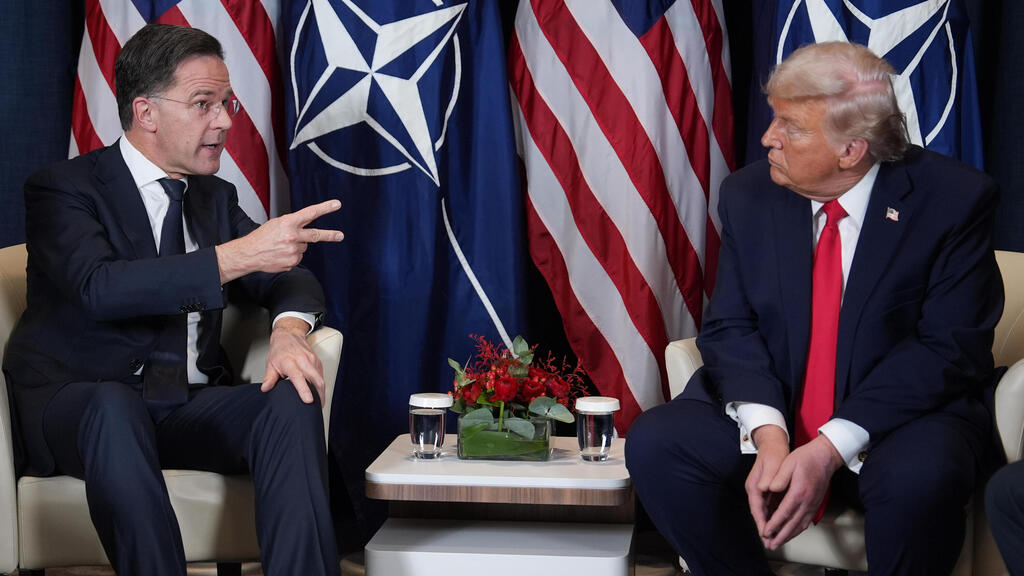
NATO Secretary-General Mark Rutte and US President Donald Trump meeting in Washington
(Photo: Evan Vucci/AP)
In an interview with CNN following the meeting, Rutte declined to say directly whether Trump raised the possibility of withdrawing from NATO, but described their conversation as “very open and honest, between two friends.”
Asked about Trump’s claim that NATO members “were tested and failed,” Rutte responded: “Some of them, yes. But the large majority of NATO countries did what they promised, because they know that when it comes to NATO, their role is to protect the United States, because the United States needs a safe Europe and a safe Atlantic Ocean. I totally understand his disappointment... But it’s not black and white.”
Ahead of the meeting, Trump intensified his criticism of the 77-year-old alliance, calling NATO a “paper tiger” and suggesting the United States should consider leaving after member states refused his call for military assistance in reopening the Strait of Hormuz. “He clearly told me that this is what he expected would happen over the past two weeks,” Rutte said in the CNN interview.
Despite previously maintaining relatively warm ties, Rutte’s visit did not appear to ease Trump’s disdain for allies that did not support Washington in the war. After the meeting, Trump vented out his frustration on Truth Social, writing: “NATO wasn't there when we needed them, and they won't be there if we need them again. Remember Greenland, that big, poorly run piece of ice!”
Earlier this week, Trump said his frustration with NATO began when the alliance opposed his proposal to take control of Greenland, the vast territory belonging to Denmark. White House press secretary Karoline Leavitt confirmed Wednesday that Trump had discussed the possibility of leaving NATO. “I think this is something the president will discuss in the coming hours with Secretary-General Rutte,” she said.
During his first term, Trump had already suggested he had the authority to withdraw from the alliance unilaterally. However, Congress passed legislation in 2023 preventing any U.S. president from leaving NATO without congressional approval. It remains unclear whether the Trump administration will challenge that law.
At the time of its passage, it was supported by current Secretary of State Marco Rubio, then a senator from Florida. Rubio met separately with Rutte on Wednesday morning at the State Department.
The core commitment of NATO’s 32 member states is a collective defense agreement, under which an attack on one is considered an attack on all. The clause has been invoked only once, in 2001, to support the United States following the September 11 attacks.
The alliance has come under strain over the past year, as Trump reduced U.S. military support for Ukraine in its war with Russia and threatened to take control of Greenland.
Pressure from Trump on NATO intensified following the outbreak of the war with Iran. The president argued that securing the Strait of Hormuz is not the United States’ responsibility but that of countries dependent on the flow of oil through it. “Go to the strait and just take control of it,” he wrote last week.
Trump also expressed anger when NATO allies Spain and France restricted or prohibited the use of their airspace or shared military facilities by the United States during the war with Iran. However, they, along with other countries, agreed to assist in an international coalition to reopen the Strait of Hormuz after the conflict ends.
British Prime Minister Keir Starmer, who drew particular ire from Trump, is expected to travel to the Gulf to support the ceasefire.