


Prime Minister Benjamin Netanyahu’s office on Tuesday issued a first public comment on the escalating dispute between Defense Minister Israel Katz and IDF Chief of Staff Lt. Gen. Eyal Zamir, following separate meetings held earlier in the day.
In a statement, Netanyahu’s spokesman said, “It is better not to listen to briefings from those with an interest. The prime minister is determined to resolve the issues and will do so in the best possible way.”
Gallery
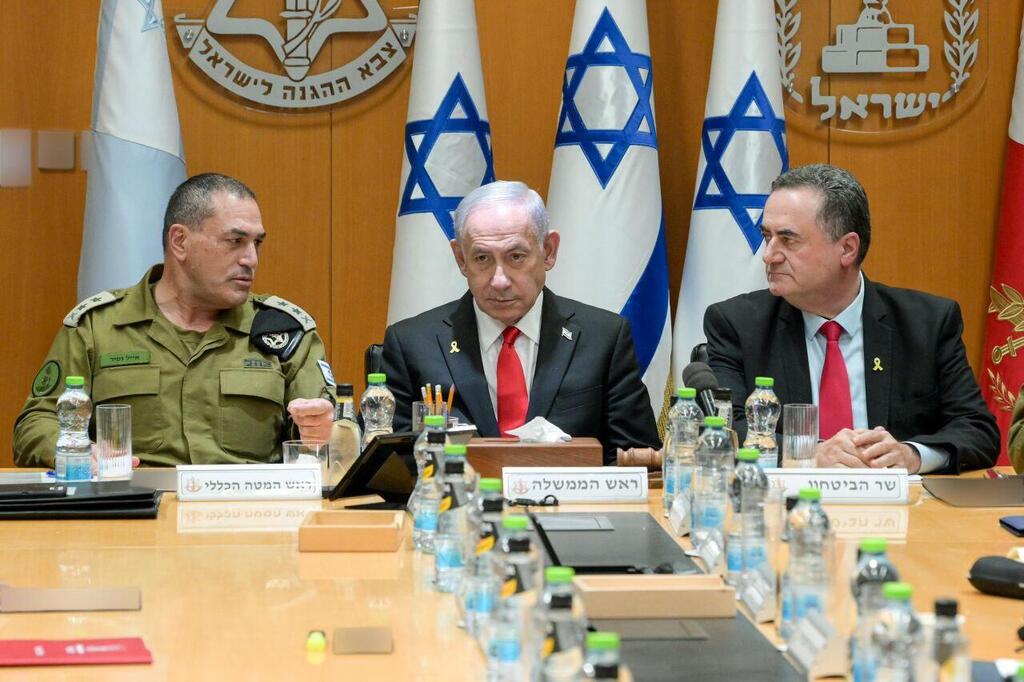
IDF Chief of Staff Lt. Gen. Eyal Zamir, Prime Minister Benjamin Netanyahu and Defense Minister Israel Katz
(Photo: GPO)
Netanyahu met with Katz and Zamir individually, although the original plan had called for a joint meeting. During the separate sessions, the prime minister asked both men to cease public commentary to the media. The two are due to meet Thursday, and Netanyahu is pressing them to reach understandings before that meeting and settle their differences.
No official comment was released by the Prime Minister’s Office regarding what was said during the sessions. The crisis erupted when Zamir criticized Katz’s decision to freeze senior military appointments and review the so-called Turgeman Report. Zamir argued that the move amounts to politicization that “harms the readiness of the military.”
Netanyahu has publicly expressed criticism of both parties — Zamir and Katz. He recently accused the defense minister of playing politics ahead of an internal election within their Likud party.
Government sources said Tuesday that Netanyahu initially believed Zamir’s appointment was a mistake and that Zamir disappointed him in his handling of operations in Gaza and Lebanon. At the same time, they said the prime minister is dissatisfied with Katz’s conduct and his public clashes with the chief of staff.
The Prime Minister’s Office denied that Netanyahu is considering removing Katz from his post or re-shuffling the Cabinet, describing media reports of a switch with Foreign Minister Gideon Sa’ar as “fake news.”
Despite the criticism, Netanyahu praised Zamir at an induction ceremony earlier this year, noting that he had twice previously tried to bring him into the top military role and that they had worked “shoulder to shoulder” more than a decade ago when Zamir served as military secretary in the Prime Minister’s Office. He described Zamir as having “iron-clad determination, with emotion and soul.”

Zamir's induction as IDF chief of staff
(Photo: GPO)
According to associates of Katz, the defense minister was summoned to a separate meeting when the third-party gathering was cancelled. A morning statement by Katz’s aides heightened the tension: it said that once investigations are completed, “there is no doubt that additional senior officers in the IDF will have to face action and stricter measures will be taken against other senior officials.” The statement added that “the chief of staff acted within his authority — but on the basis of partial information and in a non-exhaustive manner.”
The dispute stems from Katz’s decision to review the findings of the Turgeman Committee and to freeze senior IDF appointments. The committee, chaired by retired Maj. Gen. Sami Turgeman, worked for seven months and included 12 generals and brigadier generals who interviewed hundreds of witnesses about the failures surrounding the October 7 massacre. The report was finalized by the chief of staff and presented to the minister personally.
However, after the chief of staff issued personal conclusions and command-level disciplinary measures against officers involved in the failures of October 7 — without informing the minister — Katz decided to transfer the Turgeman Committee’s report for a 30-day review by the Defense Ministry comptroller, Brig. Gen. (res.) Yair Valensky and froze the pending appointments.
In response, Zamir issued a statement saying he had learned of the planned moves from media reports while participating in a surprise General Staff exercise in the Golan Heights. He wrote that the report had originally been designated for his own use, to assess the quality of the internal IDF investigations and implement lessons learned — “not for political use.” He warned that delaying appointments for an additional 30 days “harms the IDF’s capabilities and its readiness for upcoming challenges.”
Katz responded by noting that the chief of staff is subordinate to the prime minister, the defense minister and the government, and that he would finalize decisions regarding appointments only after receiving the findings of Comptroller Valensky.