


Tensions in the Middle East are at a peak. The United States is massing forces in the region, issuing threats while leaving the door open to diplomacy, and Iran is vowing a firm response. In between, Israel is preparing for all scenarios, including the possibility that Iran’s regional proxies — chief among them Hezbollah and the Houthis — will assist the mullah regime if it is attacked rather than stand aside.
The Houthis have attacked Israel numerous times since the outbreak of the war, disrupted freedom of navigation in the Red Sea and even succeeded in launching ballistic missiles and drones, a small number of which struck Israeli territory.
The Houthis train for war with Israel


With the ceasefire between Israel and Hamas taking effect, they halted their operations, but have since prepared for the next round. Their drills resemble those carried out by Hamas before Oct. 7, amid concerns they could attempt infiltration from the Jordanian border.
'The most dangerous pro-Iranian group'
A Yemeni security source opposed to the Houthis told ynet that the group has “significantly strengthened its missile capabilities” and that in the event of war against Iran, it is expected to launch military operations in the Red Sea.
According to the source, the Houthis’ offensive maritime activity is currently on hold due to the ceasefire in Gaza and the end of their confrontation with the United States, but “they have acquired weapons, missiles with multiple warheads and advanced drones. In recent months, materiel has been transferred to them from Iran.”
The source said the Houthis are expected to reimpose their “naval blockade” in the Red Sea once they receive instructions from Tehran. “They are the most dangerous pro-Iranian group,” he said. “Although technically and militarily their missiles and weapons are not effective against U.S. power, in practice they threaten the economy, trade and international shipping.” He added that several U.S. bases in countries neighboring Yemen are likely to become targets.
Asked how the Houthis are preparing for the next confrontation with Israel, the source said that according to available information, “they are training special operational teams to carry out terrorist attacks in the Red Sea and the Arabian Sea, and training operatives in Africa to attack any Israeli military movement.”
He also cited ties between the Houthis and Hamas and claimed that operatives from the Palestinian terrorist group are present in Houthi-controlled areas of Yemen, though there is no independent confirmation of that assertion. He added that the Houthis oppose and are preparing for the possible expansion of the Abraham Accords in the region.
Internally, areas under Houthi control are in dire condition. Amid fears of escalation and deep poverty, a source in Sanaa described to ynet what he called an almost emergency-like situation in the city and “a very frightening quiet.”
The United Nations has reduced its operations in Yemen following attacks on and kidnappings of its staff by the Houthis. At the same time, the economy in Houthi-controlled areas is collapsing, and hunger and disease have become commonplace.
The Saudi newspaper Asharq Al-Awsat reported this week that linking the local situation to the regional conflict gives the Houthis an opportunity to redirect public opinion toward an “external threat,” helping to ease growing internal pressure. The Yemeni source described poverty, hunger, fear, arrests, public anger and a heavy security presence in Houthi-controlled areas.
A Yemeni researcher, who asked not to be identified by name, told ynet that he believes the Houthis’ response will vary depending on the nature of any strike on the Islamic Republic. “If the war with Iran is limited and swift, the Houthis may confine themselves to statements and symbolic support, such as launching conventional missiles as they have done in the past,” he said. “The Houthis tend to escalate their responses gradually and not respond at full intensity immediately.”
“If the war with Iran drags on for an extended period,” he added, “the Houthis will gradually escalate their attacks, reach higher levels and use more advanced missiles over time. They will not reveal all their cards at the outset. There are reports that the Houthis have recently developed several military technologies and that Iran has provided them with experts and technology. It is very likely the Houthis would expand their attacks and target U.S. bases and interests in the region — not only Israel — because America is the spearhead in this new conflict with Iran, unlike Israel in the past.”
Addressing the maritime arena, where the Houthis have been particularly active, the researcher said: “Based on information about their naval capabilities, the blockade could closely resemble their previous maritime operations, which mainly targeted the Bab el-Mandeb Strait, the Gulf of Aden and the Arabian Sea. However, the Houthis may add another layer — coordinated attacks from the opposite side of the Red Sea, exploiting their presence and cells established in Africa. They may also initiate operations targeting Somaliland because of its ties with Israel and the possibility that Israel could conduct security operations against them from its territory.”
According to the researcher, the Houthis now fear that Iran may be less committed to preserving them compared to its nuclear or missile programs. That question — the scope of Tehran’s commitment to the Houthis versus the ayatollahs’ immediate interests — is among the issues currently being debated in Sanaa.
Marching, training and rehearsing for war
Last Saturday, an emergency committee meeting was held in Sanaa, Yemen’s capital, chaired by Mohammed Muftah, who has headed the Houthi government since the killing of former prime minister Ahmed al-Rahwi in an Israeli strike in August last year.
According to a report by the Houthi-affiliated Saba news agency, the committee “discussed several aspects related to raising the country’s level of preparedness to deal with emergencies” and approved a number of measures to strengthen the emergency sector and improve its readiness to respond effectively to any event in the coming period.
Muftah stressed the need to provide particular assistance to civil defense, “which bears primary responsibility for handling emergencies, rescue operations and minimizing human and material damage.”
A Yemeni journalist, Fares Alhemyari, who is not affiliated with the Houthis, wrote this week in a post on X that circulated widely in Arab media that, according to sources, Houthi preparations include raising readiness levels at all hospitals under their control, both public and private; instructing emergency departments to equip themselves; and requiring medical staff in hospitals and health institutions in Sanaa to sign commitments to report for duty whenever needed.
Alhemyari also wrote that the Houthis issued instructions designating all government schools and public facilities in areas under their control as shelters for civilians in the event of strikes. He claimed that most Houthi supporters who completed civil defense and first aid courses were notified to “remain on high alert.”
Asharq Al-Awsat attributed the Houthis’ latest preparatory steps to “growing concern over the possibility of a strike that would expand to include them, as part of Iran’s regional proxies.” Alongside the question of whether the Houthis would be targeted as part of a regional U.S. target bank, another question has emerged: whether they might join the fighting on their own initiative in order to stand alongside the leader of the Shiite axis.
The Houthis have continued preparing for a future round of fighting with Israel and the United States, making clear that they view confrontation as only a matter of time. Houthi leader Abdul-Malik al-Houthi said in December that “the coming rounds with the Israeli enemy are certain, there is no doubt about that, and the nation must remain vigilant.” This week, amid rising regional tensions, he added: “The nation has no choice but to confront the Israeli enemy and strive to get rid of it.”
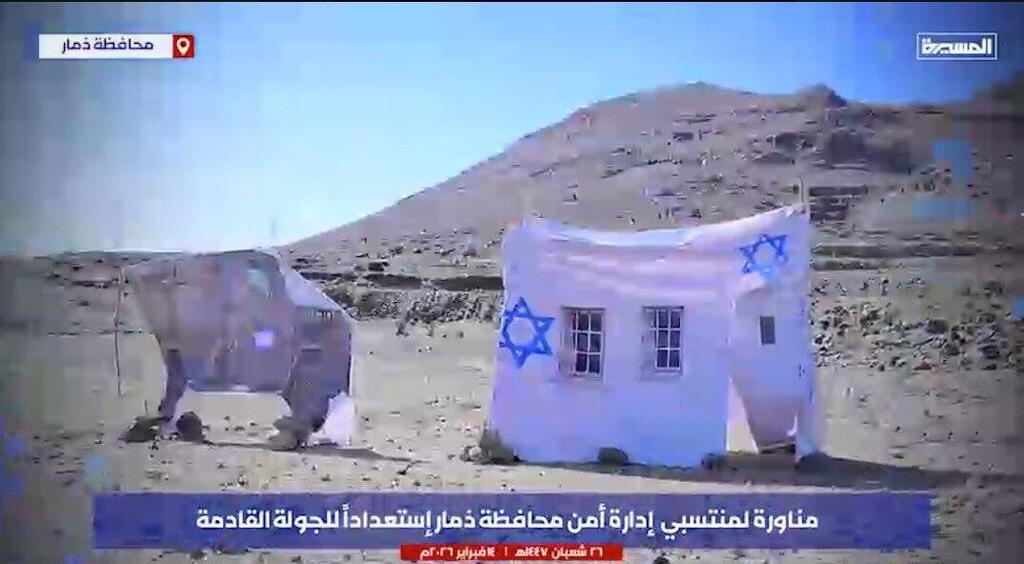
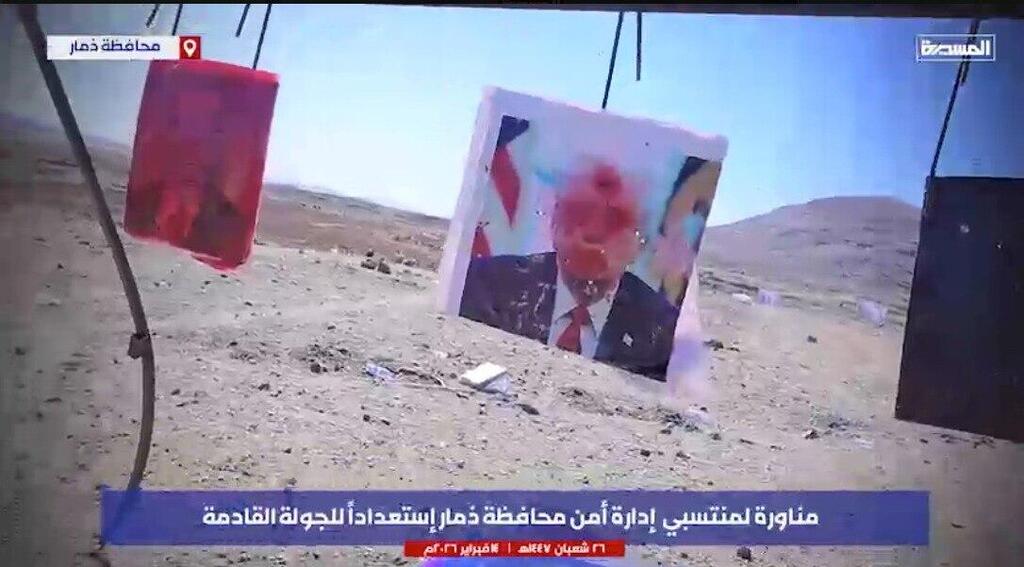
Houthi gunfire directed at image of US President Donald Trump
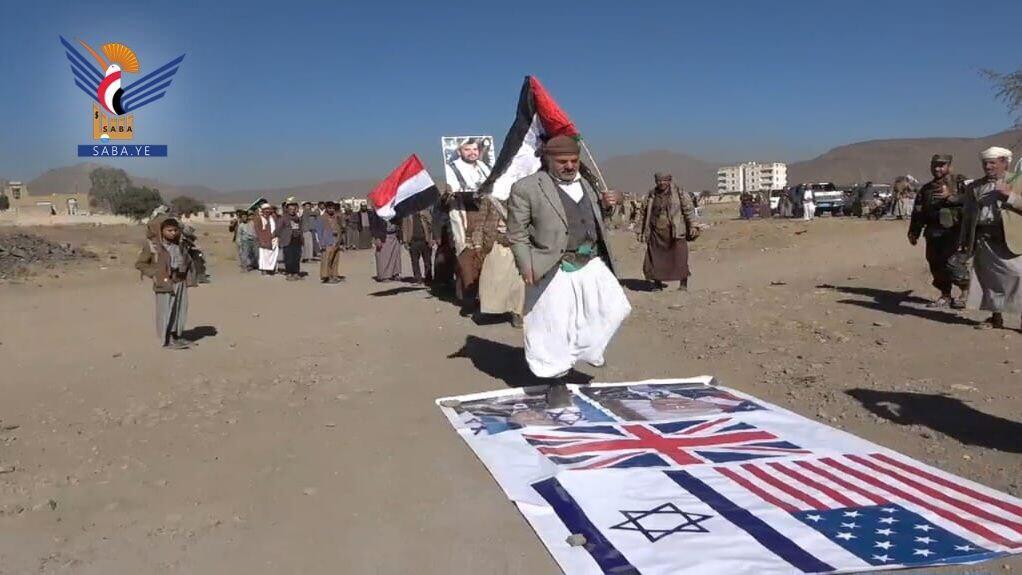
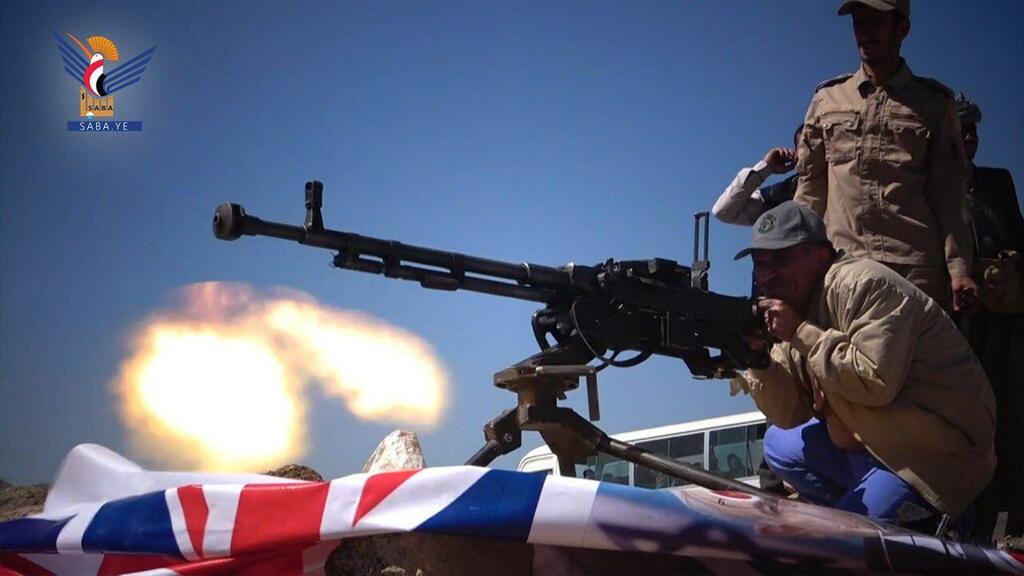
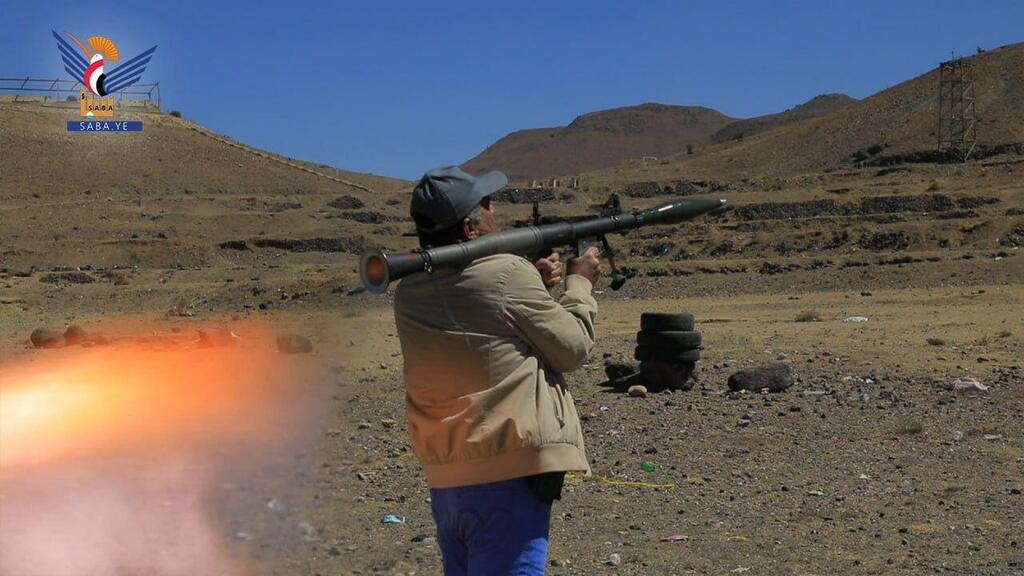
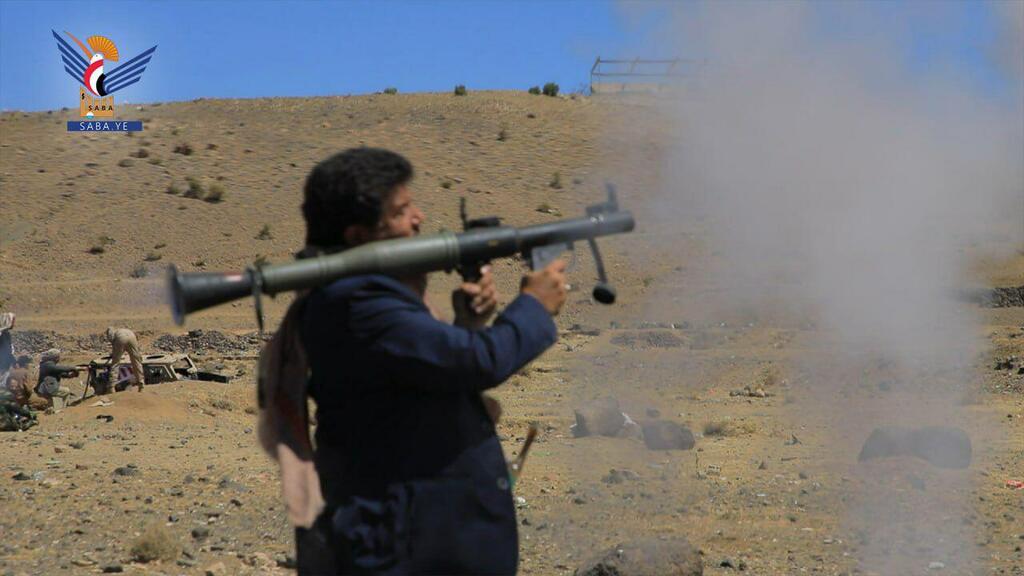
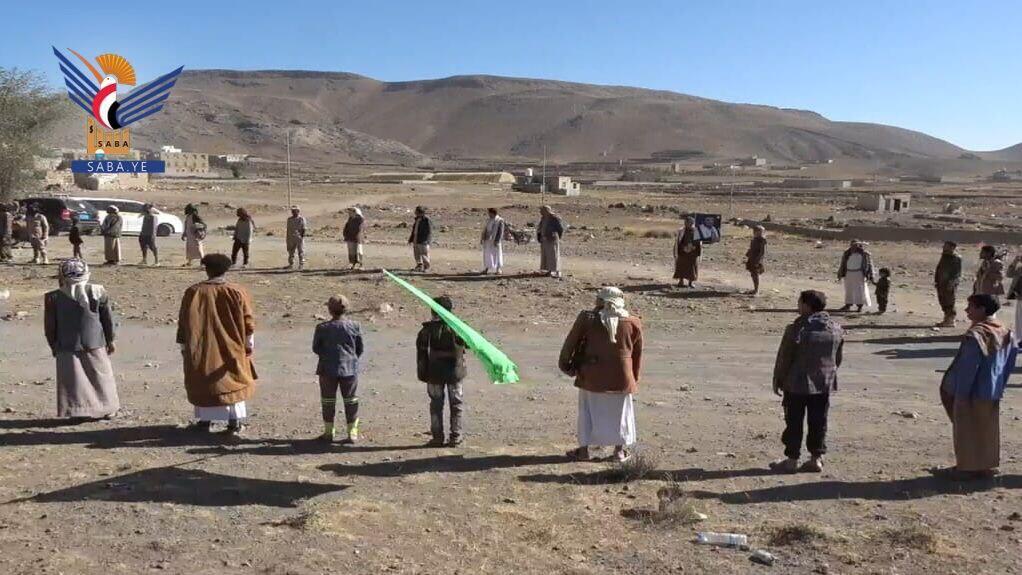
Since the ceasefire in the Gaza Strip, the Houthis have continued to hold marches and conduct drills simulating combat “against Israel,” publishing documentation on social media as part of the group’s propaganda efforts.
In recent weeks, the Houthi-affiliated Al-Masirah channel aired footage from an exercise in Yemen’s Dhamar province described as “preparation for the next round.” The video showed gunfire directed at images of U.S. President Donald Trump and Prime Minister Benjamin Netanyahu, as well as attacks on buildings and vehicles marked with Israeli flags.
The Hezbollah-affiliated Lebanese newspaper Al-Akhbar reported Monday that the Houthis used the ceasefire since October to prepare for a future confrontation. According to the report, they intensified military preparations and carried out ground exercises in the provinces of Ibb, Hodeidah and Sanaa simulating surveillance and attacks against U.S. and Israeli positions.
The same report cited military sources in Sanaa as expecting the introduction of several long-range ballistic missiles and new drone models “into the battlefield if conflict erupts.” The sources did not rule out a return to the concept of “unity of fronts,” meaning coordinated action by the Iranian-led Shiite axis if the Islamic Republic faces a joint U.S.-Israeli strike. Yemeni support, they claimed, would resume with “different tactics this time and advanced weapons capable of maneuvering and striking with high precision.”
'Only regime change'
Danny Citrinowicz, a research fellow in the Iran Program at the Institute for National Security Studies and former head of the Iran branch in the Israeli military’s Intelligence Directorate research division, told Ynet that since the ceasefire in Gaza, the Houthis have been investing in force buildup. He pointed to Iranian involvement in Yemen and reports from last November about the return of senior Iranian official Abd al-Reza Shahlai to the country.
Citrinowicz said that despite strikes against them by the United States, Israel and the Western coalition that fought them, the Houthis have improved their capabilities in recent years. For example, he noted, the group launched ballistic missiles with multiple warheads, raising the possibility that they could surprise again. “They viewed the confrontation with Israel, despite the strikes against them, as a very successful event that positions them very well within the axis,” the senior researcher said.
During the war with Israel, the Houthis learned that even when they fired single missiles, eventually something would get through — even striking Ben Gurion Airport. However, their launches were limited and carried out sporadically, and in practice most of the missiles were intercepted or fell outside Israeli territory.
Asked whether Israel should prepare for a different mechanism in a future confrontation with the Houthis, Citrinowicz replied: “We need to assume we will see a more significant pace and a greater quantity. Ultimately, if you take the Iranian doctrine, they need to improve three things: quantity, range and precision. It is reasonable to assume they are working on those.”
He added that “the campaign against the Americans did not really create a deterrence equation between the Houthis and the United States. If in Washington they think that is what happened, they will be surprised to discover what will happen in an actual war. The Houthis will be involved immediately.”
 Danny Citrinowicz
 According to Citrinowicz, the Houthis could significantly harm the U.S. naval presence in the region and again disrupt shipping routes to Israel. He also pointed to another issue: the Houthi presence in Iraq. In the event of an effort to target U.S. forces in Iraq, he said, the Houthis might volunteer to take the lead. “You have to look at the connection with the Shiite militias, which would be part of the campaign,” he said. “Ultimately, the Houthis are preparing for both scenarios — against Israel and against the American presence in the region. They could also try to strike U.S. bases in the area. If there is a war, the Americans will come back to us afterward to deal with the Houthis together.”
Asked about a solution to the problem — whether it would require toppling Houthi rule — Citrinowicz said: “In the end, it is only their removal, as difficult as that is to do. Intelligence capabilities will need to be significantly upgraded, and their launch and missile capabilities must be struck.”
Even if the Houthis possess hundreds of missiles, he said, it is essential to know where they are located and to penetrate their decision-making process and broadly target the organization’s leadership. “Striking the Houthi government was important, but it did not truly change their ability to harm Israel or the United States,” he concluded. “There needs to be an intelligence upgrade, broad joint Israeli-American activity at a minimum, and of course strategic thinking together with relevant regional actors about how this regime will no longer pose a threat, because it is not reasonable to live with this threat over time.”