

Qatar’s capital, Doha, will host indirect talks on Wednesday between Iran and mediators, and between the United States and mediators, four days after negotiations between Washington and Tehran were frozen.
Unlike the talks held in Switzerland, Wednesday’s technical discussions are not expected to include direct meetings between the American and Iranian delegations. Iran is also conditioning any final agreement on the implementation of terms included in a memorandum of understanding, including a ceasefire in Lebanon.
Gallery

In Doha, but not meeting the Iranian delegation: Steve Witkoff and Jared Kushner
(Photo: Paulina Patimer)
The Wall Street Journal reported Tuesday that Iran’s Islamic Revolutionary Guard Corps told mediators it would again close the Strait of Hormuz if Tehran does not receive guarantees during the talks that it is the sole authority controlling the waterway. According to the report, the Revolutionary Guards also demanded that the United States and other countries abandon plans to use the southern route through the strait, which runs off the coast of Oman.
So what is happening in the talks, and what comes next?
How will the Doha talks work?
Although U.S. envoys Jared Kushner and Steve Witkoff are in Doha, the sides are not expected to meet directly. Instead, each delegation will hold separate meetings with representatives of the mediating countries, Qatar and Pakistan.
Qatar Foreign Ministry spokesman Majed al-Ansari said “Iranian officials are not expected to arrive in Doha at this stage.” Iranian Foreign Ministry spokesman Esmaeil Baghaei said Iran’s technical delegation is headed by Deputy Foreign Minister for Legal Affairs Kazem Gharibabadi.
“Decisions in Iran are not made by one body, but through the institutions, while the Foreign Ministry is responsible for implementation,” Baghaei said. “We support any dialogue that bridges viewpoints and strengthens the unity of the Iranian people. We are continuing with the memorandum of understanding with America on a step-by-step basis, and we will honor all our commitments as long as Washington does the same.”
What will they discuss?
Al-Ansari said the negotiations include several issues, including Iran’s nuclear program and frozen funds. He added that the recent escalation in the Strait of Hormuz had not halted the technical talks.

(Photo: AP/Julia Demaree Nikhinson, REUTERS/Stringer)
Baghaei said Wednesday’s meeting in Doha would focus on discussions with Qatar over implementation of parts of the memorandum of understanding, including the release of frozen Iranian assets. He added that a ceasefire in Lebanon would also be discussed.
“We emphasize that what is required is not only to stop the war in Lebanon, but also to end the occupation,” Baghaei said.
What are the frozen Iranian funds?
The United States has frozen $12 billion in Iranian funds in Qatar, which Tehran wants released and has presented as a condition for continuing the talks.
Qatar’s Foreign Ministry said the frozen money is intended to finance humanitarian purchases under an agreement between Washington and Tehran, and stressed that no agreement has yet been reached allowing the funds to be transferred.
Baghaei said talks on implementing the commitment to release Iran’s frozen assets are “progressing well.”
“It is important that we have free access to these assets and use them to purchase the goods we want, as we see fit, in order to meet our needs,” he said.
Sources told the Saudi television channel Al-Hadath that Iran would receive $3 billion of its frozen funds by the end of the week. The report has not been confirmed by another source. Iranian President Masoud Pezeshkian said Monday that under the agreement with the United States, $6 billion of the frozen assets would be returned to Iran.
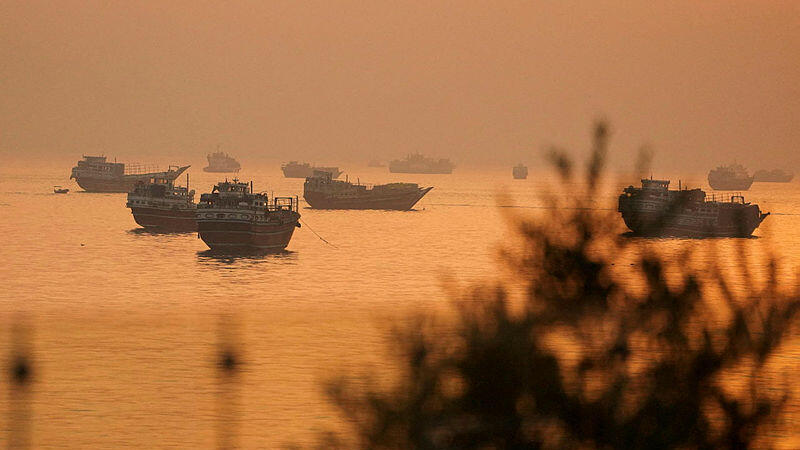
The Strait of Hormuz
(Photo: REUTERS/Stringer)
What about the Strait of Hormuz?
The dispute over control of the Strait of Hormuz, through which about one-fifth of the world’s oil output passed before the outbreak of the war, led to the mutual strikes earlier this week, the freezing of the talks and their transfer to Doha.
Iranian parliament speaker Mohammad Bagher Ghalibaf said Tuesday evening that Tehran views the events of recent nights in the Persian Gulf as “a violation of the ceasefire.”
Ghalibaf said that free passage through the Strait of Hormuz would remain in effect for only 60 days, in accordance with the memorandum of understanding.
The New York Times reported Tuesday that Iran and Oman are meanwhile advancing plans to charge fees from ships passing through the strait, despite public U.S. opposition. The report cited an Iranian official and four diplomats familiar with the issue.
According to the report, Oman recently submitted a formal proposal to the United States and its Western allies under which shipping companies would pay service fees for use of the strait. A person familiar with the U.S. position said the American negotiating team had received the Omani proposal and had reservations it planned to raise with Omani officials.
Al-Ansari said Qatar is mediating between the sides “to ensure the safety of navigation in the strait,” and rejects any unilateral action that harms freedom of navigation.
Baghaei said Tehran is “aware of its responsibility in terms of managing the Strait of Hormuz and does not need any intervention — that is why we responded to all American aggression.”
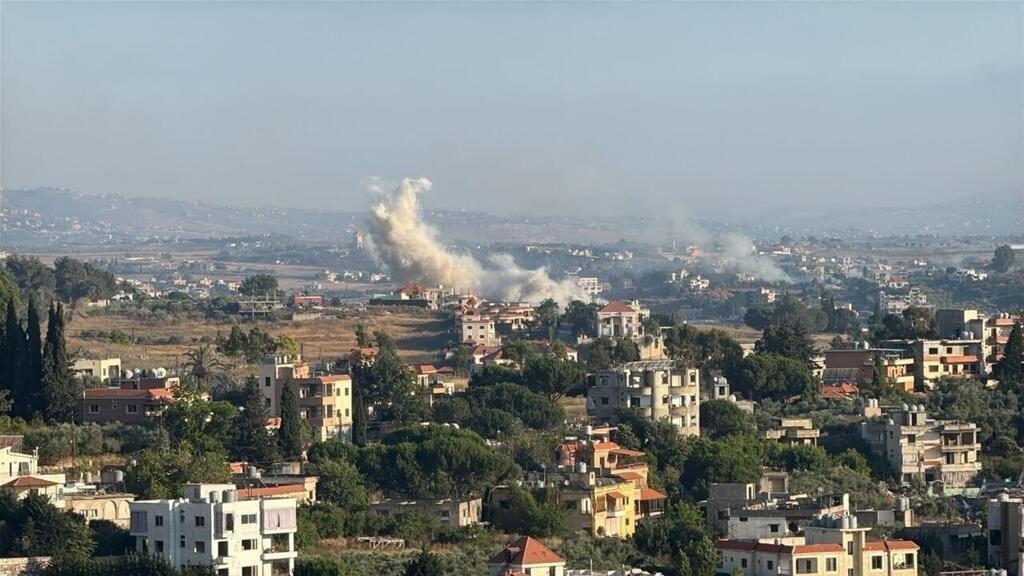
IDF strikes in Lebanon
What about Lebanon?
Iran has from the beginning tried to link the end of its conflict with the United States to the end of the war between Israel and Lebanon.
Ghalibaf said Tuesday that the memorandum of understanding includes “an American commitment to end the war in Lebanon, guarantee its sovereignty and return its lands.”
“A joint committee will be established between the United States, Iran and Lebanon to supervise the end of the war in Lebanon,” he said. “We are following this seriously.”
Baghaei added that Iran’s position on Lebanon is clear.
“It is important to us that America meet its commitments and force Israel to stop its violations,” he said.