

The Houthis have increasingly focused their militant public messaging on Saudi Arabia in recent weeks, while comparatively reducing references to the United States and Israel.
The shift comes amid escalating military tensions with the kingdom, which supports Yemen’s internationally recognized government and maintains what the Houthis describe as a maritime, aerial and land blockade.
Houthis order media campaign against Saudi Arabia
(Video: Yaron Brener)


The change is most visible online. Houthi-linked hashtags such as “Ready for the next round,” previously associated with tensions involving Israel and the United States, have been replaced by slogans including “We will break the blockade” and “Blockade for blockade,” both directed squarely at Saudi Arabia.
On July 11, a Houthi appeal circulated online accusing Riyadh of using the blockade to starve the Yemeni population.
“The Saudi regime is serving as a tool in the blockade and starvation of the Yemeni people,” the message said. “We will not remain hostages to suffering. We will not accept the continuation of the blockade. Join the broad social media campaign under the hashtag: ‘We will break the blockade.’”
Armed tribal gatherings have also focused primarily on Saudi Arabia rather than Israel or the United States.
On July 6, footage was published from a tribal rally in Sanaa described as a “declaration of readiness for mobilization to end the aggression and blockade.” Similar gatherings were held elsewhere in Houthi-controlled territory, including in the provinces of Marib, Dhamar, Taiz, Al-Mahwit, Ibb and Amran.
Gallery
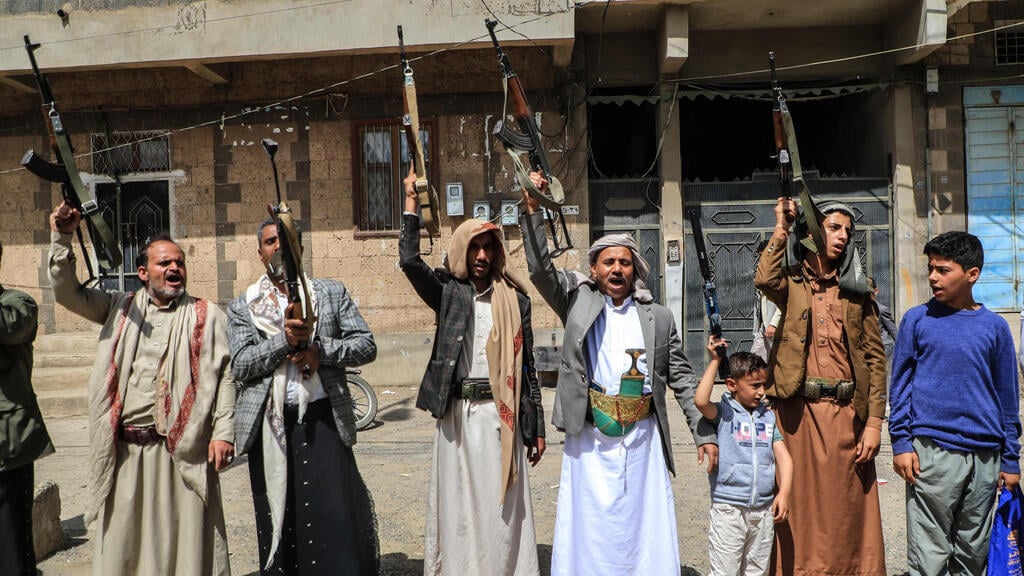
Yemen's Houthis shift propaganda from US and Israel to Saudi Arabia
(Photo: Mohammed HUWAIS / AFP)
Houthi military spokesman Yahya Saree, widely known for announcing attacks against Israel during previous rounds of fighting, has also shifted toward threatening Saudi Arabia.
He has reported a series of operations, including attacks on fighter jets allegedly attempting to prevent a civilian aircraft from landing in Sanaa, a strike on Saudi Arabia’s Abha International Airport, the downing of a Saudi drone and attacks on ships and facilities belonging to the Saudi oil giant Aramco.
Despite the growing focus on Saudi Arabia, the Houthis’ official slogan remains: “Death to America, death to Israel, curse the Jews, victory to Islam.”
From the group’s perspective, Washington stands behind Riyadh in any case.
Houthi leader Abdul-Malik Badr al-Din al-Houthi said on July 16 that “at this stage, it is clear that the Americans, British and Israelis are pushing the Saudis to escalate against our country.”
Mohammed al-Bukhaiti, a member of the group’s political bureau, said over the weekend that the Houthis would also retaliate against Washington if it supported Saudi military action.
“If the United States stands alongside Saudi Arabia in its aggression against Yemen, our response will be directed at it,” he said. “Sanaa prefers confrontation with the United States, Britain and Israel over confrontation with Saudi Arabia.”
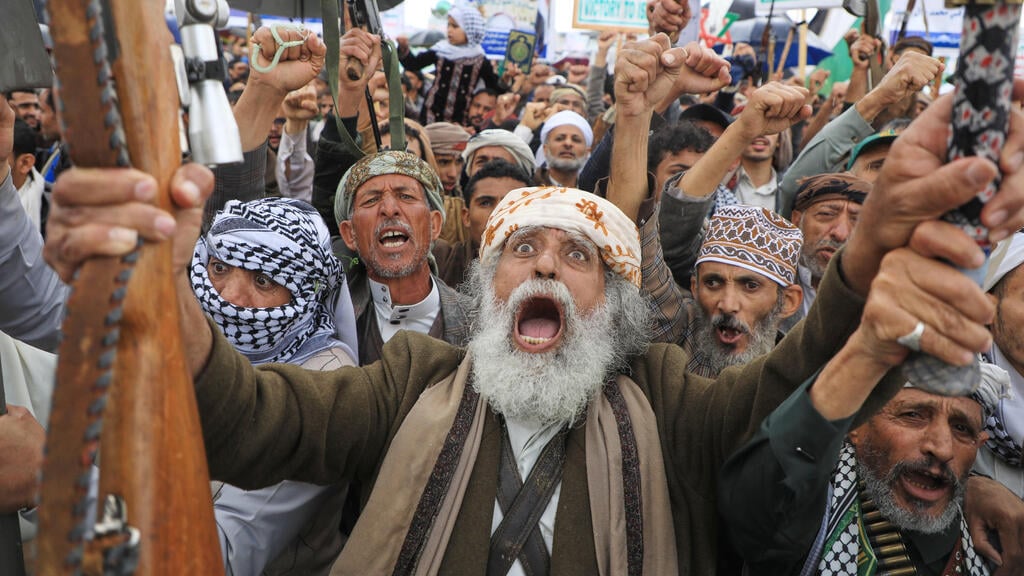
Houthis support Iran
(Photo: AP Photo/Osamah Abdulrahman)
The Houthis also marked two years since the first launch toward Israel of their “Jaffa” drone, which struck Tel Aviv and killed resident Yevgeny Ferder.
A source in Sanaa who is not affiliated with the Houthis said the group recently issued instructions to “unify the discourse, the message and the position” against Saudi Arabia and avoid focusing on other issues for now.
“This stage and the next stage are stages of war against Saudi Arabia,” the source said. “The war will continue until the fuel crisis is resolved and the blockade, including the closure of airports and seaports, is fully lifted.”
According to the source, residents of Houthi-controlled areas have been pushed toward severe hunger, while public dissatisfaction is rising. Focusing anger on Saudi Arabia, he said, helps reduce domestic pressure on the regime.
A Yemeni researcher who requested anonymity told ynet that the escalation in Houthi rhetoric against Saudi Arabia began in June.
“The Houthis are trying to give their actions a local character, so they will not be seen solely as pro-Iranian operations,” he said.
He added that the shift cannot be separated from tensions surrounding the Strait of Hormuz, the collapse of a memorandum of understanding and the return of military confrontation.
“The Strait of Hormuz was Tehran’s most important bargaining chip, but Saudi Arabia weakened it by continuing to export large quantities of oil from the Yanbu region on the Red Sea,” he said.
Saudi Arabia also eased the effect of the Iranian blockade on other Gulf states by allowing its western ports on the Red Sea to receive goods and essential products and by establishing a land bridge to transport them to Gulf countries, he added.
“The Iranians asked the Houthis to close the Bab al-Mandab Strait, but the Houthis cannot comply,” the researcher said. “A slogan supporting Iran is less attractive than slogans supporting Gaza.”
He said the Houthis therefore intensified their rhetoric against Saudi Arabia to prepare local and international public opinion for the possibility of creating a new crisis in the maritime arena.
“Living conditions and the economic situation in areas under their control have created mounting internal pressure on the group,” he said. “Focusing on the blockade and ‘Saudi aggression’ has become an effective way to restore popular support.”