

Uncertainty surrounding Mojtaba Khamenei's condition in the first weeks of the war created a problem for U.S. negotiators in talks with Iran: They did not know who they were really talking to. The Revolutionary Guards' grip on power in Tehran had strengthened, but the officials speaking for Iran did not necessarily represent the position of those actually in control.
According to Axios, President Donald Trump's administration found an unusual solution — reaching out directly to the leadership of the Revolutionary Guards through an intermediary from outside Iran.
Nechirvan Barzani, president of Iraq's Kurdistan Region, was tapped for the mission. Barzani previously lived in Iran and studied in Tehran. According to three sources familiar with the matter, he speaks fluent Farsi and has personal ties with numerous senior Iranian officials, including members of the Revolutionary Guards, and is trusted by both them and the Trump administration.
"Nechirvan Barzani is a pragmatic problem solver," said Brett McGurk, who served as a Middle East adviser under several U.S. presidents. "He's respected across the region. He knows nearly everyone in Tehran as well as Washington. That's who you call in a pinch."
In early May, after nearly three weeks of negotiations, then-U.S. Director of National Intelligence Tulsi Gabbard made the first contact. According to the sources, she told Barzani the administration wanted a direct "channel" to Revolutionary Guards commander Gen. Ahmad Vahidi. Barzani agreed and contacted his connections in Iran, insisting that he speak directly with the general. The Iranians agreed.
Just four days later, a Revolutionary Guards official arrived at Barzani's office in Iraqi Kurdistan and connected the two men using an encrypted phone. According to Axios, Vahidi was waiting on the line and told Barzani that the negotiations reflected the Revolutionary Guards' position.
"I fully support them and this is also the position of the IRGC. We prefer to solve this crisis through negotiations," Vahidi said, according to a source familiar with the conversation.
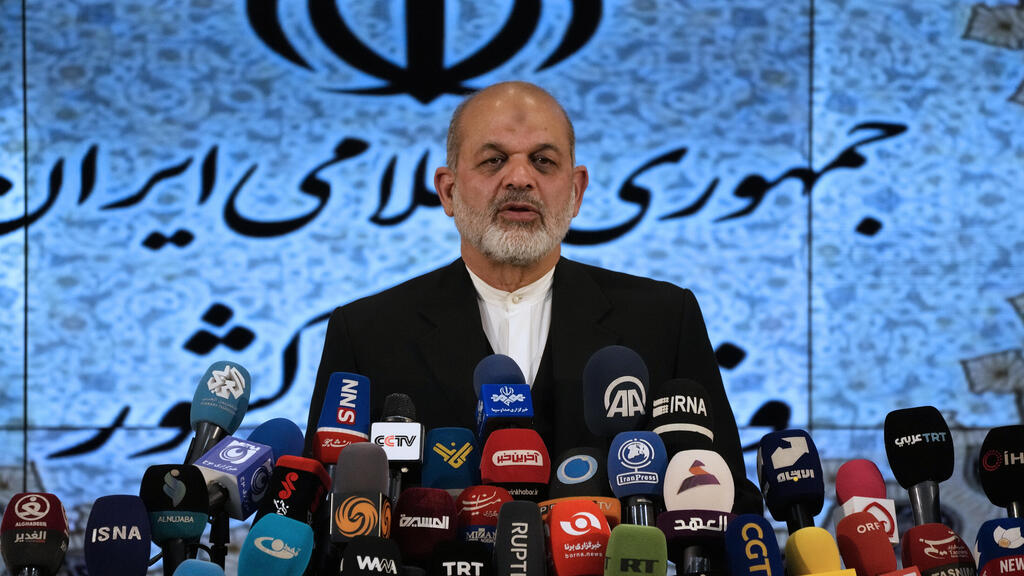
Ahmad Vahidi
(Photo: Vahid Salemi/AP)
Barzani then called Gabbard and relayed the general's response, which was immediately passed on to the White House. The Trump administration returned to Barzani with another proposal in response to Iran's message, and the exchanges continued. One source said the U.S. sought to use the momentum to arrange secret direct talks between senior American and Iranian officials, with Barzani serving as mediator.
The Iranians, however, feared Israeli intelligence could locate them if the talks were held in Iraq, and the meeting never took place. According to Axios, they were concerned Israeli intelligence had extensive assets in Iraqi Kurdistan and could target them in Erbil or while they traveled there.
The negotiations ultimately collapsed. Barzani has now sent additional messages to the United States offering to help revive the talks, according to the report. This time, however, even that may not be enough.
McGurk said the obstacle was no longer mediation but Iran's policy toward the Strait of Hormuz, which he said was unlikely to change anytime soon.
Trump: I will annex Hormuz
Just last Friday, Trump said he would "soon" declare the Strait of Hormuz U.S. territory. In an interview with Fox News, he vowed to inflict severe economic damage on Iran. Tehran responded that only Iran would determine the future of the strategic waterway, saying, "We are not deterred by threats or displays of force."
Iranian Deputy Foreign Minister Kazem Gharibabadi responded to the U.S. president, saying, "The Strait of Hormuz will only be closed and opened under Iran's command."
Foreign Minister Abbas Araghchi later said that exchanging messages through Pakistan and Qatar did not constitute negotiations and that no decision had yet been made on resuming talks with the United States.
Meanwhile, Iranian state television aired a rare interview with Brig. Gen. Reza Naqdi, a senior adviser to Vahidi. Naqdi insisted that Iran was on the winning side of the war, largely because the United States had failed to bring down the Iranian government.
He said there was widespread confusion and disarray in the United States and described the conflict as a war without a clear strategy. He said Washington was announcing a new objective every two or three days, ranging from taking Kharg Island to reopening the Strait of Hormuz. He added that Iran needed to show its enemies that attacking it was not worthwhile and suggested prolonging the war until a new U.S. president is sworn in.