

Israel was briefed on the U.S. overnight strike on Larak Island in the Strait of Hormuz, as both Israeli and Iranian assessments indicated Monday that the latest round of hostilities was likely to remain contained, despite sharp threats of further retaliation from Washington and Tehran.
A senior Iranian source with direct knowledge of Tehran’s decision-making told Reuters that the hostilities amounted to a “limited and contained confrontation,” while warning that Iran was prepared to deliver a harsh response if attacked again. The source, who spoke on condition of anonymity, also warned that conditions in the Strait of Hormuz “will become worse for vessels that violate” rules imposed by Tehran for passage through the strategic waterway, adding that no target in the region was beyond Iran’s reach.
Missile launches from Iran toward Jordan


Israeli officials have reached a broadly similar assessment, believing the confrontation will remain localized and relatively low-level until the November U.S. midterm elections, provided neither side suffers significant damage that forces a wider response. President Donald Trump, however, has continued to threaten further U.S. action. “We’re going to hit them hard; there will be a response,” Trump told Fox News’ Trey Yingst. Trump also declared on Truth Social that “Iran is officially a Failed Nation. IT IS DEAD!” and portrayed the country’s military, economy and leadership as shattered. In the Fox News interview, Trump said all but one of the missiles launched from Iran had been intercepted by U.S. air defenses, while the remaining missile was assessed as unlikely to strike a significant target and was allowed to continue on its trajectory.
The latest exchange began after a senior U.S. official told Reuters and Al Jazeera that Iranian launchers had been detected preparing to fire missiles carrying naval mines. Iran subsequently launched attacks against forces stationed in Jordan and toward Al Minhad Air Base in the United Arab Emirates. Tehran rejected Washington’s account of the events that triggered the U.S. strike, describing it as a “fabrication” and a “fantasy,” and argued that the U.S. position was contradictory because Washington had claimed both that existing naval mines had been neutralized and that it needed to prevent Iran from deploying new ones. Iran’s Defense Ministry also denied carrying out an attack on the UAE base, saying: “The reports are completely false.”
Despite describing the confrontation as limited, Iranian officials continued to threaten retaliation if the United States carried out further attacks. Deputy Foreign Minister Kazem Gharibabadi said “any action threatening our territorial integrity, regardless of its scope, will be met with the most decisive response,” while Ali Reza Elhami, commander of Iran’s Khatam al-Anbiya Joint Air Defense Headquarters, warned: “If the enemy makes any mistake against Iran, we will humiliate it.” Iranian President Masoud Pezeshkian struck a more conciliatory tone during a visit to Kyrgyzstan, saying Tehran continued to seek an agreement and that “continuing the war is not in our interest, not in the region’s interest and not in humanity’s interest.”
The United States has warned that countries maintaining significant economic ties with Iran could face severe sanctions. Iranian Foreign Minister Abbas Araghchi also sought to highlight differences between Prime Minister Benjamin Netanyahu’s domestic and international messaging, sharing an interview Netanyahu gave Sunday to Israel’s Channel 14. Iranian authorities said one of those killed in the U.S. strikes on Larak Island was Ali Fayadi, an officer in the Islamic Revolutionary Guard Corps Navy.
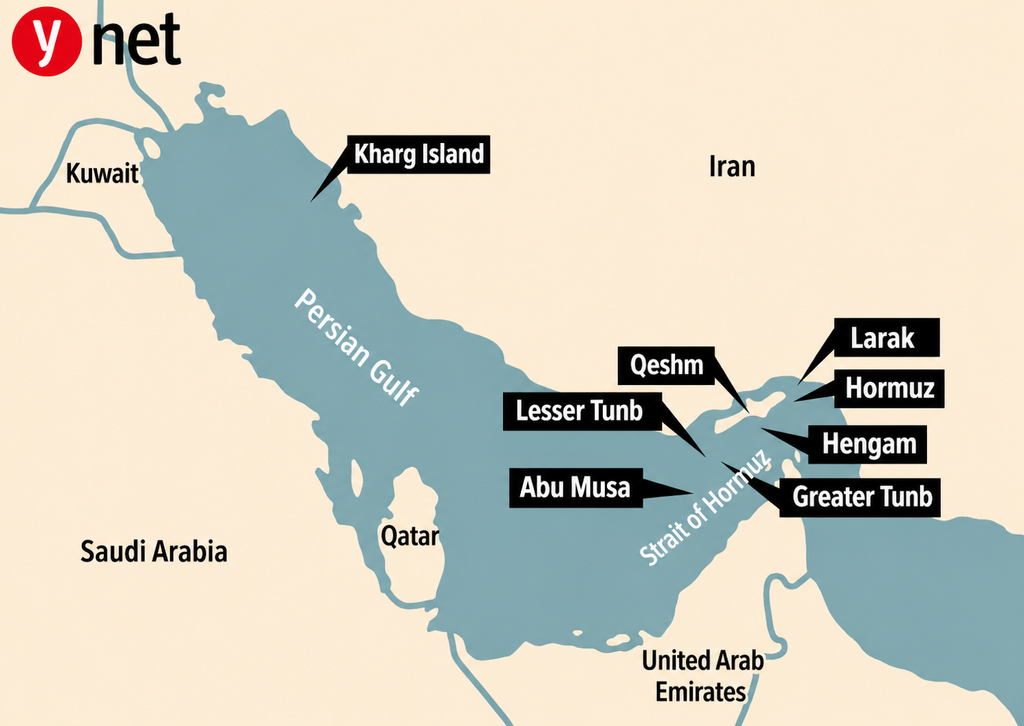
The strike came about six months into the campaign against Iran and weeks after the previous U.S. attack, as Trump continues to pressure Tehran to reopen the Strait of Hormuz and accept Washington’s terms for ending the confrontation. Trump has repeatedly made clear that additional military action remains an option, while U.S. Central Command has kept more than 50,000 troops on alert in the region for months in case the president orders further operations. The UAE and Jordan condemned the attacks directed at their territory following the U.S. strike. Anwar Gargash, diplomatic adviser to the UAE president, said: “A situation that is neither war nor peace cannot constitute a stable solution.” The UAE Foreign Ministry separately condemned what it described as an Iranian drone attack as “a dangerous escalation,” said the country reserved the right to respond and declared: “Iran bears full responsibility.”
US commanders warn prolonged Iran campaign could strain military elsewhere
The latest escalation comes as senior U.S. military commanders have reportedly warned that the heavy concentration of American forces in the Middle East cannot be sustained indefinitely without weakening the military’s ability to respond to threats elsewhere. The Washington Post reported Sunday that senior commanders raised those concerns with Defense Secretary Pete Hegseth in a classified assessment. According to people familiar with the assessment, the warnings came from the chiefs of the Army, Navy and Air Force, as well as commanders responsible for U.S. operations in Europe, Asia and Latin America.
Some forces deployed to the Middle East have already been ordered to remain there until September, while other deployments are expected to continue into 2027, according to the report. The Air Force is also preparing for a prolonged presence, with units deployed for bombing missions and round-the-clock operations expected to remain into next year. The prospect of further extensions reportedly prompted the commanders of U.S. European Command, Indo-Pacific Command and Southern Command, along with the Navy’s top officer, to formally register opposition to extending the allocation of their forces to the Iran campaign, while making clear they would carry out the orders if they remained in force.