

U.S. President Donald Trump said on Sunday he will have the final word on when the war with Iran ends, though the decision will be made in coordination with Prime Minister Benjamin Netanyahu.
In an interview with The Times of Israel, Trump said the conflict was the result of Iran’s long-standing threats toward Israel. “Iran was going to destroy Israel and everything else around it… We’ve worked together. We’ve destroyed a country that wanted to destroy Israel,” Trump said.
Gallery
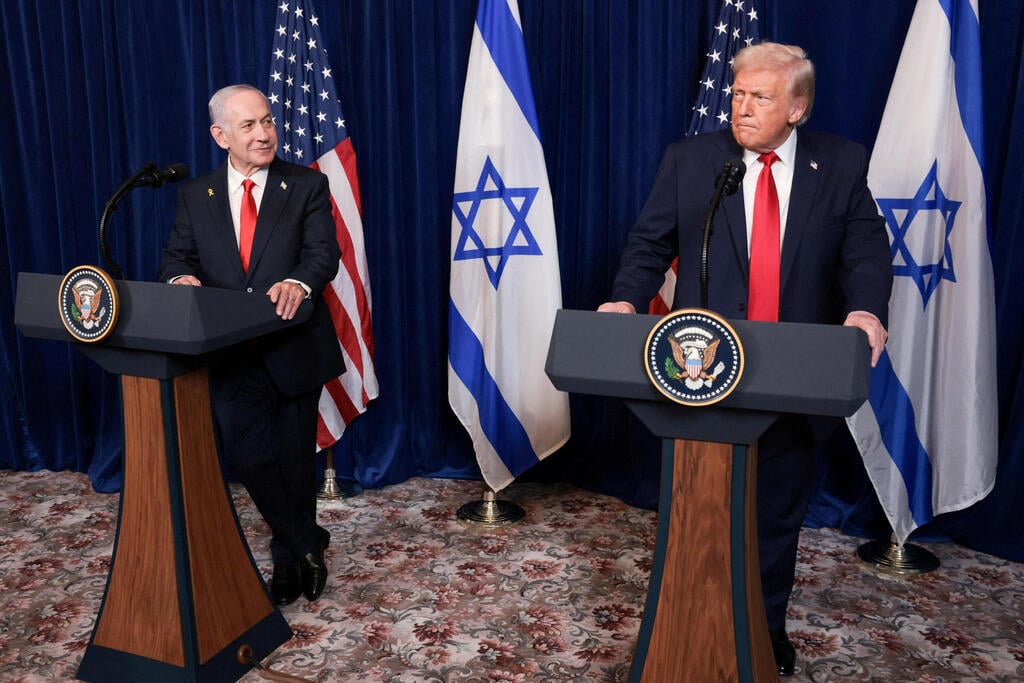
Prime Minister Benjamin Netanyahu and US President Donald Trump
(Photo: REUTERS/Jonathan Ernst)
Asked whether Israel would be able to continue its strikes after the United States ends its own operations, Trump replied that he did not believe that would be necessary.
Trump also renewed criticism of President Isaac Herzog over Netanyahu’s ongoing legal troubles, calling on him to grant the prime minister a pardon. “Bibi Netanyahu should be given that pardon immediately,” Trump said, referring to Netanyahu by his nickname. “I think [Herzog is] doing a terrible thing by not giving it. We want Bibi to be focused on the war, not on a ridiculous pardon.”
Trump returned to the topic again near the end of the interview, saying: “Tell this president to give him the pardon right now.”
He praised Netanyahu’s leadership during the war, saying the Israeli prime minister had “done a great job.”
“He’s been a wartime prime minister. We’ve worked together. We’ve destroyed a country that wanted to destroy Israel. Would have destroyed Israel if I wasn’t around,” Trump said. “And [if] Bibi wasn’t around, Israel would not exist today.”
Asked whether the war with Iran could also lead Hamas to disarm, Trump said the conflict would likely have wider effects across the region. “Many people will disarm because of [the war against Iran],” he said. “Because right now, Iran is in a position that it’s never known before, and it’s only going to get worse for them.”
Meanwhile, U.S. Secretary of War Pete Hegseth said in an interview with CBS’ 60 Minutes that Trump will ultimately determine the terms of surrender for Iran, without detailing what those terms might be.
“[Unconditional surrender] means we’re fighting to win. It means we set the terms,” Hegseth said. “We'll know when they're not capable of fighting. There'll be a point where they'll have no choice but to do that.”
Hegseth said that despite thousands of strikes already carried out against roughly 3,000 targets in Iran, the campaign is still in its early stages.
He said the United States and Israel have so far used only a portion of their air superiority, adding that the next phase could include wider use of heavier munitions weighing one and two tons. “[W]e can be clear with the American people that this is not a fair fight,” Hegseth said. “This is bringing your enemy to their knees.”
A U.S. soldier also died from wounds sustained in an Iranian attack in Saudi Arabia at the start of the war, officials said.
Responding to criticism that Netanyahu had “pulled” the United States into the conflict, Hegseth said "I'm in the room every day and I see how President Trump operates and what he's putting first, and it's America, Americans and American interests."
He contrasted the current campaign with what he called the “foolish approaches” in Iraq and Afghanistan, saying the United States is not seeking regime change in the sense of building a democracy or nation.
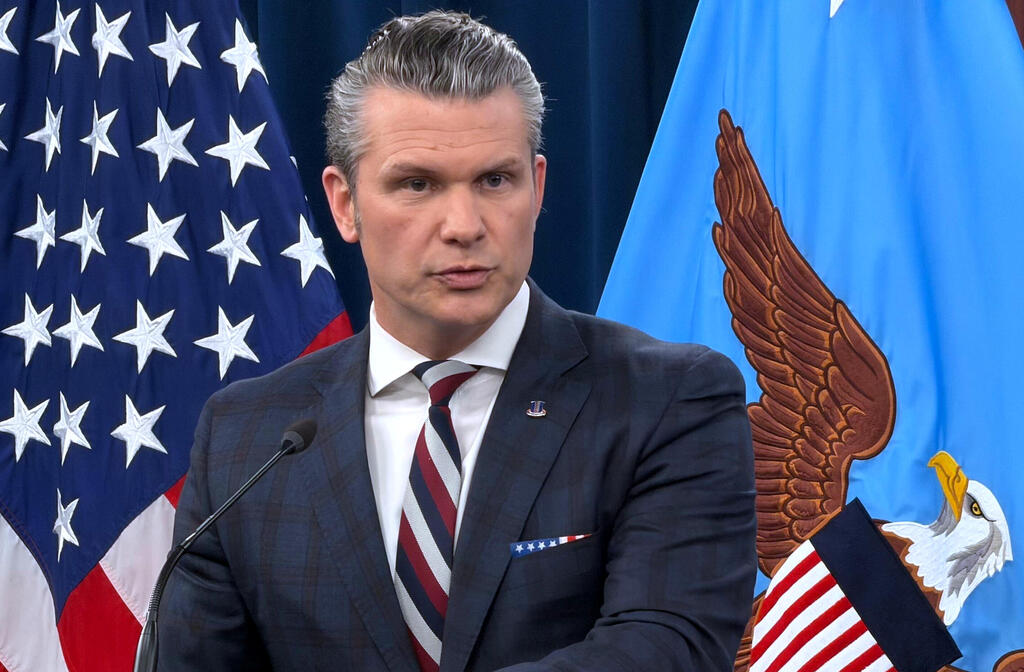
US Secretary of War Pete Hegseth
(Photo: Konstantin Toropin/AP)
“The hubris of, 'We're gonna take Afghanistan and turn it into a Jeffersonian democracy by building western-style forces and western-style institutions,' it was never gonna work,” he said. “But this is not a remaking of the Iranian society from an American perspective. We tried that. The American people have rejected that. President Trump called those wars dumb. And we're not fighting that way.”
Hegseth said surrender could take many forms but stressed that Trump — not Iran — would ultimately determine the conditions.
He also addressed Iranian missile launches and threats to close the Strait of Hormuz, saying Iran’s naval capabilities had been severely degraded.
“What was the-- Iranian Navy is largely no more. There'll be more boats to be sunk, for sure,” he said. “So their ability to project any power in that area in a naval sense is diminishing and will be increasingly diminished. Again, what I want your viewers to understand is this is only just the beginning.”
Hegseth also warned Russia, which has reportedly been providing intelligence to Iran, saying the United States is closely monitoring the relationship.
While confirming that there are currently no U.S. “boots on the ground” inside Iran, he declined to rule out such a possibility in the future.
“You don't tell the enemy, you don't tell the press, you don't tell anybody what your limits would be on an operation,” Hegseth said. “We're willing to go as far as we need to in order to be successful.”