

German Chancellor Friedrich Merz accused the far-right Alternative for Germany party on Wednesday of advocating what he called “ethnic cleansing” through its mass “remigration” policy, three days after the AfD scored a historic election victory in the eastern state of Saxony-Anhalt.
The bitter parliamentary clash came as President Donald Trump openly celebrated the AfD’s breakthrough, posting “MGGA,” apparently meaning “Make Germany Great Again,” in a German variation of his MAGA slogan.
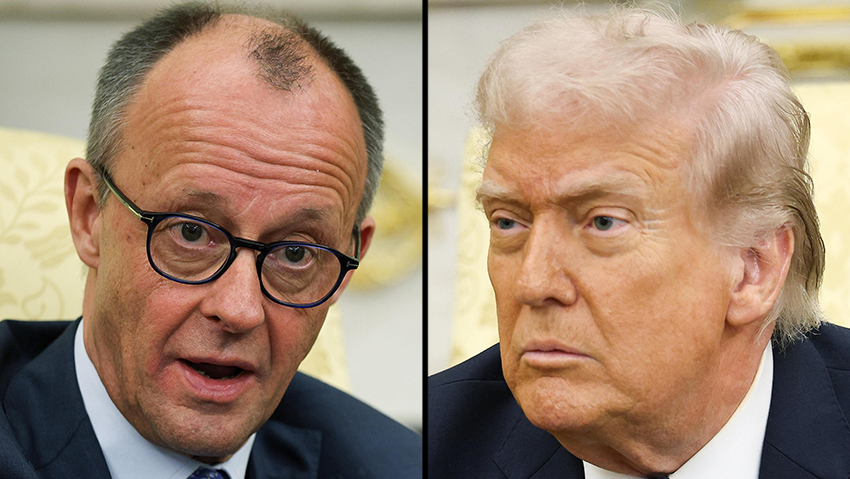
A telephone call between Trump and Merz planned ahead of the 25th anniversary of the Sept. 11 attacks was subsequently postponed. The German government did not say why, but its spokesman pointed to Merz’s longstanding opposition to foreign leaders intervening in or commenting on Germany’s domestic politics, particularly elections.
Merz confronted AfD co-leader Alice Weidel in the Bundestag after her party won nearly 44% of the vote in Sunday’s Saxony-Anhalt election, putting it within three seats of an absolute majority and raising the possibility that it could lead a German state government for the first time.
Merz’s center-right Christian Democratic Union suffered a crushing defeat, winning just over 17% and losing roughly half the support it had received in the previous state election.
The AfD’s victory has reverberated across Germany and Europe. Germany’s domestic intelligence service has classified the party as right-wing extremist.
During Wednesday’s parliamentary debate, Merz called the AfD a “destructive force” and accused it of acting against German interests through its support for Russia.
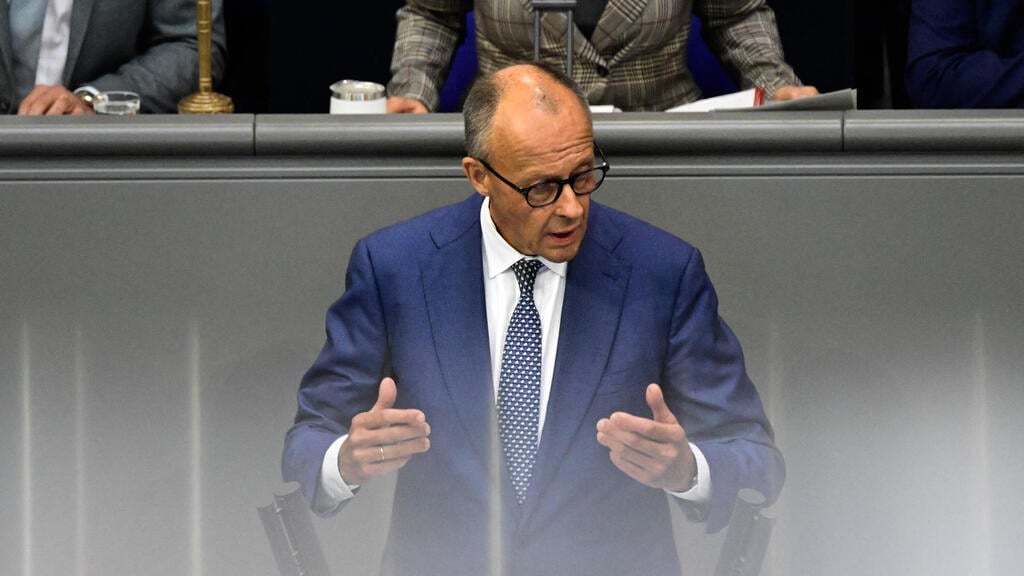
'Nothing less than ethnic cleansing of skilled workers based on skin color and origin'
(Photo: John MACDOUGALL / AFP)
He reserved his sharpest attack for the AfD’s policy of “remigration,” a term the party uses for policies aimed at sending migrants back to their countries of origin.
Merz said one in six skilled workers in Germany has a migration background and argued that implementing the AfD’s plans would amount to “nothing less than ethnic cleansing of skilled workers based on skin color and origin.”
Millions of immigrant workers are essential to the German economy, he said, warning that nursing homes, hospitals and restaurants would be unable to function if the AfD’s plans were implemented.
Merz said his government accepts that some migrants must be deported, but insisted on a distinction between those who work in Germany and contribute to its prosperity and people without a legal right to remain who, he said, “must leave our country.”
AfD lawmakers repeatedly interrupted the chancellor during his speech, prompting the Bundestag president at one point to threaten disciplinary action and remind lawmakers that “we are not at a football stadium.”
Weidel, who as leader of the largest opposition party spoke before Merz, used the AfD’s election triumph to attack the chancellor.
She told Merz that his CDU had been “ground into dust” in Saxony-Anhalt and accused his government, as well as the Social Democrats who led its predecessor, of pushing Germany toward bankruptcy.
Weidel also argued that mass immigration had left Germans facing knife attacks and violence at train stations.
“Your time is up,” she told Merz. “The public wants a change in policy, and it will get one.”
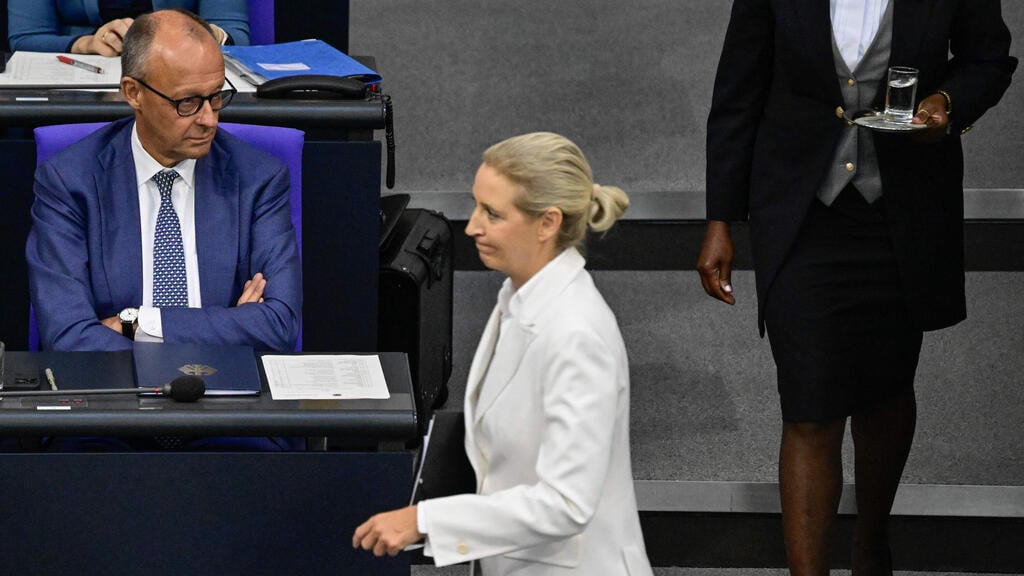
AfD leader Alice Weidel walks past Merz in the Bundestag on Wednesday. ‘Your time is up’
(Photo: John MACDOUGALL / AFP)
The AfD now hopes to translate its state-level breakthrough into national power. Weidel said the party’s goal remains victory in Germany’s next federal election and the formation of a national government.
For now, however, its path to power in Saxony-Anhalt remains uncertain. The party fell three seats short of the majority needed to govern alone, while most other parties have long rejected entering a coalition with it.
AfD state leader Ulrich Siegmund is seeking potential partners, with attention focused in part on the populist left-wing BSW.
Merz also attacked the AfD over its Russia policy, pointing to the party’s response to an explosive-laden drone found near a Ukrainian cargo aircraft at Leipzig airport last month. Germany has blamed Russia for the incident, an accusation Moscow rejects.
The political fallout from the Saxony-Anhalt election has now crossed the Atlantic.
Trump praised the result on Truth Social, writing that “the populist party in Germany just had a really big night” and saying voters had “finally gotten tired” of what he described as Germany’s “absolutely horrible immigration rules and regulations.”
“They are on the rise, and are not going to take it anymore!” Trump wrote, before signing off: “MGGA!!!”
Trump did not name the AfD directly, but the reference was clear.
His comments followed repeated expressions of support over the past two years by Trump, members of his administration and allies including Elon Musk for the AfD and other far-right European parties.
Later Wednesday, a German government spokesman said a planned conversation between Merz and Trump had been postponed and that no new date had been set.
The spokesman declined to say whether Trump’s comments about the AfD were behind the decision. He noted, however, that Merz has repeatedly opposed foreign “interference or commentary on the domestic political situation, particularly when it comes to elections.”
German public broadcaster ARD separately reported that the government described the call as postponed, rather than canceled, and said officials did not confirm that Trump’s AfD post was the reason.