

Several countries began scaling back tsunami warnings on Wednesday afternoon following a massive 8.8-magnitude earthquake that struck Russia’s far eastern Kamchatka Peninsula earlier in the day—one of the strongest quakes ever recorded.
Tsunami waves in Russia, Japan


So far, waves of 3 to 5 meters (10 to 16 feet) have been reported along parts of Russia’s coast, with waves between 1.2 and 1.7 meters hitting Hawaii and 1.3-meter waves recorded in Japan. Smaller waves were observed in California, Washington, Oregon and Alaska. While no major injuries or significant property damage have been reported, authorities in many countries continue to warn against complacency.
In some regions, preparations are still ramping up. Colombia joined the list of nations evacuating coastal areas, and tsunami waves as high as 4 meters are said to be heading toward French Polynesia. Peru also issued a coastal alert, warning of waves between 1 and 2.3 meters.
The quake struck early Wednesday and was among the most powerful in modern history—the strongest since Japan’s catastrophic 2011 earthquake and tsunami that killed about 18,000 people. The epicenter was located 119 kilometers from the Russian city of Petropavlovsk-Kamchatsky, which has a population of 165,000. The quake originated at a relatively shallow depth of 19.3 kilometers, which tends to increase surface-level shaking.
Dozens of strong aftershocks followed, including one measuring 6.9 in magnitude. Experts warn that additional tremors—some possibly as strong as 7.5—could continue throughout the month.
Kamchatka sits on the Pacific “Ring of Fire,” one of the most seismically active regions on Earth. Around 12 hours after the quake, the Klyuchevskoy volcano erupted, spewing large amounts of lava down its western slope. The Russian geological service reported glowing explosions above the peak—one of the tallest active volcanoes in the world, which has erupted multiple times in recent years.
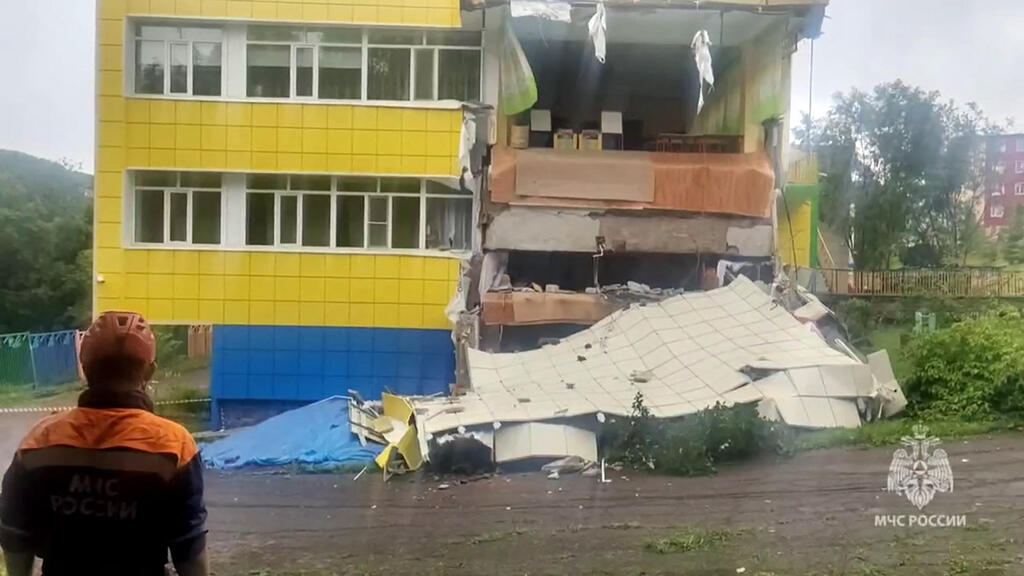
A damaged building in the Kamchatka Peninsula
(Photo: AFP/ Russia's Emergencies Ministry)
The initial tsunami warning covered an unusually long list of countries and territories: Russia, the U.S., Japan, China, the Philippines, Mexico, Chile, Ecuador, Colombia, Costa Rica, Togo, Taiwan and more. Tsunami alerts were also issued for several Pacific islands, including Guam, the Solomon Islands and French Polynesia, while even distant New Zealand—nearly 10,000 kilometers from the epicenter—urged coastal caution due to potentially dangerous sea currents.
Altogether, millions of people were evacuated from coastal areas across South America and East Asia.
By Wednesday afternoon, after waves of up to 1.7 meters reached Hawaii, local authorities said, “The worst is behind us,” and lifted evacuation orders. Ports that had been closed were gradually reopened, and suspended flights resumed. Still, officials emphasized that the warning had not been fully lifted and continued to monitor for potential flooding.
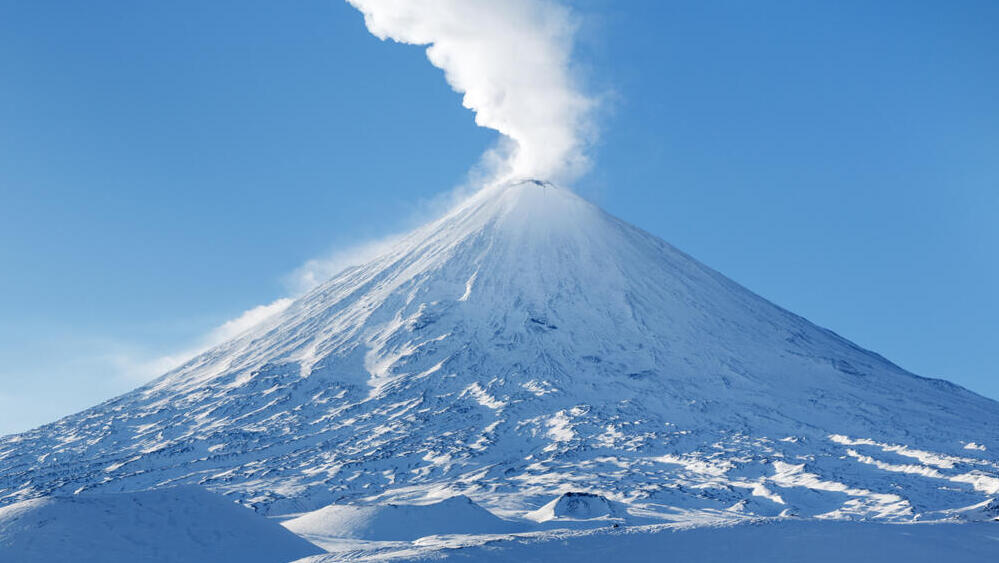
The Klyuchevskoy volcano
(Photo: Alexander Piragis/ Shutterstock)
Japan also downgraded its alert level, shifting from a tsunami warning to a general advisory. Earlier, sirens had sounded in coastal cities, and residents were told to evacuate to higher ground or upper floors of buildings. The waves that eventually reached Japan’s shores measured just 1.3 meters and caused no reported damage. Even so, Japan’s Meteorological Agency warned the public to remain on alert for at least another 24 hours.
Get the Ynetnews app on your smartphone: Google Play: https://bit.ly/4eJ37pE | Apple App Store: https://bit.ly/3ZL7iNv
In the U.S., California saw only minor waves—around 30 centimeters—but the Los Angeles weather service urged residents to remember that the first wave is not always the largest. Another branch of the National Weather Service reported tsunami activity building offshore, with waves reaching up to 70 centimeters.
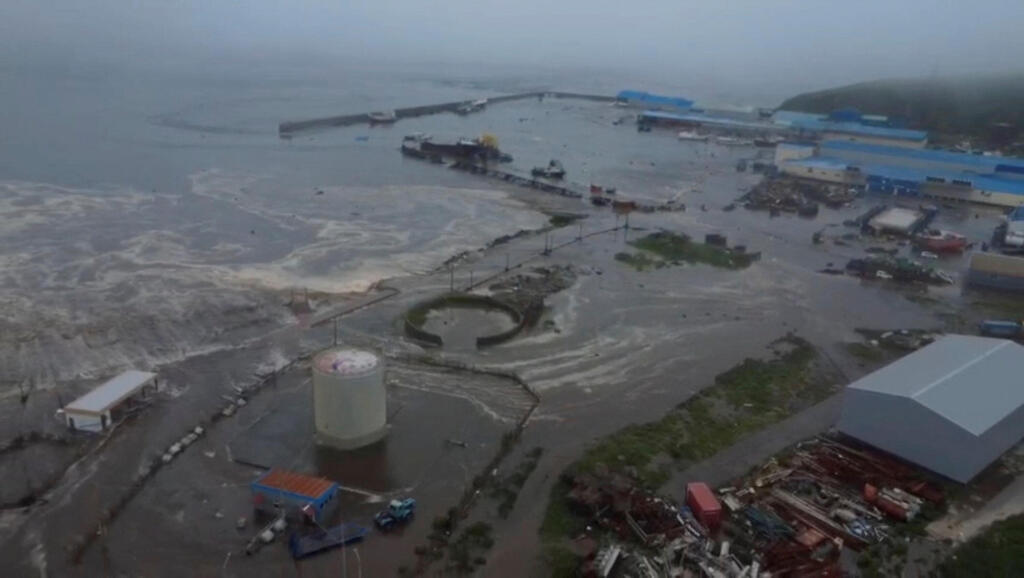
As of now, the most notable damage appears to be in Russia, where 3 to 5-meter waves hit parts of Kamchatka. In the town of Severo-Kurilsk, the waves caused flooding at the port and a fish processing facility. Boats were swept from their moorings, and a kindergarten sustained light damage. While there were no fatalities, a few injuries were reported—mainly people who were hurt while fleeing to safety.
In the city of Petropavlovsk-Kamchatsky, the quake triggered power outages and phone line disruptions. Yaroslav, a 25-year-old resident, said the shaking started gradually but intensified quickly: “The quake lasted at least three minutes, and it felt like the walls could collapse at any moment.”