


Despite explicit regulations meant to protect them, transgender soldiers in the Israel Defense Forces say the rules governing their service are not being implemented on the ground. As a result, they report repeated violations, exclusion from certain roles and damage to their rights, often by the very system meant to safeguard them.
Under existing regulations, transgender soldiers are entitled to separate sleeping quarters in soldiers’ barracks and separate shower schedules. However, several soldiers recently complained that these orders are routinely ignored. Instead of receiving protection, they say, they are left feeling harmed and marginalized.
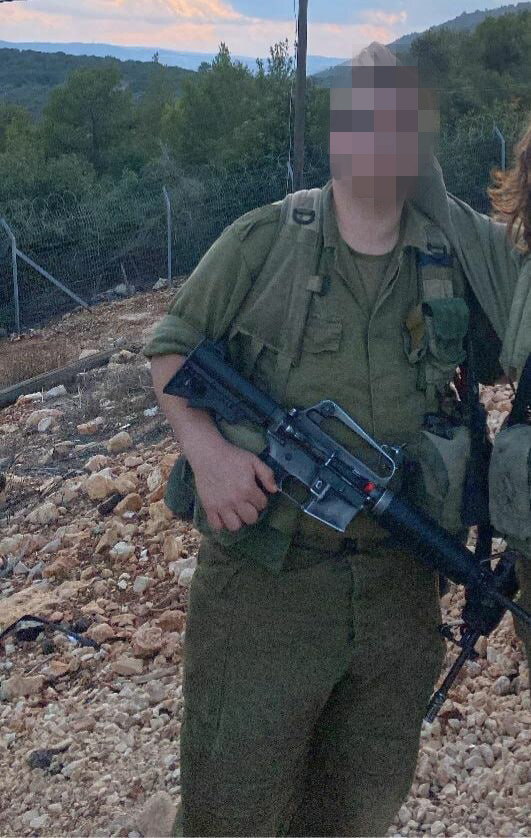
Tal, a transgender soldier
Tal, 22, from Petah Tikva, who asked that his name be changed to protect his privacy, was assigned female at birth and began his gender transition at age 14. “It included language, haircut, clothing and name, long before any physical changes,” he said. The process, which later included surgery during 10th grade, was supported by his family and close environment.
“I’m a gay man. From the moment I came out, my entire environment accepted it warmly. I didn’t encounter homophobia,” he said, noting that three other students in his class went through similar processes. “That made things easier with the system. I wasn’t alone. They did everything to make me feel comfortable.”
When he received his initial draft notice about six years ago, Tal was determined to enlist. “I’m Israeli. It’s important for me to contribute to my country, and there’s no reason my identity should prevent that,” he said. “I had friends from the community who got exemptions from a mental health officer, and others who fought to enlist. The army no longer gives automatic exemptions to transgender people, but I felt hesitation toward me.”
Tal initially wanted to serve in a combat role, but said the process was derailed by what he describes as frustrating treatment. “They dragged things out. There was no clear guidance,” he said, pointing to gaps between the recruitment office and the gender affairs noncommissioned officer meant to accompany him through screening and service.
He was eventually sent to a mental health officer, who assigned him an adjustment difficulties profile that disqualified him from combat service and officer training. “It was a very unpleasant experience,” Tal said. “There were no physical reasons preventing me from being combat. Why should a mental health officer decide what’s right for me? It felt like they weren’t considering what was good for me or beneficial to the army, only what would create the fewest frictions and make me least ‘problematic’ for the system.”
After completing a year of national service, Tal enlisted in August 2022 in a command role in the Education Corps. He was assigned a room in the women’s barracks rather than the men’s. “It was extremely uncomfortable,” he said. “I had a shaved head, a beard, men’s uniforms, after four years of hormone treatment. Throughout the course there were many uncomfortable moments, and when I raised the gaps, I was told these were the only solutions available at that base.”
After training, he was placed in a civilian environment and served in his assigned role until the outbreak of the war. His unit was then sent to operate evacuation hotels near the Dead Sea. Because no room was arranged for him, Tal was separated from his soldiers and transferred to another base.
“They removed me from command and sent me to a base where I returned home every day, just because no one arranged a separate room,” he said. “During a time of deep uncertainty, it was very important for me to be with my soldiers. It was frustrating, infuriating and diminishing. I didn’t even want a separate room, but that’s what the IDF decided was required, and in the end I was the one who paid the price. Everything felt out of my control.”
“My direct commanders and soldiers respected me and saw me as a human being,” he said. “But at the system level, everything was handled crookedly. Unfortunately, there are many roles transgender people are better off not serving in. I hope that in the future we’ll feel the system actually wants us as part of it and listens to what we want and need.”
‘The law is on my side, but it isn’t enforced’
Neta, 19, from Ashkelon, said she realized she was transgender only a few months before enlisting. “At first I wanted to be a combat soldier in the Caracal Battalion, but when I was summoned to a mental health officer, she gave me an adjustment difficulties profile just because I’m transgender,” she said.
“It was very hard. I had already imagined what my service would look like, and suddenly everything changed instead of focusing on who I am as a person and my abilities,” Neta said. She appealed the decision but felt there was no one to talk to, and with little time before enlistment, she could not push further.
After enlisting, Neta spent her entire training period in a room in the men’s barracks, in direct violation of regulations. “That should not happen,” she said. “The law is on my side, but it wasn’t implemented. I felt like a stranger in the space, constantly hiding. It was simply hard.”
She was later separated from her peers and transferred to a role unrelated to her training. “It was heartbreaking,” Neta said. “We all cried, got angry and were mainly disappointed. I did a year of national service. The state and society burn inside me. I wanted to feel that those I volunteer for have my back.”
Her current role, she said, is fundamentally different from what she was trained for, and she arrived without proper preparation. “Beyond the violation of my rights, it’s simply unprofessional,” she said. “The people I work with are also frustrated. They’re sensitive to me, but there’s a systemic failure here. If there are orders meant to protect me, someone has to enforce them.”
The frustration is well known, said Rom Ohayon, co-CEO of IGY, Israel’s LGBTQ youth movement, which supports transgender draftees and soldiers. “We see the sense of injustice felt by transgender soldiers who want to serve in meaningful roles, but the system doesn’t know how to contain them,” she said.
“The army created an excellent and welcome regulation, but one that isn’t implementable,” Ohayon added. “It passed without budgets or an explanatory process to support it. The system doesn’t enforce it, and in practice, discrimination against the transgender community persists.”
According to a survey conducted by the Magnus Hirschfeld Research Institute at IGY among transgender soldiers, it supports that 33.3 percent of transgender women, 25 percent of transgender men and 66.7 percent of nonbinary participants reported a lack of belonging in the IDF.
In addition, 40 percent said it is better to remain in the closet during military service, a 13 percent increase compared with a similar survey in 2016. More than half reported that commanders and fellow soldiers did not respect their preferred form of address, 64 percent and 71 percent respectively, in violation of IDF orders.
IDF Spokesperson’s Unit response:
The IDF provides tailored responses to the unique needs of its service members from diverse populations. A service procedure exists for transgender personnel, regulating their conditions of service, responses and possible accommodations during military service.