

The former Lebanese president who once signed a short-lived deal with Israel ending decades of a state of war now says the time is right to try again.
Amin Gemayel spoke with The Associated Press in an interview on Wednesday after the first direct talks between Lebanon and Israel since the 1980s, as they explore what could lead to a security agreement or even the eventual normalization of relations. He is part of one of Lebanon's strongest political dynasties that founded the Christian Phalange party, which held powerful positions for decades.
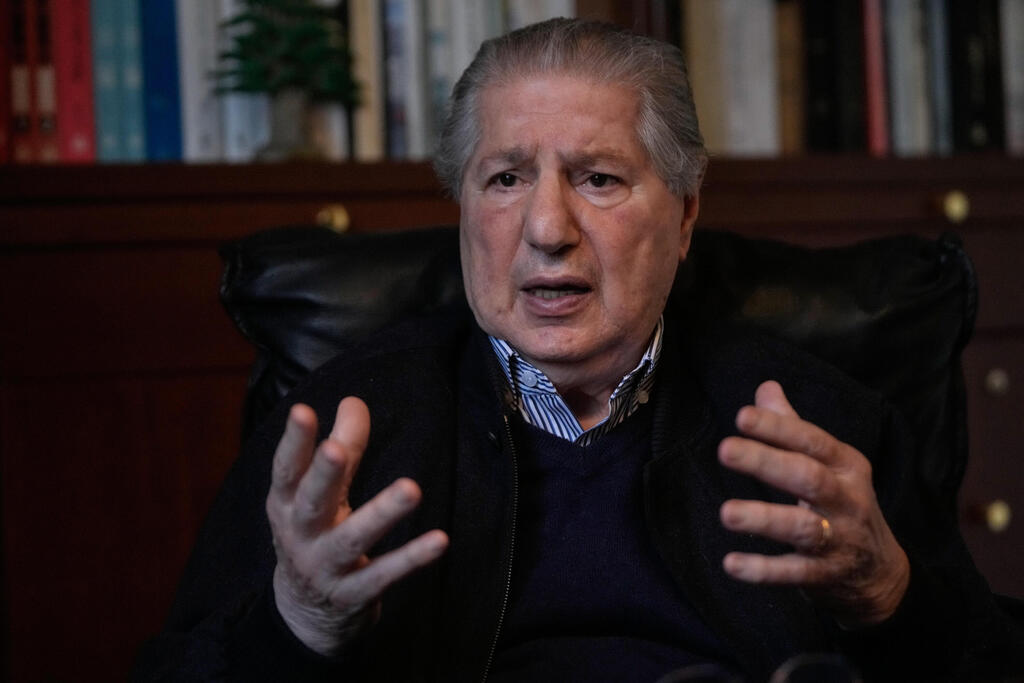
Amin Gemayel
(Photo: AP Photo/Hussein Malla)
The 84-year-old Gemayel, who rarely speaks to international media, acknowledged that much has changed as Lebanese leaders again pursue talks with Israel and as a fragile ceasefire holds. The discussions in Washington have led to angry protests as the Israeli military invasion of southern Lebanon continues, and as parts of Beirut recover from a devastating Israeli bombardment early this month.
For one, the Iranian-backed Hezbollah had only been established during Gemayel's presidency and was far from the powerful armed and political presence it has since become. Hezbollah opposes direct talks with Israel and believes Lebanon instead should support Iran in its talks with the United States, saying Tehran has more leverage.
But Hezbollah has taken major blows, Gemayel noted, and he supports its disarmament. The group's military capabilities were significantly weakened by Israel's strikes in Lebanon over the past two years. And the ouster of longtime backer Bashar Assad in Syria by Islamist-led armed opposition groups closed off much of the porous border used for transporting weapons.
Regional circumstances also have changed, Gemayel said. "During my time, discussing a peace agreement with Israel was an unforgivable, fatal crime," he said.
Now he believes there is more openness in the region, and pointed to Syria's direct talks with Israel as well as the Abraham Accords, where a handful of Arab countries, notably the United Arab Emirates, established diplomatic ties with Israel.
The deal with Israel in the 1980s crumbled quickly
Gemayel was Lebanon's youngest-ever president in 1982 when he was sworn in at 40 years old. The country was in the middle of a devastating 15-year civil war, occupied by both Syrian and Israeli troops.
He decided to enter U.S.-brokered direct talks with Israel, via a foreign ministry official, and reached an agreement in May 1983 that included ending the state of war that had existed between the countries since Israel's inception in 1948. Israeli troops would withdraw from southern Lebanon and Lebanese troops would deploy there.
Despite U.S. President Ronald Reagan's backing at the time and the Lebanese parliament voting overwhelmingly in favor of the agreement, it never went into effect. Gemayel blamed Syria and its allies in Lebanon, which were critical of any talks with Israel from the start, as well as Israel itself.
"Israel, though we had finished the negotiations and reached the stage of signing, tried to impose an article outside of the framework of the agreement, which was the simultaneous withdrawal alongside the Syrian army in Lebanon. So the Israeli military wouldn't withdraw unless the Syrians would," Gemayel said.
"It gave the Syrian military a veto on the agreement ... and a public atmosphere of doubt that (then-Syrian president Hafez) Assad and his crew created."
But now, Gemayel said, Lebanon's leaders should pursue a long-term peace deal. Even an armistice, like the one signed in 1949 to bring calm to tense frontier for 18 years, could be a good step forward, as long as it keeps the country in one piece.
Lebanon's president seeks a step short of full normalization
President Joseph Aoun has said he is seeking a deal similar to the 1949 agreement, not a full normalization of relations with Israel.
The move by Aoun and Prime Minister Nawaf Salam to enter into direct talks with Israel was met with both wide support and criticism in the deeply divided country. The officials have said the negotiations are the only way to secure the withdrawal of Israeli troops and bring about long-term calm.
"There is an opportunity for the Lebanese government to go into negotiations to reach a solution that achieves peace, security and stability in Lebanon," Gemayel said.
"That would also satisfy the feelings of Lebanese who yearn for the bare minimum of calm, peace, stability and an end to the war."
During this latest round of fighting between Israel and Hezbollah, which began two days after the U.S. and Israeli attacks on Iran on Feb. 28, over 2,500 people in Lebanon have been killed and over one million people displaced.
Israeli troops remain in large swaths of southern Lebanon and continue to clash with Hezbollah fighters despite a truce being nominally in place. Both sides accuse each other of violating the ceasefire.
Lebanese have largely been critical of Hezbollah's decision to launch rockets into Israel on March 2, but they have also been horrified by Israel's bombardment and ground invasion.
Gemayel said the situation remains complicated, especially in a "boiling region" suffering from serious security and economic repercussions from the Iran war.
"We have to see how far we can go," he said. "We trust General Aoun to enter negotiations as far as they go while maintaining the interests of the country and the unity of Lebanon. And he knows exactly how far he can go in negotiations."
More than 1 million in Lebanon expected to face acute food insecurity
A new analysis published Wednesday by the Integrated Food Security Phase Classification (IPC) has found that 1.24 million people in Lebanon will be unable to consistently meet basic food needs and will be forced to reduce the quality and quantity of foods consumed, or resort to harmful coping strategies to survive in the months ahead as a result of renewed conflict and mass displacement.
"These results underscore the severity of the current situation in Lebanon, where conflict intersects with economic pressures putting national food security under critical risk and juncture," said Nora Ourabah Haddad, the Food and Agriculture Organization of the United Nations' representative in Lebanon.
The nearly two-month war between Israel and the Lebanese terrorist group Hezbollah has displaced more than 1.2 million people in Lebanon, with many heads of households out of work and relying on donations to survive as the regional conflict drives up food prices.