

Germany’s foreign intelligence chief warned Monday that the country faces a real risk of being drawn into a violent confrontation with Russia, saying Moscow is escalating its “shadow war” against European democracies and is prepared to intensify sabotage and other hostile operations.
“The confrontation we are in with Russia has taken on a new and more dangerous dimension,” Martin Jäger, head of Germany’s Federal Intelligence Service, or BND, told lawmakers during the annual public hearing of the country’s intelligence chiefs.
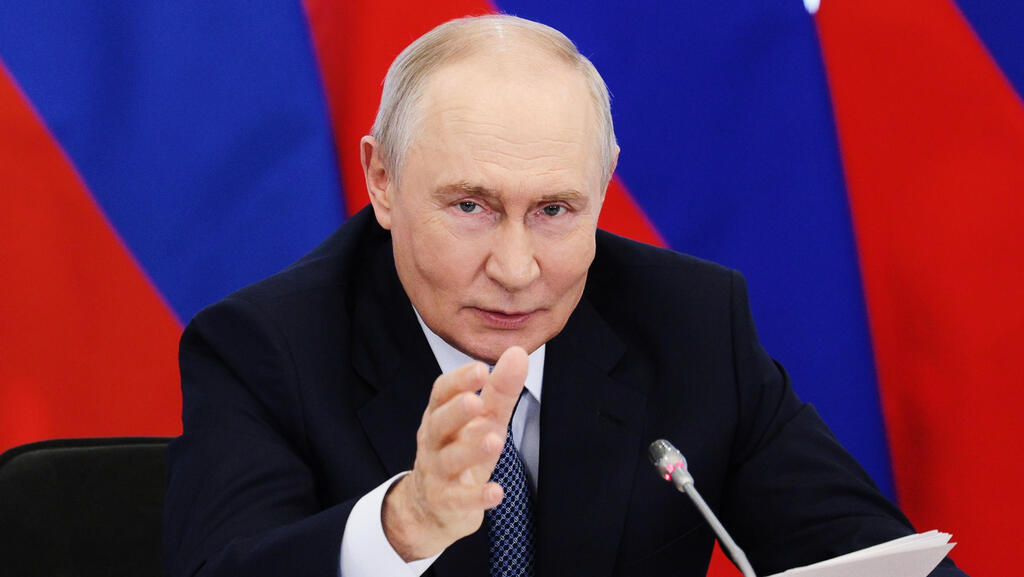
Russian President Vladimir Putin
(Photo: Gavriil Grigorov, Sputnik, Kremlin Pool Photo via AP, File)
“Moscow is betting on our weakness,” he said. “The danger of attacks against targets in Germany remains real.”
Germany’s domestic intelligence chief separately warned that Russia was prepared to carry out sabotage, disruption and killings as part of its campaign against Western countries.
Jäger cited an alleged attempted attack at Leipzig airport in August as an example of the threat. German authorities have said Russia sent an explosive drone to the international airport, where it was found near a parked Ukrainian cargo aircraft that reportedly carried military ammunition.
Putin’s hard-to-stop drones explode on Kyiv bridges


Germany has repeatedly accused Moscow of conducting a hybrid campaign against European countries involving drones, cyberattacks and other acts of sabotage.
Russia has consistently denied plans to attack NATO members.
“We are not threatening anyone and have no intention of attacking anyone, not in 2029, not in 2030 and not in 2050,” Russian President Vladimir Putin said Thursday. “But if we face aggression, we will have no choice but to respond.”
Jäger said Russia could carry out relatively limited military actions against the Baltic states of Lithuania, Latvia and Estonia, though he did not expect Moscow to launch a major attack on NATO territory.
He also argued that Putin had passed the point at which he could simply end the war in Ukraine without placing his own rule at risk.
The war, Jäger said, is entering another increasingly dangerous phase, with even more severe Russian attacks expected during the coming winter.
Ukraine turns to AI against Russia’s new jet drones
The German warnings come as Russia has repeatedly struck homes, warehouses and bridges in Kyiv in recent days using a new generation of fast, relatively inexpensive jet-powered drones.
Their introduction caught Ukrainian defenses off guard. Ukrainian President Volodymyr Zelenskyy has acknowledged that Kyiv is currently intercepting only about 60% of the new drones, relying heavily on F-16 and MiG fighter jets.
Ukraine is now racing to develop another answer.
Serhiy “Flash” Beskrestnov, an adviser to Zelenskyy on defense technology, said 12 automated firing positions have been deployed around Kyiv to intercept the new jet-powered Shahed drones.
He described the Ukrainian-developed systems as machine guns controlled by artificial intelligence and said additional units would be installed.
The new drones pose a particular problem because their speed makes them harder for existing Ukrainian interception systems to catch.
Kyiv claims 51% of Russian refining capacity disabled
Against the backdrop of the intensified Russian drone campaign, Zelenskyy has vowed to expand Ukrainian attacks on oil facilities deep inside Russia.
Moscow warned Monday that Kyiv would face consequences if the campaign intensified.
Ukraine’s Defense Ministry said Sunday that recent long-range attacks on refineries across Russia, from the Moscow region to Siberia, had disabled 51% of the country’s oil-refining capacity.
The figure is a Ukrainian assessment and has not been independently confirmed by Russia.
The strikes contributed to a broad fuel shortage in Russia over the summer, forcing authorities to impose restrictions on gasoline sales.
Russian officials have not publicly released detailed figures on damage to the country’s oil infrastructure. Putin, however, acknowledged Thursday that the attacks had inflicted economic damage.
“They began attacking oil refineries and openly declared that their goal was to damage our economy,” Putin said at a meeting of the Valdai Discussion Club. “Did they achieve their goal? Partially.”
He said the strikes had cost Russia about 1% of its gross domestic product.
Ukrainian Defense Minister Yevhen Khmara said the estimate on refinery damage was compiled by analysts from Ukraine’s intelligence services, General Staff and Defense Ministry.
“Damage to 51% of refining capacity is a significant blow to the enemy’s economy, its ability to wage aggression and supply its forces,” he said. “Our deep strikes continue to carry the war into Russian territory.”
Russian drone attacks continue
Russian drone attacks inside Ukraine continued overnight.
One person was killed and six others were wounded in Kharkiv after drones struck the city, setting vehicles and an administrative building on fire and damaging residential buildings.
Russia’s Defense Ministry said its forces had struck energy facilities and vessels used by the Ukrainian military in the Kharkiv region.