


In the wake of the Republicans' historic defeat in the U.S. midterm elections and the Democratic "blue wave" that swept the country, The New York Times reported Thursday that a breakthrough may be possible in negotiations to end the war between the United States and Iran. Citing five officials familiar with the talks, including American and Iranian officials, the newspaper reported that Tehran was considering a series of proposals presented by mediators that could shape the future of its nuclear program.
According to the report, which highlighted Qatar's mediation efforts between Tehran and Washington, Iran's willingness to reengage in nuclear negotiations after weeks of refusing to soften its position suggests that recent Qatari-led diplomatic efforts to prevent a return to all-out war have achieved some success. The officials told the newspaper that the terms now being considered to end the conflict amounted to "concrete proposals."
Mohsen Rezaei meets Russian President Vladimir Putin at the Kremlin in Moscow


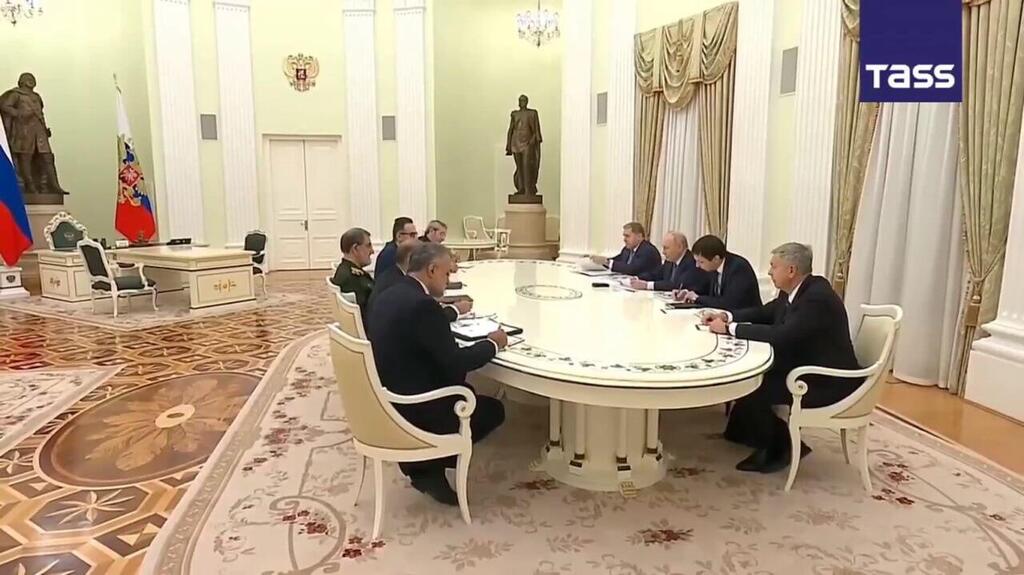
Meanwhile, Russian media reported that President Vladimir Putin met in Moscow with Mohsen Rezaei, secretary of Iran's Supreme National Security Council. "We held consultations with Putin on important regional issues," Rezaei said following the meeting, according to the reports. "The supreme leader asked me to convey his message to Putin as soon as possible. The Russian president sent warm and sincere greetings to the supreme leader." Rezaei was referring to Mojtaba Khamenei, who has not appeared publicly since his father was killed at the beginning of the war.
Rezaei holds one of the most powerful and influential positions in the Islamic Republic. He replaced Mohammad Bagher Zolghadr, who had assumed the role in March following the killing of Ali Larijani, a longtime central figure in Iran's leadership, in an Israeli strike during Operation Roaring Lion. Rezaei previously served as an adviser to Supreme Leader Mojtaba Khamenei, is considered close to him and commanded the Islamic Revolutionary Guard Corps for 16 years.
"We held important discussions concerning the postwar period and regional security arrangements," Rezaei said. "President Putin condemned the attacks on Iranian nuclear facilities and regarded the war against Iran as unjust. He declared that he would do everything in his power to help bring the war to an end." Rezaei added that the meeting also addressed the possibility of constructing gas pipelines from Russia to Iran, a project intended to alleviate Iran's domestic gas shortages while allowing Russian gas to be sold to neighboring countries.
An Iranian source described as knowledgeable about the talks told Lebanon's Hezbollah-affiliated Al Mayadeen television network that Rezaei had made clear Tehran would not reopen the Strait of Hormuz until its conditions were met and would not negotiate over that decision.
What will Trump do?
On Wednesday, following the Republicans' crushing midterm defeat, U.S. Vice President JD Vance published a lengthy post on X outlining what he regarded as the four main reasons for the party's losses. Chief among them was the war with Iran, followed by the rising cost of living, the failure to implement what voters expected from an "America First" policy and the relationship between the United States and Israel. Trump later acknowledged that his vice president was largely correct but insisted that the war had been worth the cost.
"I think that's largely true, because the war did cause some increase in gasoline prices in the short term," Trump said of Vance's assessment. "But at the same time, if I had to make the decision again, I would have to do exactly the same thing, because in the long term, that's the only solution. Iran must not be allowed to have a nuclear weapon."
Nevertheless, White House officials and staff told Reuters overnight that Vance's post had surprised many in Washington. According to the report, White House officials had been informed of the post before its publication, but one official described it as a departure from Trump's position, even though the president acknowledged that his deputy was largely right. American officials who spoke to Reuters said the possibility of renewed strikes against Iran was still under consideration despite the Republicans' midterm defeat, and perhaps even because of it.
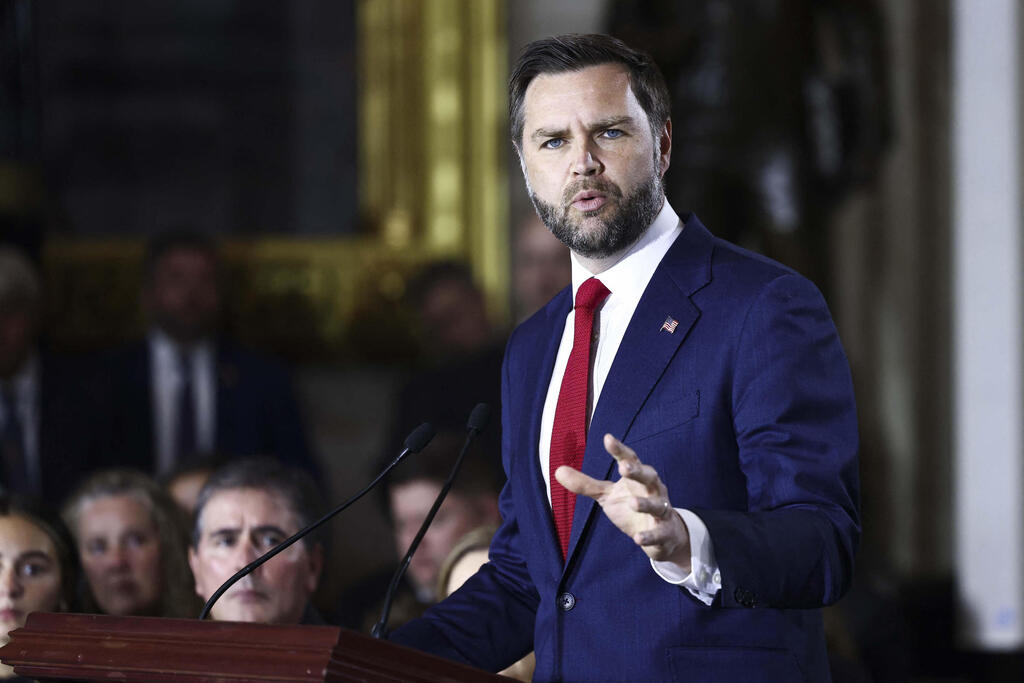
JD Vance
(Photo: JIM LO SCALZO / POOL / AFP)
According to two sources familiar with the matter, Trump received a briefing last week from Admiral Brad Cooper, commander of U.S. Central Command, on possible options for resuming military operations against Iran, with no clear diplomatic path to ending the conflict in sight. U.S. intelligence assessments in recent months, according to an intelligence official and two other senior American officials, indicate that renewed strikes would not substantially change Tehran's negotiating position and would be even less likely to bring about the collapse of the Iranian regime.
Despite those assessments, officials familiar with the deliberations warned that Trump could still order military action. They noted that he had been aware of the political risks ahead of the midterm elections but "simply didn't care." One source told Reuters that the likelihood of renewed fighting could now be greater because Trump has "nothing to lose politically" with the elections behind him. The source assessed that the president could adopt a tougher position toward Iran and move to resume strikes.
Another source agreed that renewed military operations were now the most likely scenario, saying: "He's planning to bomb Iran. Don't listen to what he says. He held back because of the midterms. We asked him to wait until after the elections."
In any event, Israel is preparing for every possibility, and the IDF has already begun preparations for a potential return to war with the Islamic Republic. Israeli officials caution against attempting to decipher the American president's intentions. One senior Israeli official said Trump "could ignore them and attack simply to show that he's strong and doesn't care about the election results." Another Israeli source familiar with the situation stressed: "There is no way to predict Trump's behavior."