


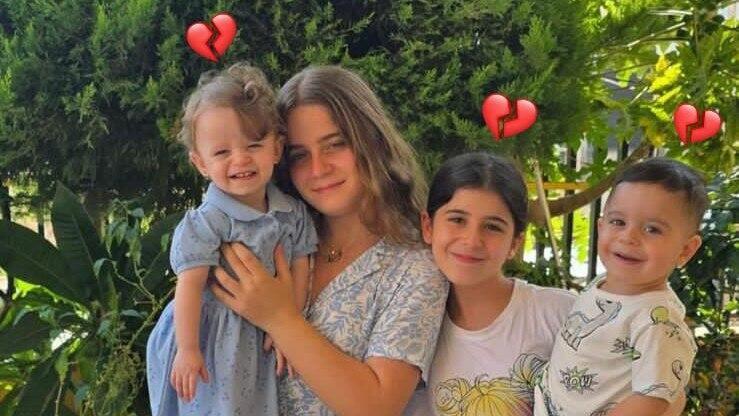
Lebanese media reported Sunday that five people were killed in an Israeli strike in the southern town of Bint Jbeil. The attack reportedly targeted a motorcycle carrying a suspected Hezbollah operative. Four of the dead were said to be members of one family — a father and three children.
Local outlets in Lebanon and the wider Arab world described the incident as a “massacre.” Israel has not claimed responsibility or commented on the target, though Saudi-owned Al-Hadath television identified one of the dead as Hezbollah member Mohammed Marwa.
Israeli strike in southern Lebanon


Lebanese President Joseph Aoun, in New York for the UN General Assembly, also called the strike a “massacre.”
“While we are in New York to discuss peace and human rights, Israel continues to violate international resolutions, above all the cease-fire agreement, and has carried out a new massacre in Bint Jbeil that took five lives, including three children,” he added. “From New York, we call on the international community and its leaders at the UN to act to stop these violations and pressure Israel to withdraw from Lebanon and comply with the November cease-fire declaration.”
The strike came three days after the Israeli military carried out widespread attacks in southern Lebanon against weapons depots belonging to Hezbollah’s Radwan force. The army said civilians had been evacuated from the area three hours before those strikes.
On average, Israel’s Northern Command carries out enforcement strikes against Hezbollah targets every two days, including operatives and commanders, according to the military. Hezbollah has not responded to most of the recent raids.
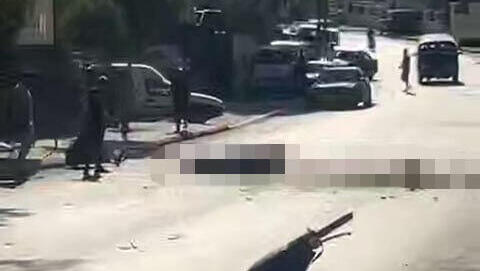
The scene at Bint Jbeil
Military officials say Hezbollah is attempting to rebuild its capabilities, partly with cash deliveries from Iran — some intercepted — and through training exercises both near and far from the border. While Israel has focused on Shiite strongholds like Nabatieh with airstrikes, it has not yet pushed into Hezbollah’s third defensive line of villages in southern Lebanon or reached all of the group’s weapons stockpiles north and south of the Litani River.
The IDF estimates Hezbollah still possesses dozens of precision-guided missiles, thousands of rockets, and a large fleet of drones, some manufactured domestically after Syria’s civil war cut off overland smuggling routes.