

Ukraine has sharply increased its use of Flamingo cruise missiles in recent months, launching them at targets deep inside Russia and reportedly causing extensive damage.
The story of the missile, which entered operational service only a year ago and moved into large-scale production in recent months, reflects the unusual character of Ukraine’s defense industry: improvising, expanding and finding battlefield solutions while fighting a grinding war against Russia.

At the center of that story is Iryna Terekh, a 35-year-old architect from Kharkiv who has emerged as an unlikely figure in an overwhelmingly male industry.
Terekh grew up in the northeastern Ukrainian city, one of the places most heavily bombarded by Russian forces, and eventually decided that she could no longer remain on the sidelines.
When Russia launched its full-scale invasion of Ukraine in February 2022, Denys Shtilerman, the founder of Fire Point and a close friend of Terekh, persuaded her to help establish the weapons company.
In early 2023, the team assembled the first prototype of one of its strike drones inside a hot, makeshift garage. Employees worked exhausting shifts and slept as little as three hours a night.
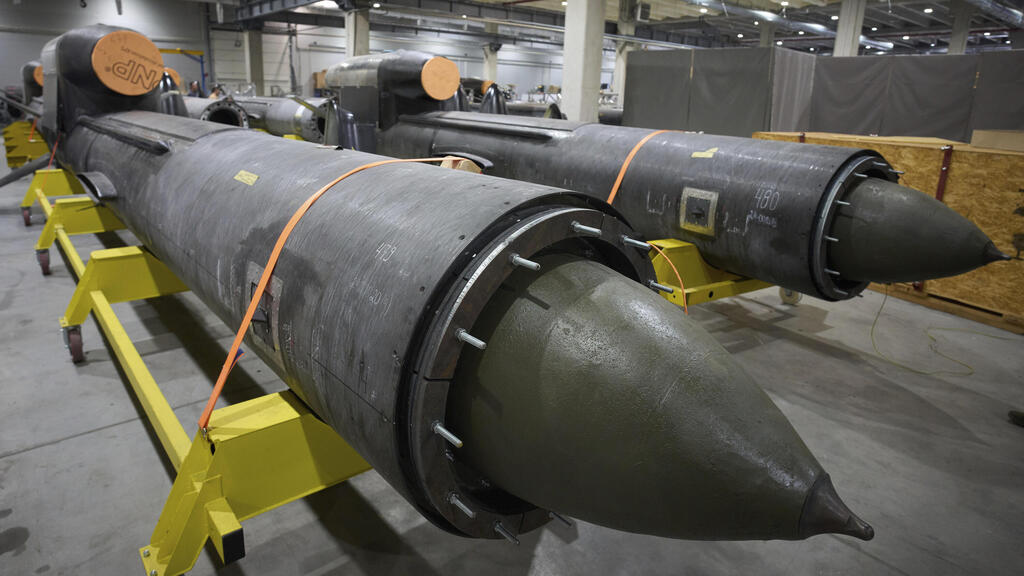
A Ukrainian-made Flamingo cruise missile at a secret production facility
(Photo: AP Photo/Efrem Lukatsky)
Critics ridiculed the operation as amateurish and dismissed its work as “garage engineering.” Terekh embraced the description.
In a war relying heavily on volunteers and rapid adaptation, she argued, weapons had to be simple, dependable and easy to manufacture in large quantities.
The company’s growth appears to have vindicated that approach.
Fire Point is now far removed from its modest beginnings. It operates 83 production facilities across Ukraine and another factory in Denmark, employs about 6,000 people and manufactures thousands of drones each month.
Alongside them, the company produces approximately 100 Flamingo long-range cruise missiles a month.
The missile carries a heavy warhead containing more than a ton of explosives and is designed to penetrate concrete walls, giving Ukraine a domestically produced capability to strike fortified and distant targets.

Terekh grew up in the northeastern Ukrainian city, one of the places most heavily bombarded by Russian forces
(Photo: HENRY NICHOLLS / AFP)
In one of the weapon’s most notable missions, a Flamingo reportedly followed a complex flight path of about 1,800 kilometers before striking a military-components plant deep inside Russian territory.
The missiles have also been used against Russian oil refineries. Those strikes were reported to have helped reduce Russia’s fuel production by about 20%, while giving Kyiv an independent long-range capability that its Western partners had been reluctant to provide during the early stages of the war.
Fire Point’s rapid expansion has not been free of controversy. The company has faced allegations that it received preferential treatment from the Ukrainian government, as well as regulatory delays connected to reviews of corruption claims.
Terekh, however, is already looking beyond the Flamingo.
Her next ambitions include developing Ukraine’s first ballistic missiles and helping establish an international air-defense coalition, another leap for a company that began with an improvised workshop, minimal sleep and a weapon its critics dismissed as garage engineering.