


Israeli Air Force jets are taking off in concentrated waves, flying more than 1,500 kilometers each way in order to reduce the need for complex aerial refueling operations. When the “train” arrives, the forces split off to different targets — regime sites, air defense systems — but the main mission appears to focus on Iran’s ballistic missile launch and production arrays.
The mission is being conducted on several levels. Although Iran is still managing to fire toward Israel and at targets in the Persian Gulf, the force multiplier created by Israeli-American cooperation is enabling a relatively successful response to Iran’s firepower across the vast country.
The IDF destroys a missile launcher truck
(Video: IDF )


Iranian footage shows drones emerging from a tunnel to attack US bases
The complexity of the challenge stems from the fact that in the previous war in June last year, Israel struck a production and launch network that was not seriously prepared for a surprise attack. Following Operation Rising Lion, the Iranians dispersed their missile storage and launch systems, making it far more difficult to strike them in a single concentrated operation.
Storage and launch sites: Most are located in the Zagros Mountains in northern and western Iran, where numerous caves have been easily expanded into missile storage facilities. They often have several entrances, some concealed and camouflaged. The Israel Defense Forces’ goal is to locate and block them.
Under Iran’s operational method, a missile — or several missiles — emerges on a launcher from one of the openings to a pre-leveled launch site. The missile is then erected and can be fired. If it is solid-fueled, launch can occur within minutes. If it is liquid-fueled — most of the simpler-to-produce missiles fall into this category — fueling takes several dozen minutes and is carried out in the open.
Israeli Air Force attack drones are primarily operating against these sites. They must identify a launch in real time, though they do not have to remain directly overhead, both to avoid detection and because identification can be carried out through other means, including satellites and various ground and aerial sensors. The drones must be close enough to fire and strike an exposed missile before launch, and fast enough to hit a missile moving into launch position.
Air Force officials say significant risks are being taken for this mission. In recent days, some drones have been damaged or destroyed, but that was anticipated. Destroying or sealing the cave facilities, however, requires fighter jets.
A 'missile city' unveiled by Iran last year
Another target category comprises more sophisticated and fortified sites — underground “missile cities,” a term used by Iran to describe subterranean complexes it has showcased in propaganda videos showing vehicles driving below ground. These sites also include underground launch facilities that are far more difficult to detect and strike.
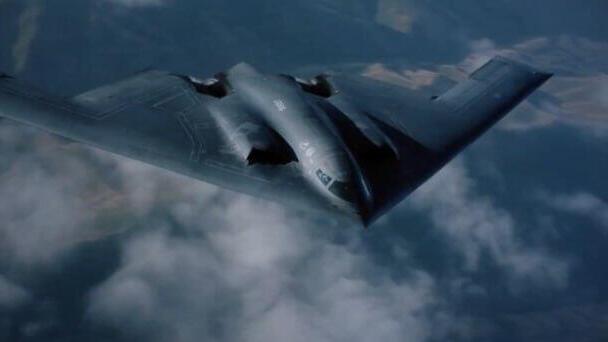
Here the Americans enter the picture with GBU-57 bunker-buster bombs carried by B-2 bombers, which operate mainly at night and are escorted by F-22 fighter jets, along with electronic warfare aircraft. For logistical reasons, the B-2s primarily take off from the United States. This is an especially critical mission requiring great precision, as a difference of a meter or two from a tunnel can negate the desired effect — unlike centrifuge facilities, for example, where shock waves alone can cause damage.
Beyond the “missile cities,” the Americans are also operating extensively against the first type of storage and launch sites mentioned above, particularly those east of Qom. Deeper penetration is required there, making an approach from the south more convenient.
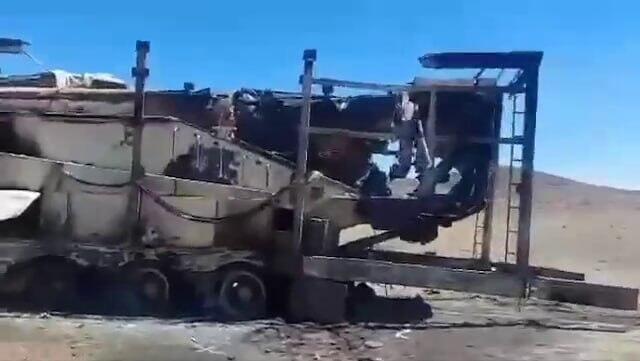
A third cluster of targets consists of launcher trucks. For camouflage, Iran has mounted many Shahab and Emad missiles on trucks that, when closed, appear to be standard shipping containers. In a process reminiscent of “Transformers,” the container opens upon reaching a pre-prepared launch site, the missile is erected and then fired. Iran has previously released footage of such operations.
'Transformers'
Locating the trucks presents a significant challenge, as during daylight hours they travel on highways like ordinary trucks and cannot be bombed. They are identified by their structure, with the assistance of artificial intelligence, and efforts are made to analyze travel patterns and points of origin. Drones are used against them. Specialized Israeli and American satellites can track such movement down to the level of license plates. One reason for the relatively limited number of nighttime launches, incidentally, is that trucks traveling at those hours would be considered unusual.
Another critical component is missile production sites. After Operation Rising Lion, Iran retained planetary mixers used to manufacture solid rocket propellant for solid-fueled missiles. In addition, it continues to produce liquid-fueled missiles at a relatively rapid pace. The facilities are dispersed across the country: some produce chemical materials, others manufacture missile components, electronic systems and navigation equipment. Most are concentrated in the Kermanshah, Tabriz, Karaj and Qom areas.
In fact, in the weeks before the war, many production systems were dismantled and hidden — even in the midst of manufacturing — leaving intelligence gaps. The objective is that by the end of the war, even if the United States lifts sanctions on Iran, it will be difficult to impossible for Tehran to revive its industry.
Overall, in the face of Iranian methods designed to complicate detection and targeting, intelligence coordination and division of labor have become crucial. This time, Israeli and American assets are working together to hunt launchers and missiles — a game changer in countering Iran’s concealment efforts.