

Austria’s Interior Ministry has announced that renovation work begun in 2023 to convert Adolf Hitler’s birthplace into a police station is nearing completion.
The new purpose was chosen to prevent neo-Nazi pilgrimages to the house, but it has sparked criticism locally.
Gallery
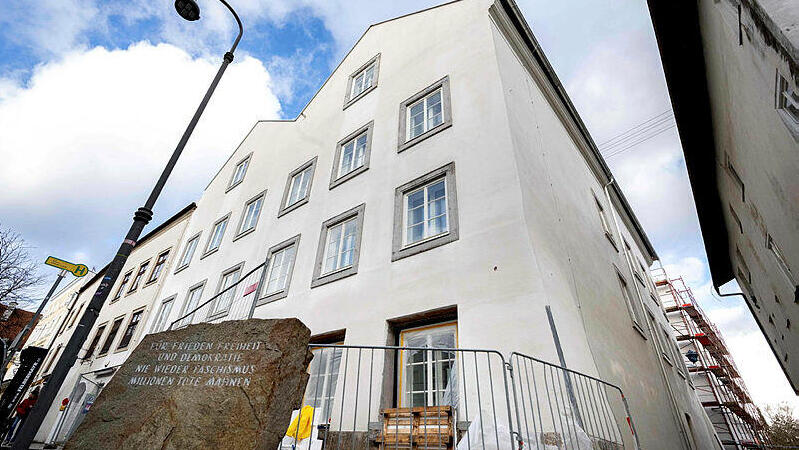
Adolf Hitler’s home in Austria after renovations, to become a police station
(Photo: Joe Klamar / AFP)
In the small northern town of Braunau am Inn, near the German border, workers were seen installing window frames as the building’s old yellow plaster was replaced with a modern, angular white facade. The project is running about three years behind schedule. Construction is expected to be completed by the end of the first quarter of 2026, the ministry told AFP, with operations set to begin in the second quarter.
Authorities hope the move will close a long and sensitive chapter in a country criticized for failing to fully acknowledge its responsibility for the Holocaust. The far-right Freedom Party of Austria, founded by former Nazis, leads in opinion polls after winning the 2024 parliamentary election but failing to form a government.
“It’s a double-edged sword,” said Sibylle Treiblmaier, a 53-year-old administrative assistant, referring to the building’s new role. While she understands the government’s aim of neutralizing the site, she said another use could have been found for the 17th-century house where the dictator was born on April 20, 1889.
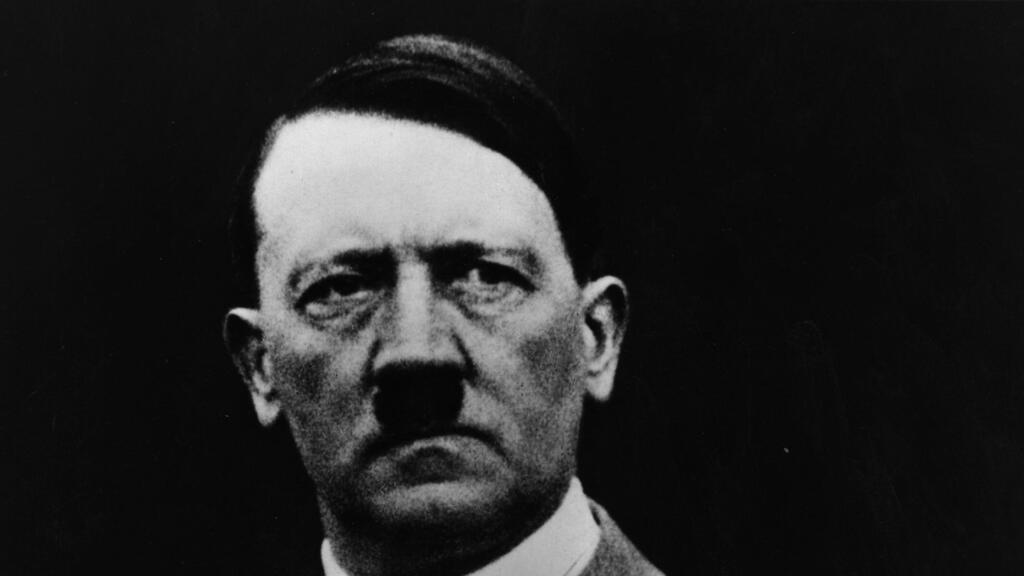
Adolf Hitler
(Photo: Hulton Archive / Getty Images)
A magnet for neo-Nazis
The house, owned by the same family since 1912, had been rented by the Austrian state since 1972 and was used, among other things, as a center for people with disabilities, a group persecuted by the Third Reich.
The address has regularly attracted neo-Nazis. The last private owner, Gerlinde Pommer, vetoed structural changes and fought expropriation through the courts.
In 2016, a special law was required to ensure public interest prevailed. Three years later, Austria’s Supreme Court approved the purchase of the 800-square-meter property for 810,000 euros. Pommer had demanded 1.5 million euros, while the state initially offered 310,000.
Several options for the two-story building were considered. An expert commission decided against turning it into a memorial site to avoid making it a magnet for neo-Nazis. Demolition was also ruled out, as historians argued Austria must “confront its past.”
Ultimately, though not unanimously, the decision was made to convert it into a police station to “clearly demonstrate,” the government said, that no commemoration of Nazism would be permitted there.
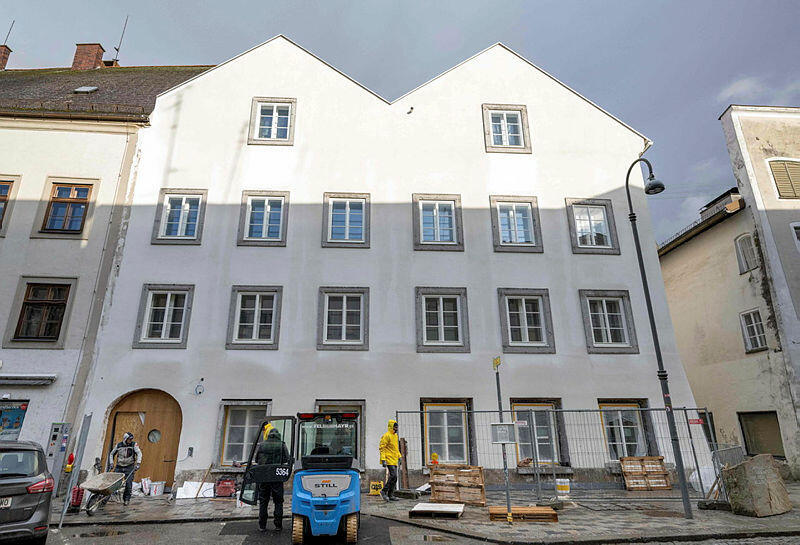
(Photo: Joe Klamar / AFP)
The government launched an architectural competition, and the winning design by Austrian firm Marte involves raising the building with a new roof and expanding it.
“Even a police station is a problematic choice, because in every political regime the police are obliged to do what they are told,” said Ludwig Laher, a writer and member of the Mauthausen Austria Committee, an organization of concentration camp survivors. He said he would have preferred an alternative proposal that had received broad support: establishing a center to promote pacifism.
Yasmin Stadler, a 34-year-old shopkeeper in Braunau, criticized the project’s 20 million euro cost and said the building’s history should have been explained more extensively.
By contrast, Wolfgang Leitner, a 57-year-old electrical engineer, said turning it into a police station could help “bring, hopefully, a bit of calm” to Braunau, whose municipality only last year renamed two streets previously named after Nazis.
Around 65,000 Austrian Jews were murdered and about 130,000 were forced into exile during the Holocaust.