

The High Court of Justice on Thursday heard arguments regarding the controversial appointment of retired judge Josefh Ben-Hamo to oversee the investigation into former military advocate general Yifat Tomer-Yerushalmi, following the leak of sensitive footage from the Sde Teiman detention facility.
The panel hearing the case—comprising Supreme Court Chief Justice Yitzhak Amit, Justice Yael Wilner, and Justice Khaled Kabub—differs from the one that previously ruled Justice Minister Yariv Levin could appoint a legal overseer to the investigation.
Gallery
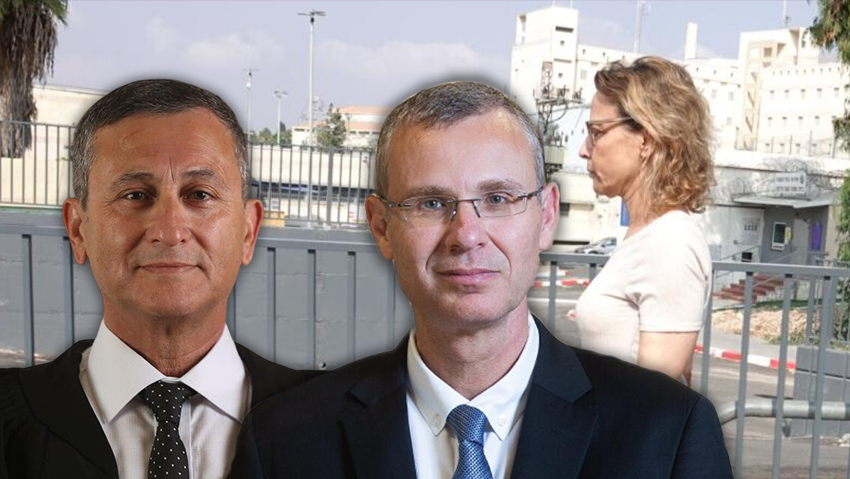
Retired judge Josefh Ben-Hamo, Justice Minister Yariv Levin, former military advocate general Yifat Tomer-Yerushalmi
(Photo: Judicial Authority, Alex Kolomoisky, Shaul Golan)
At the center of the dispute is whether Ben-Hamo meets the criteria set by the earlier court ruling, which stipulated that the appointee must be a senior civil servant with no political affiliation and a background in criminal law. The State Attorney’s Office argues Ben-Hamo’s appointment should be voided, claiming he does not meet those standards and was effectively hired as a temporary civil servant for this role alone.
“The justice minister did not assign the task to a senior state employee, a requirement rooted both in the law and in the court’s prior ruling,” representatives of the Attorney General’s Office said, adding that the appointment also suffered from factual irregularities regarding the exercise of authority.
Justice Minister Levin defended the appointment, warning of potential harm to the investigation if delays persist. “Every hour that passes increases the risk of obstruction of justice and irreversible damage to the investigation,” Levin argued in a submission to the court. “History will judge who sought the truth and who acted to conceal, delay or derail it.”
Levin’s selection of Ben-Hamo followed the court’s initial approval for appointing a non-political legal professional with criminal law experience to oversee the probe. The appointed overseer's powers are limited to supervising the investigation itself, while any prosecutorial decisions will remain under the authority of Attorney General Gali Baharav-Miara.
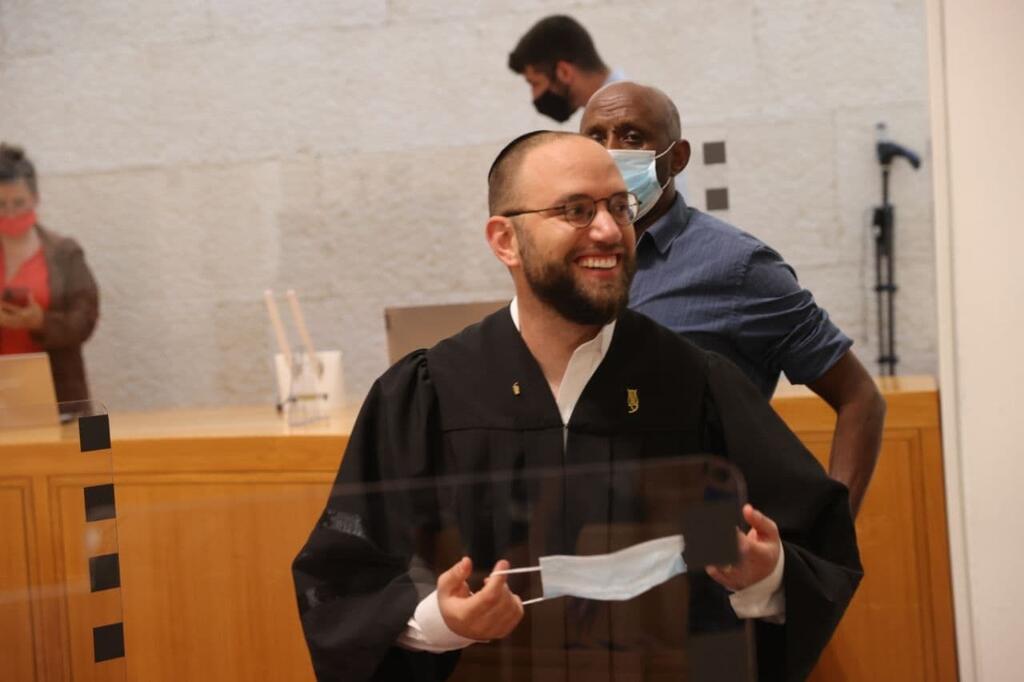
Attorney David Peter
(Photo: Alex Kolomoisky)
Attorney David Peter, representing Levin in place of attorney Zion Amir, who is abroad, told the court that prosecutors had a conflict of interest and could not be involved in the selection or oversight process.
Peter also pointed out that two public service committees—one of them chaired by the civil service commissioner—had reviewed and unanimously approved Ben-Hamo’s appointment in accordance with the court’s previous criteria.
Despite these approvals, Justice Kabub questioned the speed and manner of the appointment. “We’re talking about a senior public service position. Is this really how it happens, over a few phone calls?” he asked.
Peter replied that the process was thorough and legally sound, involving approvals from the Civil Service Commission, the Justice Ministry’s deputy legal adviser and the minister himself. “This process is so kosher,” he added, “if it were a restaurant, I’d be worried the food doesn’t taste good.”
Kabub interjected: “I wonder when you’ll start addressing the actual petition.” Peter responded, “We’re exactly on topic. The petitioners are claiming flaws in the procedure, and we’re explaining why that claim doesn’t hold.”