


The war in Gaza may have ended and their military chief killed, but the Houthis are far from defeated. Once dismissed as a ragtag militia, the Iran-backed group has transformed into a regional force that now claims to be “operating from a position of strength.” And while the assassination of their top commander, Muhammad Abdul Karim al-Ghamari, dealt a symbolic blow, it’s unlikely to halt their operations or ambitions.
Israeli airstrikes showcased intelligence and precision in areas where other nations fighting the Houthis have failed. Yet even that may not stop the barrage of threats and possible missile launches that continue to emerge from Yemen.
A symbolic blow, not a strategic one
Houthi media outlet Al-Masirah confirmed al-Ghamari’s death, calling him a “pioneer” who turned the movement “from a primitive force armed only with Kalashnikovs into one of the region’s most advanced armies, capable of producing hypersonic missiles.” While such claims have never been verified, they underscore how the Houthis view themselves today: a legitimate army, not a militia.
Two years ago, the Houthis joined Iran’s proxy network in direct conflict with Israel — and now, despite the Gaza ceasefire, they appear determined to stay in the fight. “His death is a great loss for Yemen, which faces its fiercest enemies — above all, the Americans and the Zionists,” Al-Masirah declared.
Business as usual in Sanaa
Even after Israeli strikes killed al-Ghamari and other senior officials — including Houthi “Prime Minister” Ahmad al-Rahawi — Yemen’s Houthi-controlled government sought to project stability. Saudi outlet Al Arabiya reported that al-Ghamari was killed in the Aug. 28 airstrike that also eliminated top government figures. A Yemeni security source, however, claimed he was wounded in a separate Israeli strike while attending a qat-chewing gathering and later died of his injuries.
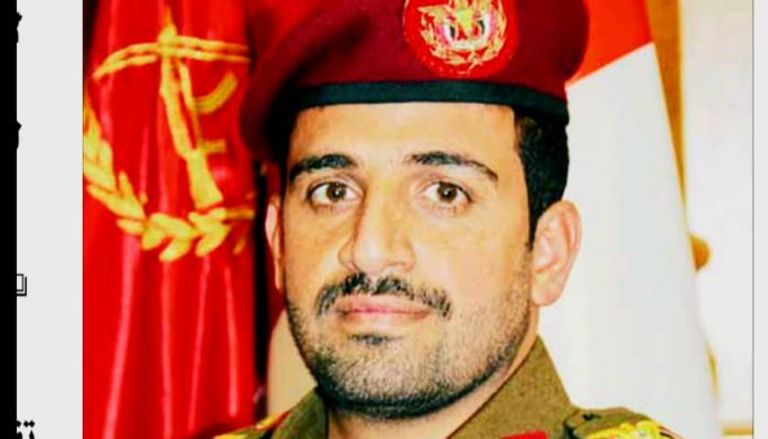
Muhammad Abdul Karim al-Ghamari
Despite his death, Houthi media continued issuing written statements under al-Ghamari’s name until officially acknowledging his demise. Days later, reports surfaced that Yemeni Defense Minister Mohammed Nasser al-Atifi was also wounded in the same attack. Following the announcement of al-Ghamari’s death, Al-Masirah quoted al-Atifi as offering condolences, though the statement was not recorded, and his condition remains unknown.
The Houthis swiftly named al-Ghamari’s successor: Yusuf Hassan al-Madani, commander of the group’s Fifth Regional Corps overseeing Yemen’s Red Sea coastline and naval forces. A Yemeni political analyst told Ynet that the timing of the appointment — just after the ceasefire in Gaza — was deliberate: “They announced it now because they know Israel won’t target him at this stage.”
In his regular Thursday speech, Houthi leader Abdul-Malik Badr al-Din al-Houthi eulogized al-Ghamari, praising his “significant contribution to supporting Gaza.” He accused “spy cells” linked to international humanitarian organizations, including UNICEF and the World Food Programme, of aiding Israel in targeting Houthi leaders during a government meeting.
“We remember Sinwar — and we will continue his path”
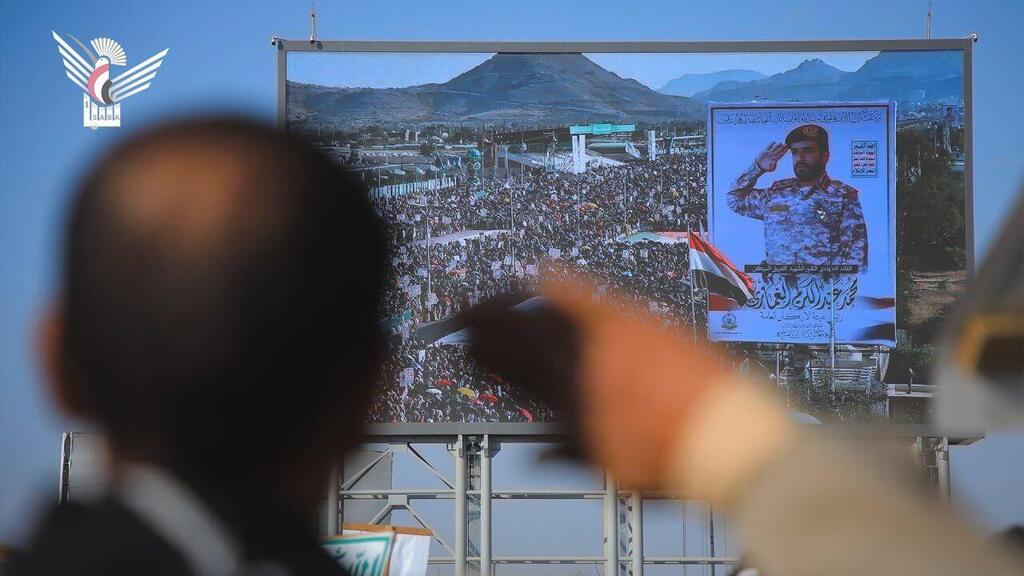
While Israel celebrated the end of the Gaza war and the release of 20 living hostages, mass rallies filled the streets of Sanaa on Friday under the banner “Two years of giving and loyalty to the blood of martyrs.” Protesters waved al-Ghamari’s portrait and issued a statement declaring:
“We remember our leaders, especially Yahya Sinwar, and pledge to continue their path without hesitation or retreat. We reaffirm our support for Gaza, for the Palestinian cause, and for al-Aqsa. We will keep monitoring developments in Gaza — and are ready to return if the enemy returns.”
The IDF described al-Ghamari’s killing as “a severe blow to the Houthi military command and its chain of operations that directed hundreds of terror attacks against Israel during the war.” But geography remains the Houthis’ greatest shield.