


After Iran’s negative response, U.S. President Donald Trump finds himself in a complex strategic bind. The current status quo, which is driving up oil prices, is hurting his popularity as his poll numbers hit an unprecedented low ahead of the critical midterm elections in November. Under such circumstances, Trump cannot afford to stand still, but his room to maneuver is limited.
For their part, the Iranians clearly identify what they see as American weakness. That is why they feel comfortable giving Trump what was seen as an almost humiliating response to his proposals. In Tehran, officials estimate that the likelihood of Trump dragging the United States into another war is slim, and that even if he chooses such a move, success is far from guaranteed. It was no coincidence that a recently leaked CIA document stated that Iran could survive months more under siege and that the Iranians still retain about 70% of their missiles.
Gallery
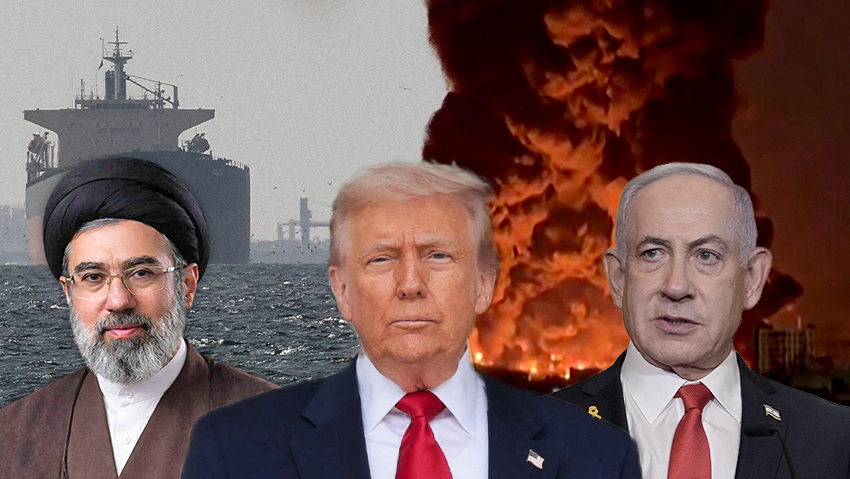
Who will blink first? Benjamin Netanyahu, Donald Trump and Mojtaba Khamenei
(Photo: AFP - SOURCE: UGC / UNKNOWN, REUTERS/Jessica Koscielniak/Stringer, Oliver CONTRERAS/AFP)
Prime Minister Benjamin Netanyahu is convening the limited security cabinet today for its first meeting since Iran’s response. The meeting comes after an overnight phone call with Trump, in which the sides likely discussed possible joint courses of action. But before diving into the options Trump may have to choose between, it is important to understand that predicting what happens next is extremely difficult. The sides are playing a game of “chicken,” and it is far from clear who will blink first.
Trump boasted of his negotiating skills in his book “The Art of the Deal,” but now he likely understands far less about the Iranians than he thought. Ostensibly, the only way for him to save face is military action — not necessarily to achieve a decisive victory in the war, since it is fairly clear that would require a lengthy campaign — but rather to demonstrate that he is “in control.” Striking strategic infrastructure or oil wells could also serve Netanyahu, whose polling numbers have fallen because of the tense situation involving Iran, Hezbollah and Hamas.
Settlement or nuclear breakout
Both leaders, Netanyahu and Trump, have been backed into a corner and are in dire political shape. Trump’s dream of winning the Nobel Peace Prize appears more distant than ever, and every day that passes without a response to Iran’s defiance weakens both men politically. As a result, assessments are growing that a “painful but limited” military operation may soon take place, designed to show the Iranians that Trump is not afraid of their conduct.
Among the military options reportedly under consideration are strikes on Islamic Revolutionary Guard Corps bases in the Strait of Hormuz, targeted assassinations of IRGC leaders viewed as extremists and attacks on infrastructure facilities.
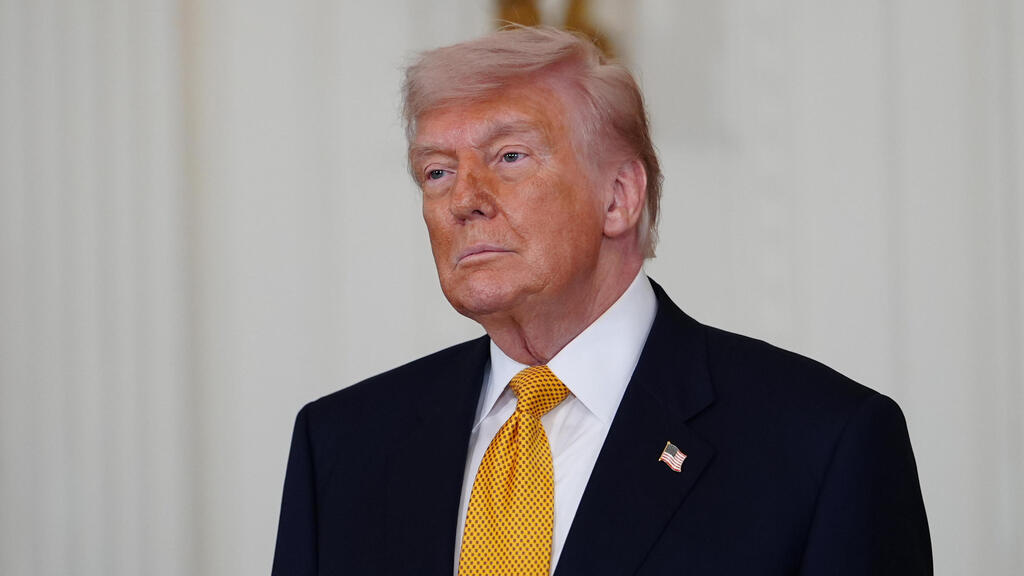
Room to maneuver is limited; Trump
(Photo: AP Photo/Julia Demaree Nikhinson)
At the same time, the question remains whether such a move would actually “move the needle,” or whether the sides would find themselves back in the same situation shortly afterward. For now, statements about toppling the Iranian regime appear to have been wishful thinking. Despite the severe economic situation, the violent suppression of protests in January — which, according to various reports, claimed the lives of between 30,000 and 40,000 Iranians — has left the Iranian public fearful and deterred from returning to the streets.
Another possibility, and perhaps a more likely one, is a temporary 30-day agreement that would include reopening the Strait of Hormuz and lifting the American blockade in exchange for six months of negotiations. The problem is that both sides — the United States and Iran — are intoxicated by a sense of victory. For Netanyahu, this would be a nightmare scenario. It would cement a perception of failure on his part, while Trump could lose interest and leave Israel to deal with the consequences alone as elections approach.
The most troubling possibility, however, is that the Iranians are simply buying time to achieve a nuclear breakout — even if only for a small and unsophisticated bomb using technology purchased from another country. Such a development would grant Iran immunity similar to North Korea’s and permanently alter the balance of power in the region.
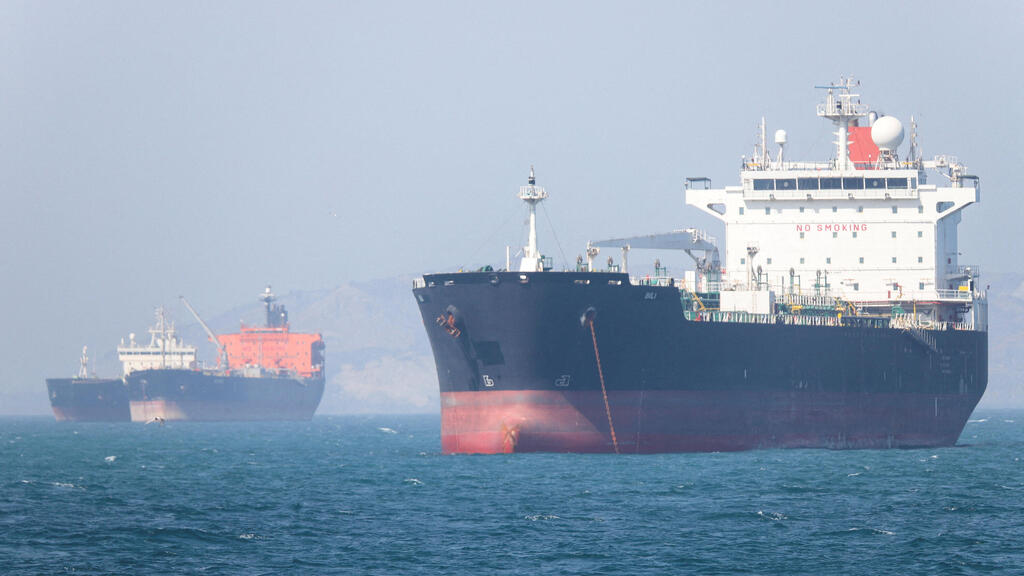
Will it begin with a temporary deal? Strait of Hormuz
(Photo: Amirhosein Khorgooi/ISNA/WANA (West Asia News Agency) via REUTERS)
As noted, the possibility still exists that the United States and Israel will resume the war on a massive scale, including the destruction of energy and infrastructure targets. But Trump appears concerned about becoming entangled in a broader conflict and about the effect on oil prices. This is a campaign that only appears simple on the surface, which is why Trump is reportedly angry and disappointed by what he sees as Netanyahu’s false promises in February that the regime could be toppled. Therefore, even if military action takes place, it is likely to be short and swift. Trump faces a narrow timetable between his Wednesday meeting with Chinese President Xi Jinping and the opening of the World Cup, which the United States will host together with Canada and Mexico beginning June 11 — exactly one month from now. In other words, there are less than four weeks left for war games.
The slippery slope in Lebanon
Against the backdrop of the negotiations with Iran, the complex Lebanese arena should not be forgotten. Troops on the ground are paying in blood almost daily because of operational restrictions Trump has imposed on Israel, preventing large-scale strikes in Beirut and limiting combat to southern Lebanon. Aside from targeted killings of senior figures such as the commander of the Radwan Force, Israel is perceived as being on the defensive, eroding deterrence and reviving the grim feelings that preceded Oct. 6.
The situation in Gaza is also far from encouraging, and Hamas continues to strengthen itself. Netanyahu is trapped in a lose-lose situation: without a green light from Trump he appears weakened, but even if he receives approval to operate in Beirut, without a broad ground invasion — which is not currently on the table — it is doubtful that any long-term solution can be achieved.