


Police in northern Israel have uncovered a shocking case involving the disappearance and death of 93-year-old Holocaust survivor Maina Tolstikov. According to investigators, Tolstikov’s daughter and the daughter’s partner allegedly buried her in the backyard of their home in Karmiel to continue collecting her German reparations and state benefits — more than NIS 18,000 (about $4,800) each month.
For weeks, police searched for Tolstikov, who had vanished without a trace. The investigation was riddled with lies, contradictions, and even a suicide by one of the main suspects before the grim truth was exposed.
The case began in early September when one of Tolstikov’s other daughters, who lives in central Israel, filed a missing person report. The two had not spoken for two years, but the daughter grew concerned after hearing conflicting accounts from relatives about her mother’s health. “She realized her mother was still being reported as alive to state authorities,” said Chief Inspector Alon Reuveni, head of the Galilee District’s Special Crime Unit, which led the investigation.
Officers were dispatched to Tolstikov’s Karmiel apartment. “They knocked, but there was no answer,” Reuveni said. “A decision was made to force entry — just as firefighters arrived, the daughter and her partner, both in their 60s, were spotted nearby.” Inside, officers found an eerie scene: “The home was filled with cobwebs, the windows sealed shut with tape. The atmosphere was strange and unsettling.”
When questioned about Tolstikov’s whereabouts, the couple gave conflicting stories. The daughter, identified as Sharon Kantor, and her partner were arrested and interrogated separately. Investigators soon learned that the elderly woman had likely died of natural causes around April 2024. Kantor claimed her mother had been buried in Haifa, while her partner insisted he had buried her himself “in a kibbutz in the north,” refusing to say where “for fear of his partner’s safety because of the war.”
Faced with a wall of deception, investigators began to suspect the worst. “Using advanced technology, we started realizing she might be buried in the garden,” Reuveni said. Police units with search dogs and trackers combed the place for hours but initially found nothing.
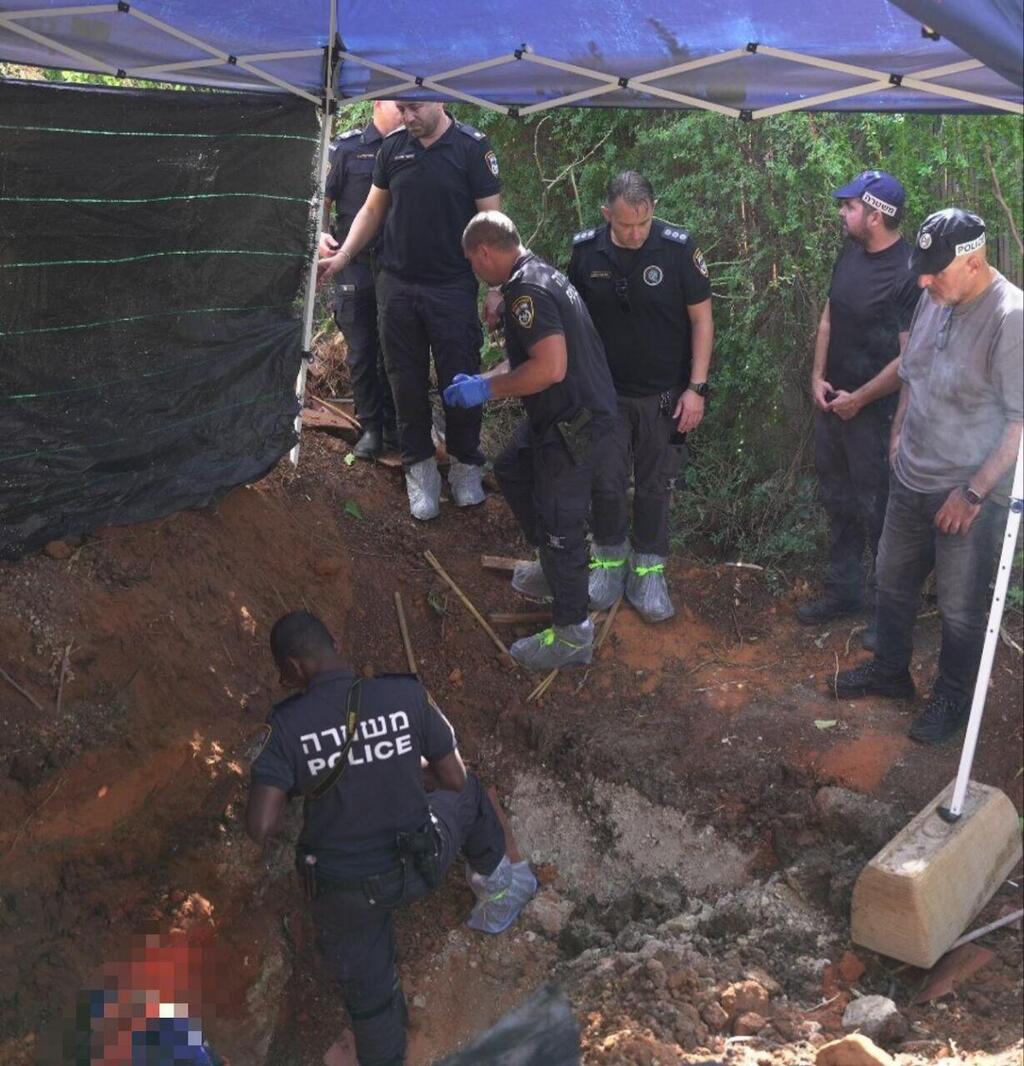
(Photo: Israel Police)
The case stalled — until a dramatic breakthrough. “Three weeks ago, we were informed in the middle of the night that the main suspect, the daughter’s partner, had taken his own life in his prison cell,” Reuveni recounted. “He admitted to burying her but took the location to his grave. His suicide brought us back to square one — we knew we had to find the body quickly.”
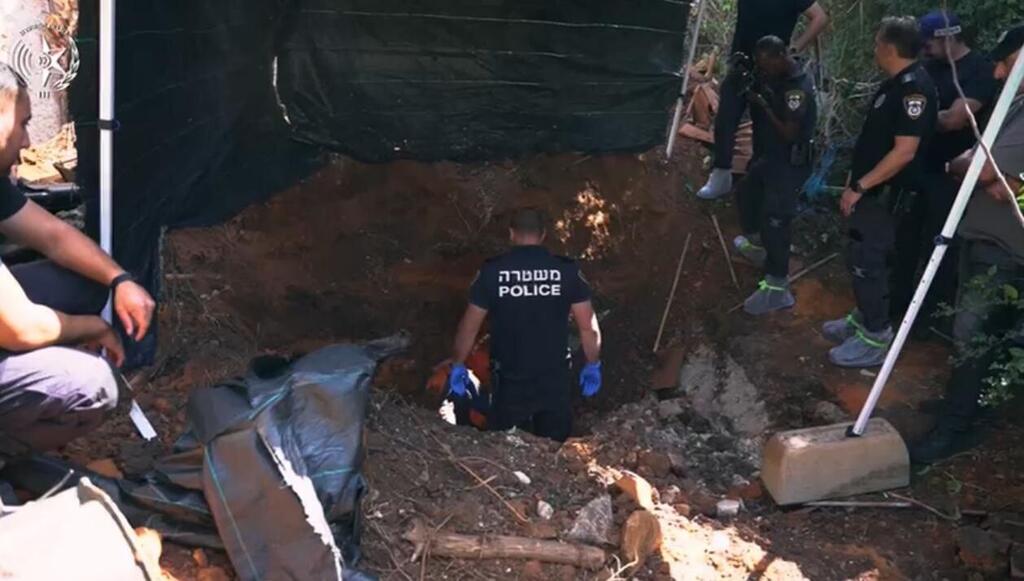
Eventually, a new lead emerged. “A contractor who had done work at the house two years earlier came forward,” Reuveni said. “He pointed to a specific spot in the backyard where he remembered seeing a deep pit.” Police brought in heavy equipment — a crane and a Bobcat — and once again deployed cadaver dogs. “We began digging in that spot. At a depth of three meters, the operator noticed a piece of clothing and stopped immediately. We went down and found another item wrapped around a body — it was her.”
The discovery revealed further disturbing details. “It turned out that for two days after her death, the daughter and her partner stored her body in an old ice cream freezer in the backyard,” Reuveni said.
The motive, investigators believe, was purely financial. Tolstikov, as a Holocaust survivor, received tens of thousands of shekels each month from the Israeli government and Germany. “They simply never reported her death and kept withdrawing the funds for over a year and a half,” Reuveni said.
When the body was found on September 30 — before being sent for autopsy — the officers paused their work for a symbolic moment. For the first time in a year and a half, Kaddish, the Jewish mourning prayer, was recited for the Holocaust survivor. “We felt privileged to bring her to a proper burial,” Reuveni said. “Her funeral will be attended by all the officers who took part in the search. In 26 years of service, I’ve seen terrible cases, but this is one of the hardest — a 93-year-old Holocaust survivor buried in her own backyard by her family.”
The daughter, now the sole suspect, remains under investigation in coordination with the Haifa District Attorney’s Office. Police await the autopsy results to determine how Tolstikov died. She is suspected of multiple serious offenses, including aggravated fraud, obstruction of justice, failure to report a death, and breach of legal duty.