

The High Court of Justice convened on Tuesday to deliberate over Prime Minister Benjamin Netanyahu’s controversial appointment of IDF general David Zini as the new head of the Shin Bet security service.
The legal challenge centered on whether Netanyahu, still bound by conflict-of-interest arrangements due to his ongoing criminal trial, had the authority to promote the appointment. The hearing quickly descended into chaos.
Interruptions during Supreme Court discussions
(Video: Israel Supreme Court)


Tensions were high from the start. A crowd packed into the courtroom, and repeated outbursts from the gallery disrupted the proceedings. Chief Justice Yitzhak Amit ordered a temporary shift to a closed-door session so the justices could review classified information related to the so-called “Qatargate” affair, in which close aides to Netanyahu are suspected of lobbying for the Qatari government, and an alleged leak of Israeli intelligence to the German newspaper Bild. While the session remained televised for transparency, the judges made clear they would not allow disruptions to continue unchecked.
Cabinet Secretary Yossi Fuchs proposed submitting a classified security briefing to the justices, a move that Netanyahu claims is relevant to the contested appointment.
Attorney General Gali Baharav-Miara has been asked to respond to Fuchs’ request. The court is expected to issue its decision after reviewing her response.
The situation deteriorated further. Likud MK Tally Gotliv, no stranger to interruptions at courthouses and detainment facilities, repeatedly shouted over the judges, defying warnings to maintain order. “This court has no right to silence the public,” she yelled, before challenging the bench: “Throw me out if you dare.” She was expelled. Moments later, several bereaved families and additional politicians began shouting, prompting more removals and a court recess.
Get the Ynetnews app on your smartphone: Google Play: https://bit.ly/4eJ37pE | Apple App Store: https://bit.ly/3ZL7iNv
When the session resumed, Chief Justice Amit addressed the courtroom with pointed frustration. “We are witnessing a breakdown of democratic discourse,” he said. “This conduct, this contempt for the rule of law—it’s not just noise. It’s a warning sign.”
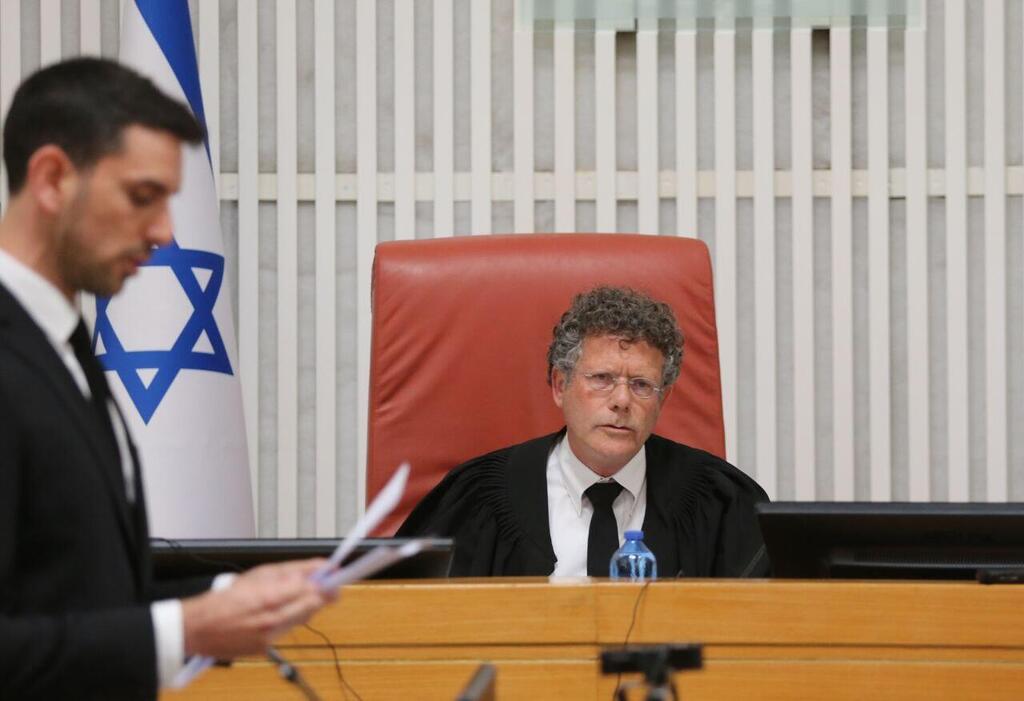
Arguments then turned to the core of the case: whether Netanyahu’s involvement in appointing Zini violated his legal obligations to avoid conflicts of interest. Adv. Meiron, representing the government, claimed Netanyahu was not personally responsible, emphasizing that the decision belonged to the full Cabinet.
“The prime minister didn’t act alone,” he said. “It was a collective decision.” Justice Amit was unconvinced. “Are you suggesting the Cabinet functions as anything more than a rubber stamp?” he asked. He criticized the government’s rush to announce the appointment before legal objections had been resolved. “This could have been avoided entirely,” he said, “if a little restraint had been exercised.”
Not a 'potential' conflict anymore
Adv. Neta Oren from the Attorney General’s Office offered a sharply different assessment. She told the court the prime minister had not only ignored legal guidance but openly rejected it. “We are no longer dealing with a potential conflict,” she said. “The conflict of interest has fully materialized.”
By forging ahead with Zini’s appointment, Netanyahu, she argued, had undermined both the rule of law and the integrity of an active investigation. Oren stressed that the matter was not theoretical—ongoing probes connected to the Qatargate affair reportedly involve Netanyahu’s close associates and possibly Zini himself. “Appointing him under these conditions,” she said, “risks contaminating the investigation at its core.”
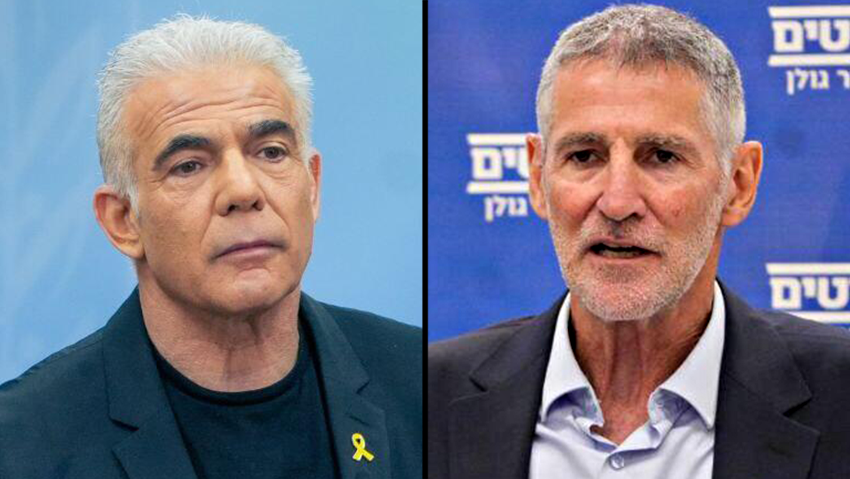
Opposition leaders Yair Lapid and Yair Golan
(Photo: Shalev Shalom)
The justices debated the legal bounds of Netanyahu’s authority. Justice Sohlberg maintained that a prime minister is not legally required to accept the Attorney General’s position. Justice Stein agreed, referencing the Shamgar Commission and arguing that legal flexibility exists. He floated a compromise: Zini could be excluded from the Qatar-related files to preserve the integrity of the investigation. But Justice Amit strongly objected. “If every minister gets to decide which legal advice to follow,” he said, “we won’t have a government. We’ll have a legal free-for-all.”
Outside the courtroom, the political fallout intensified. Opposition leader Yair Lapid blamed the government for stirring anti-court sentiment, calling the behavior inside the courtroom “a coordinated campaign of delegitimization.” Former MK Yair Golan was even more direct: “This looked like January 6,” he said. “The next time they lose an election, I wouldn’t be surprised if they try to storm this very building.”