

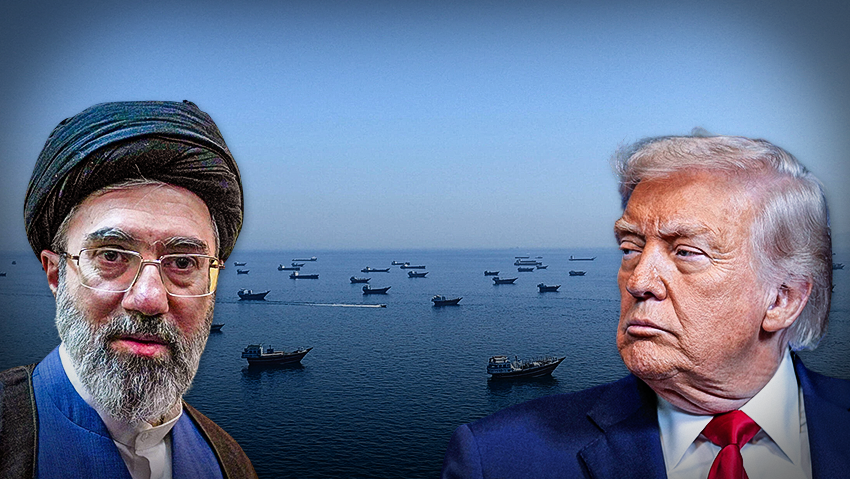
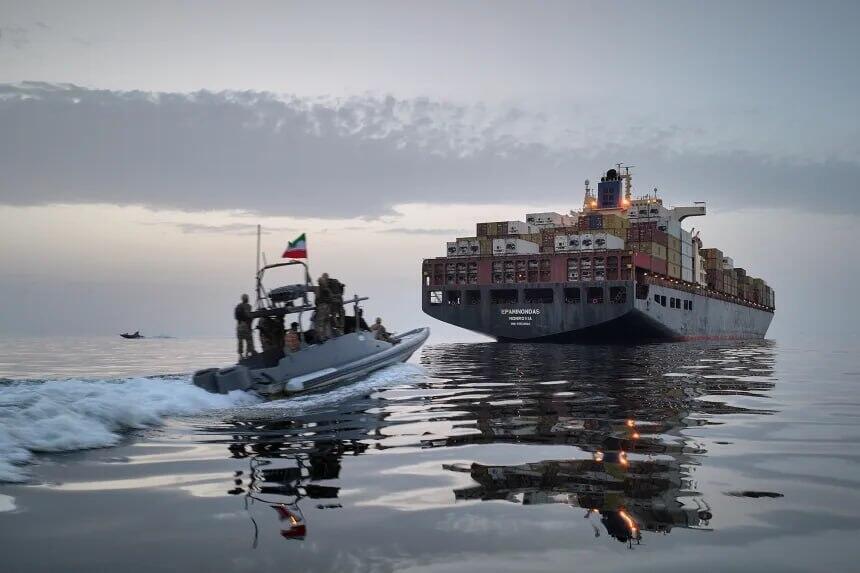
The United States is demanding that Iran publicly commit to ending attacks on ships in the Strait of Hormuz, guarantee that all shipping lanes remain open and abandon any effort to charge vessels for passage, senior U.S. officials said Friday.
The demand comes as Washington imposed a new round of sanctions targeting a financier allegedly linked to Iran’s new leader, Mojtaba Khamenei, and a network of exchange houses and front companies accused of moving billions of dollars for sanctioned Iranian banks and the country’s ruling elite.
Gallery
(Photo: Hamed Jafarnejad/ISNA/WANA (West Asia News Agency) via REUTERS, AP/Alex Brandon, REUTERS/Stringer)
Iran has refused to relinquish control over the Strait of Hormuz, the strategic waterway through which roughly one-fifth of the world’s oil supply normally passes. U.S. officials nevertheless said recent contacts between Washington and Tehran had been productive.
“What we’re demanding is that the Iranians issue a public statement that acknowledges all channels of the Strait of Hormuz are open and they’re not shooting at ships anymore,” one senior official told a small group of reporters during a conference call.
“They’re either going to give us that statement or we’re not having a good outcome for them,” the official said.
According to another senior official, Iran told Washington that the recent attacks on commercial shipping were carried out by “an errant part of their system.”
U.S. officials said the explanation appeared to reflect a power struggle unfolding between Iranian hardliners and more pragmatic elements of the leadership.
Three Qatari and Saudi commercial tankers came under fire during the past week, prompting the United States to strike Iranian sites. Tehran then responded by attacking U.S. military installations in Gulf states.
President Donald Trump declared that a ceasefire signed by the two countries in June was over, although Washington agreed to continue negotiations at Iran’s request.
“We are hoping to get to a place where they publicly say that they will stop shooting at ships and sort of explicitly, or at least implicitly, acknowledge that they screwed up,” one official said.
“The president has directed us to talk, but as he’s shown a willingness to do, if they keep on shooting at ships or they engage in any other hostile acts, then we’re going to hit them back,” the official added.
Iranian Foreign Minister Abbas Araqchi is expected to travel to Oman on Saturday for talks on bilateral relations and regional developments, particularly the situation in the Strait of Hormuz, Iran’s official IRNA news agency reported.
US says no deal without enriched uranium transfer
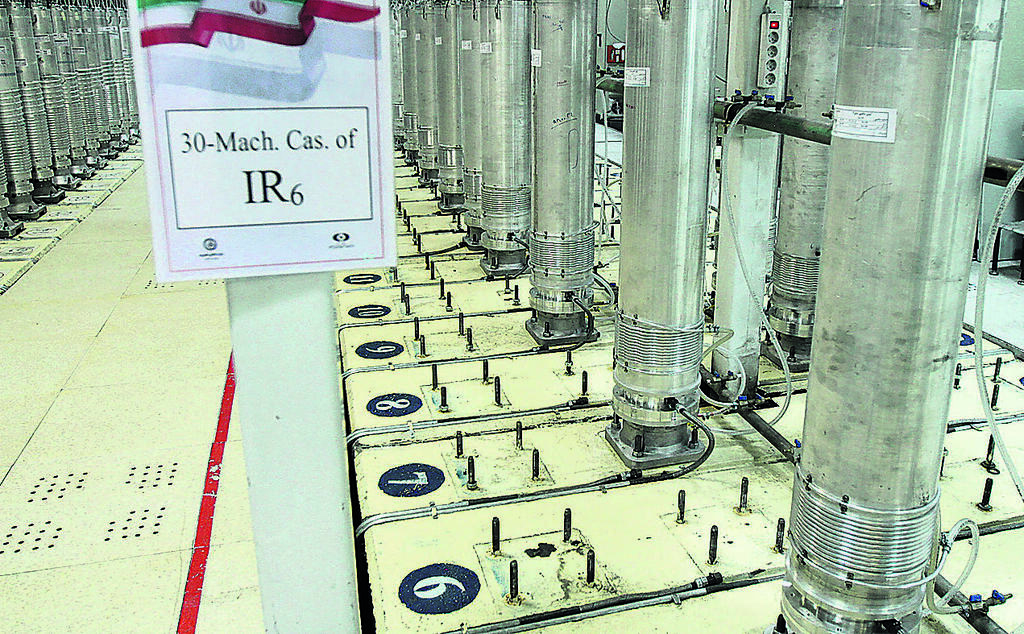
Beyond the shipping dispute, U.S. officials said Washington’s fundamental demand remained the transfer of Iran’s nuclear material.
Tehran is believed to possess more than 900 pounds of highly enriched uranium, which Trump and other U.S. officials have referred to as “nuclear dust.”
The nuclear issue is supposed to be addressed during a 60-day negotiation period established under a memorandum of understanding signed by the two countries in June.
(Photo: AP)
“I just want to be clear here that if we don’t get the dust, we do not have a deal with Iran,” one official said.
The official said Washington had “a lot of options” if Iran refused, including both military and economic measures.
Iran has said it is prepared for “all-out defense” if the United States violates the memorandum. Its chief negotiator, Mohammad Baqer Qalibaf, wrote on Telegram that the conflict would never end with Tehran’s surrender.
Sanctions target financier linked to Mojtaba Khamenei
The U.S. Treasury Department on Friday announced sanctions against Iranian banker and businessman Ali Ansari, who is based in Dubai, as well as 13 other individuals and entities.
Britain had previously sanctioned Ansari over accusations that he financially supported Iran’s Revolutionary Guard Corps and other Iranian organizations.
The Treasury said Ansari diverted publicly funded wealth into an extensive overseas portfolio of real estate and commercial assets, enriching himself, Iranian government elites and the IRGC.
“Although held in Ansari’s name, many of these financial interests are ultimately held for the financial benefit of Mojtaba Khamenei, his family and other Iranian elites in the regime and the IRGC,” the Treasury said.
The department accused those figures of protecting Ansari from punishment despite what it described as his corruption and the economic damage he caused Iran and its population.
Ansari previously owned and directed Ayandeh Bank, which was sanctioned by the United States and later declared bankrupt. Iranian authorities ordered the bank closed in mid-October 2025.
According to the Treasury, Ansari used shell companies and bank accounts across several jurisdictions to accumulate holdings worth millions of dollars under Smart Global Limited, a Saint Kitts and Nevis-based holding company established in 2011.
(Photo: CNN)
The company invested in real estate and commercial properties in Europe, the Gulf and other regions, the Treasury said.
The Treasury’s Office of Foreign Assets Control also sanctioned three Iran-based currency exchange houses and foreign companies accused of transferring billions of dollars each year on behalf of blacklisted Iranian banks.
Officials said the network used layers of shell companies to conceal financial activity on behalf of the Iranian government.
“The United States is taking decisive action to cut off the financial lifelines sustaining Iran’s ruling elite,” State Department spokesman Tommy Pigott said.
“By targeting these networks, the United States is directly disrupting the regime’s ability to access foreign currency and conduct international financial activity.”
The sanctions also targeted Iranian nationals associated with the exchange houses, Hong Kong-based CDM Trading Limited and Naba Alzaki Raw Materials Trading LLC in the United Arab Emirates.
Treasury Secretary Scott Bessent said the department would “continue using every tool at its disposal” to isolate Khamenei and other senior Iranian officials from the international financial system.
The sanctions could further complicate negotiations because Article 9 of the June U.S.-Iran memorandum states that Washington will not impose new sanctions or deploy additional forces in the region.
Brett Erickson, managing principal at Obsidian Risk Advisors, said the measures indicated that Washington was preparing for the possibility that the existing diplomatic framework would collapse.
“Washington is no longer trying to salvage the existing framework,” he said. “It’s preparing to replace it entirely.”