

Police officers from the Tel Aviv North precinct in the Yarkon District were called about two months ago to a home in an upscale neighborhood in the city’s north after neighbors noticed a strong odor coming from the apartment. Inside, they found the body of the late Igo Margolis, an 85-year-old Holocaust survivor who lived alone. He was lying lifeless in his bed. His body was transferred to the Abu Kabir Institute of Forensic Medicine, where it remained unclaimed.
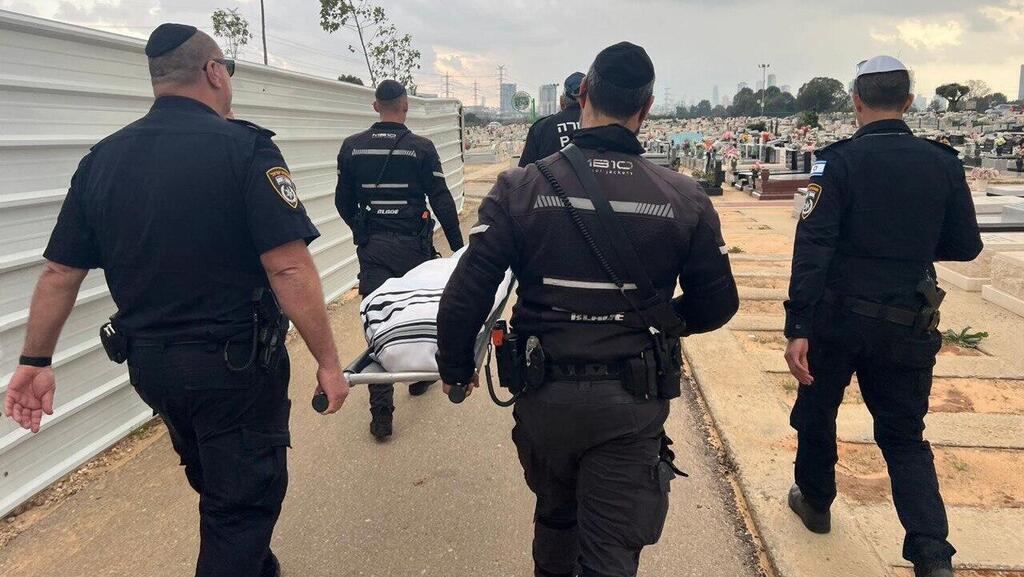
“We were unable to identify him initially due to the condition of the body,” said Superintendent Shai Ebro, head of investigations at the station. “The assessment was that he had died at least several weeks earlier. About two weeks later he was identified at the forensic institute, and a check with the population registry revealed that Igo had no immediate family. That is why no missing-person report was ever filed.”
Neighbors told police that Margolis lived modestly and in isolation, rarely leaving his home.
According to the population registry, Margolis immigrated to Israel from Poland toward the end of World War II with his mother. His father was murdered in the Holocaust. In Israel, his mother remarried but had no additional children. After she and her husband died, Margolis was left alone, without family.
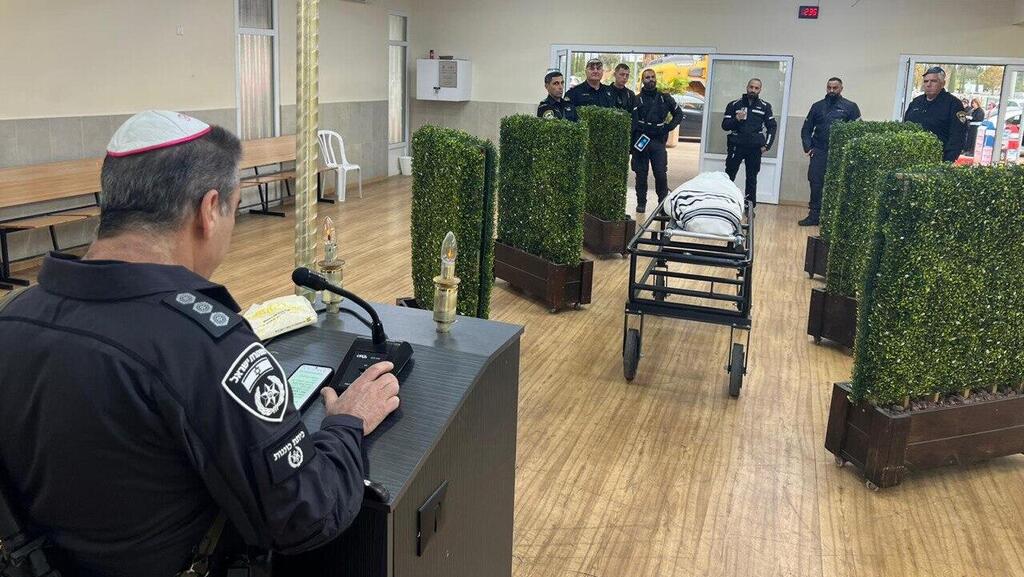
Eulogizing Igo Margolis
(Photo: Israel Police )
Ebro did not give up. She contacted Interpol in an effort to reach Polish authorities and locate any relatives, but none were found. An inquiry to Yad Vashem also yielded no results.
“Igo touched my heart,” Ebro said. “I imagined how, in the heart of Tel Aviv, in a luxury neighborhood, he lived a life of painful loneliness. And even in death, he lay in a refrigerator at the forensic institute, with no one claiming him. In his life and in his death, there wasn’t a single person who took an interest in him.”
After police informed the forensic institute that no relatives had been found, arrangements were made for burial by the Chevra Kadisha. Because Margolis had no family, he was slated for a shared grave. That outcome was unacceptable to volunteer Superintendent Eli Menashe, head of the station’s emergency response unit, who succeeded in securing Margolis a private burial plot at Yarkon Cemetery.
“I decided that we, the police officers, would be his family, and that Igo would have a proper grave and a funeral,” Menashe said.
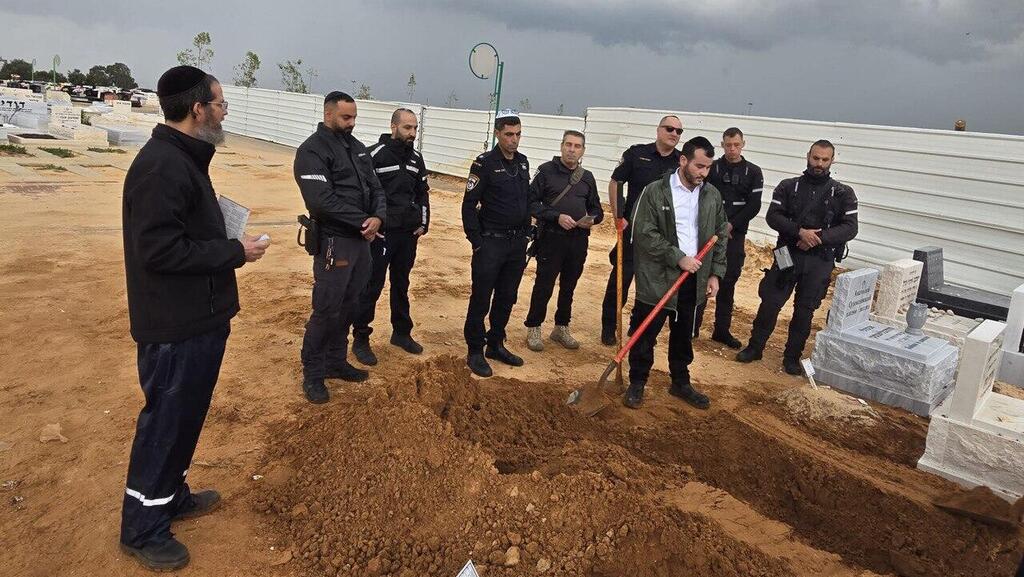
The police officers near the grave of the late Igo Margolis
(Photo: Israel Police )
The story moved the entire station. Officers checked daily with the head of investigations to see whether there had been a resolution. Two days ago, they gathered at the cemetery and held a funeral for Margolis. Menashe delivered the eulogy and recited Kaddish.
“Igo’s story touched me deeply, even without knowing him personally,” Menashe said. “This man, a Holocaust survivor, deserved a proper funeral and for Kaddish to be said in his memory. If he had no one around him in life, at least in his burial he was accompanied by people.”
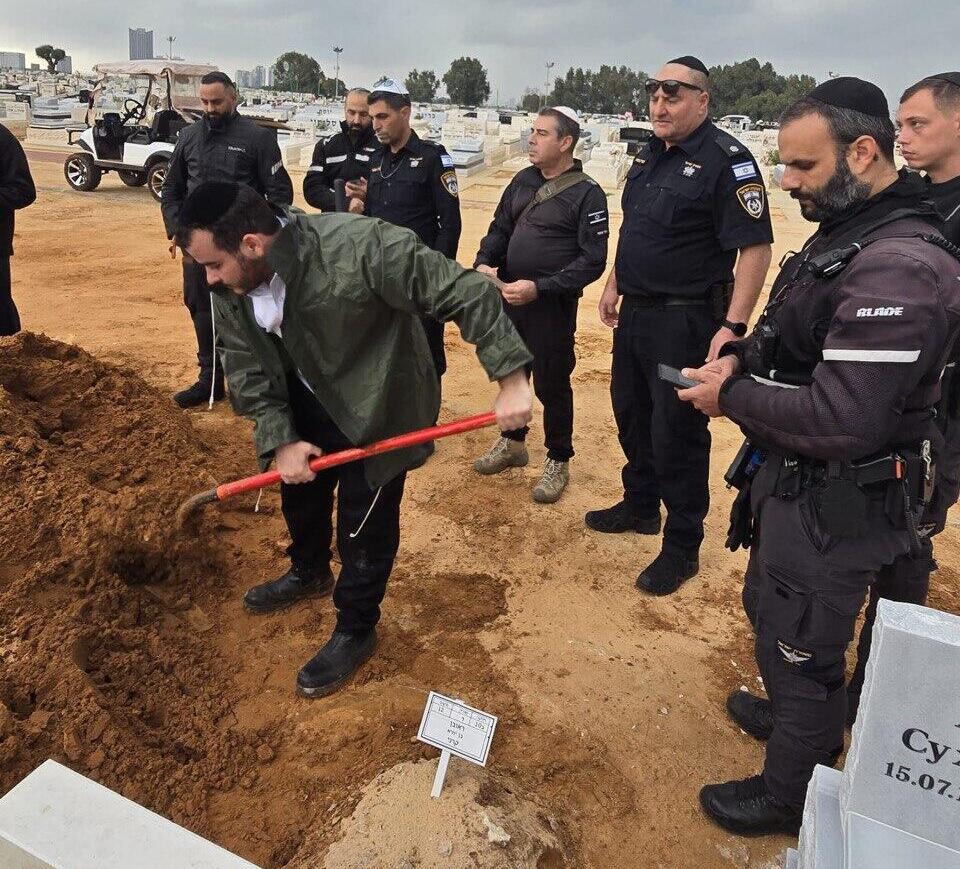
The officers helped bury him and recited Kaddish
(Photo: Israel Police )
Menashe, 63, volunteers with the Last Survivors project. In Israel there are 157 soldiers, men and women, who survived the Holocaust, were the last surviving members of their families, immigrated alone, enlisted in the IDF and were killed in combat, leaving no one to remember them. Each year, Menashe visits the graves of one fallen female soldier and four fallen male soldiers who have no one to visit them, recites Kaddish and lights a memorial candle.
On Wednesday, he also promised that Margolis would not be forgotten. Police officers will ensure a headstone is placed and will visit his grave every year. In his eulogy, Menashe said: “Today we accompany Igo Margolis, son of Ada, to his final resting place. A man who was alone, but not alone. He lived quietly and modestly, far from the spotlight. But today we are here to say out loud: you have not been forgotten.”