

The Israel Defense Forces confirmed Saturday morning reports from Lebanon of fatalities in strikes carried out deep inside the country, in the Baalbek area, saying it killed “a large number” of terrorists belonging to Hezbollah’s missile array in three separate command centers.
Lebanese media reported at least 10 people were killed in the Baalbek strikes, of whom six were allegedly Hezbollah members.
IDF strikes Hezbollah targets in Lebanon
(Video: IDF)


“The terrorists were recently identified operating to accelerate processes of preparedness and force buildup, while planning fire toward the State of Israel and advancing terror attack frameworks that endanger IDF troops and Israeli civilians,” the military said in a statement.
“Hezbollah’s missile array is responsible for the launch of missiles and rockets toward the State of Israel and is currently engaged in planning such fire toward our territory,” the statement added.
The strikes come amid concerns that Hezbollah could join Iran in attacking Israel if the United States strikes the Iranian regime.
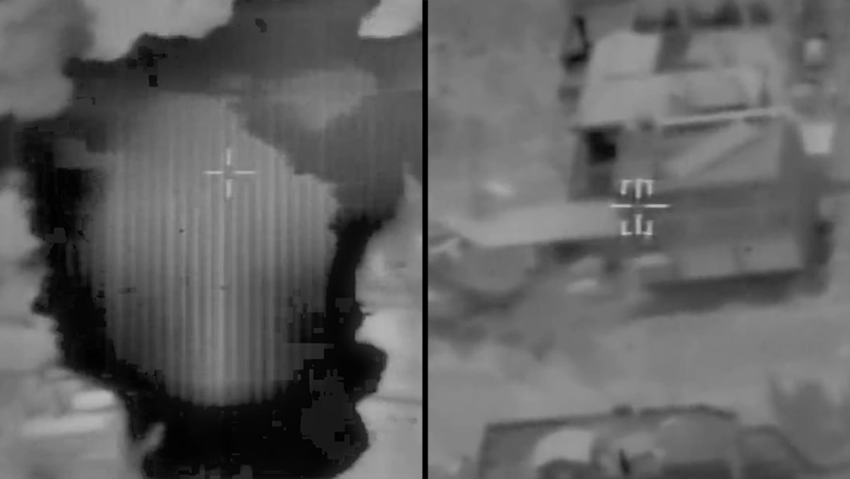
IDF strikes in Lebanon
(Photo: IDF)
Military correspondent Yossi Yehoshua reported that the IDF has already prepared a plan to significantly damage Hezbollah in response to the group’s rehabilitation efforts over the past year. At the same time, Israel’s defensive capabilities against Hezbollah’s missiles and rockets are described as strong, with proven and improving interception rates. In the next confrontation, the laser defense system is expected to be fully operational, a factor Israeli officials say should deter Hezbollah from entering another round of fighting.
Israel has also formulated an offensive plan against the group and continues to strike targets in Lebanon on a regular basis. However, Hezbollah’s rate of recovery has been described as faster than the IDF’s ongoing efforts to degrade its capabilities.
Following the Baalbek strike, the IDF said the terrorists’ activity constituted a violation of the understandings between Israel and Lebanon.
“The IDF will continue to act against attempts by the Hezbollah terrorist organization to rehabilitate and rearm, and will operate with force to remove any threat to Israeli civilians,” the statement said. “The IDF remains committed to the understandings between Israel and Lebanon.”
According to Lebanese reports, at least 10 people were killed in the Baalbek area and dozens were wounded. One report said three Hezbollah commanders were among the dead: Ali Zeid al-Moussawi, Muhammad Ibrahim al-Moussawi and Hussein Yaghi.
Lebanese newspaper An-Nahar reported that Hussein Yaghi was the son of former Hezbollah parliament member Muhammad Hassan Yaghi, considered one of the founders of the terrorist organization and a former aide to Hassan Nasrallah. In an obituary published by Hezbollah-affiliated media, Yaghi was described as a “jihad commander” who was killed “defending Lebanon and the people.”
In addition to the strikes in the Bekaa Valley, the IDF carried out another strike in Lebanon on Friday, targeting a command center where Hamas terrorists were operating in the Ain al-Hilweh Palestinian refugee camp near Sidon in southern Lebanon.
According to the IDF, the command center had recently been used to prepare terror attacks against IDF forces in Lebanon and to conduct training aimed at advancing various attack plans against Israeli forces and the State of Israel. In an unusual move, the strike was carried out by a Navy missile boat.
Lebanese reports said three people were killed in that strike and 12 were wounded.