



IDF Gaza Division Commander Brig. Gen. Barak Hiram met with residents of Kibbutz Nirim on Monday in an effort to encourage them to return to the small Gaza border-adjacent community.
During the conversation, one remark he made stood out particularly, saying that one lesson from the October 7 Hamas attack is the need for communities to be able to defend themselves until the military arrives.
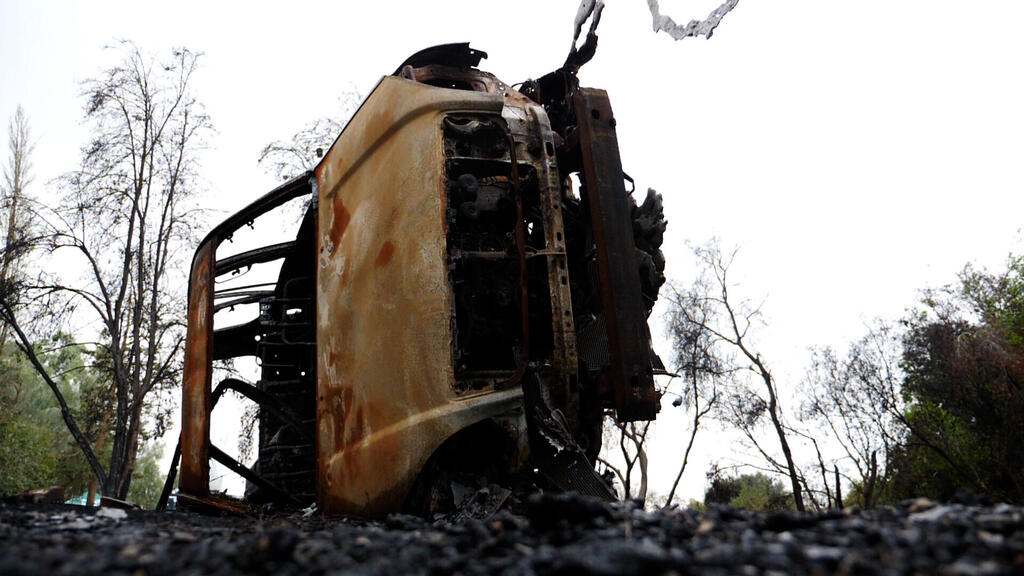
“The fourth element in defense, which we sadly learned during the October 7 disaster, is the community’s ability to serve as a final line of defense, with residents capable of holding the line,” Hiram said. “Not tomorrow morning, but 10, 20, even 30 years from now—this should be part of our doctrine for border communities, so they can hold out for half an hour until the IDF arrives.”
He added that communities must be prepared to prevent terrorists from breaching their perimeters. “We saw firsthand that in places where the enemy broke through, there were major tragedies. Where the enemy was pushed back, disaster was avoided.”
To improve readiness, Hiram said the IDF has significantly expanded local response teams, upgraded weapons and equipment and increased training frequency. “I don’t expect residents to be the main response to terrorists, but part of the security buffer we’re building includes a last line of defense based on the community, the location and the immediate ability of residents to react and repel attacks until IDF forces arrive. The goal is to prevent another catastrophe—even in the event of a failure.”
Hiram also took responsibility for the army’s failures in the October 7 Hamas assault. “As a brigadier general, I was a senior commander on the eve of the attack and the war. I bear responsibility for the disaster, the disgrace and the failure,” he said. “This wasn’t a specific error—it was an institutional failure. I hope we will learn, adapt and rebuild. Though some things can never be fully restored.”
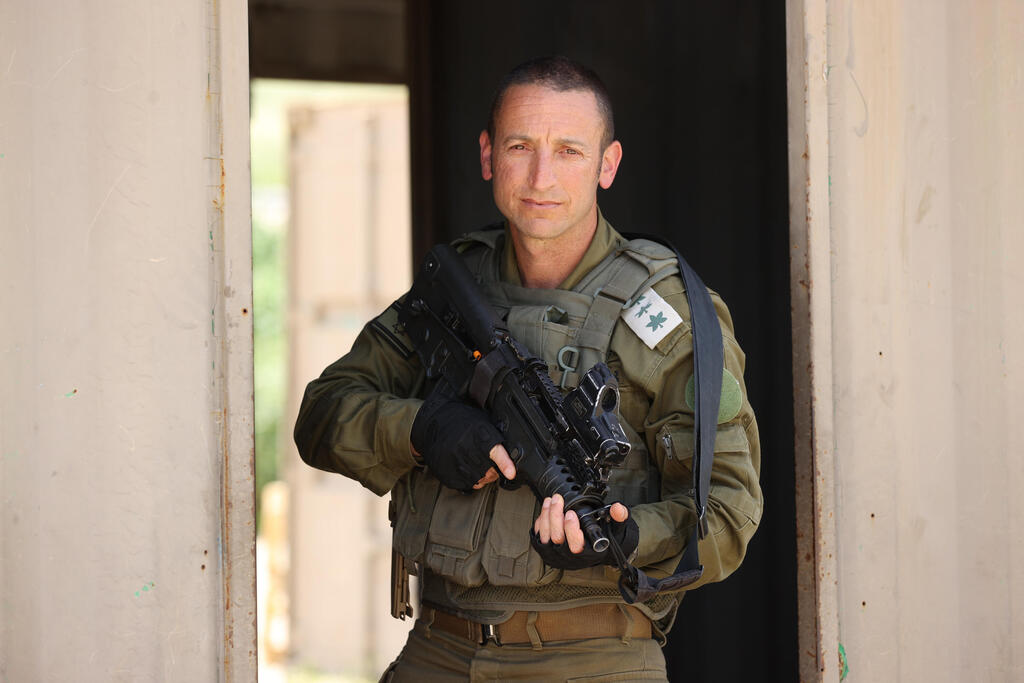
IDF Gaza Division Commander Brig. Gen. Barak Hiram
(Photo: Elad Gershgorn)
Addressing the ongoing war in Gaza, Hiram said, “Above all, I hope we bring the hostages home, defeat Hamas and rebuild our beloved country. That is our generational duty, despite the massive failure. Without returning the hostages and eliminating the threat beyond our border, Israel cannot recover—not just the western Negev, but the nation as a whole.”
Hiram also said that sustained military pressure is contributing to efforts to secure the release of the hostages. “We see that the pressure we’re applying—both directly on Hamas’ military arm and on its governing structures, as well as the indirect pressure on the population—is having a significant effect,” he said.
“It’s pushing them into positions they previously wouldn’t even consider, both in terms of returning the hostages and in their grip on Gaza. I believe we’ll see their release through a negotiated agreement made possible by pressure. It’s not only the heroic operations—it’s both those and the pressure.”
Addressing the return of residents to border communities, Hiram said, “As the military commander here, I believe there is no physical threat to people’s safety, and it is possible to return. That said, I understand that demanding or forcing people to come back now—amid constant explosions and ongoing combat—isn’t fair.”

A Hamas terror tunnel in Gaza
(Photo: JACK GUEZ / AFP)
Regarding smuggling, Hiram noted that the IDF has secured the Philadelphi Corridor along the Egypt-Gaza border. “We inspected every segment and can now say with certainty there are no remaining tunnels crossing between Egypt and Gaza. Everything we found has been destroyed,” he said.
“I can also say with high confidence that there’s no one left to dig—especially after the population was completely cleared from the area. We now have the capability to detect if digging begins and where.”
Get the Ynetnews app on your smartphone: Google Play: https://bit.ly/4eJ37pE | Apple App Store: https://bit.ly/3ZL7iNv
“There are no longer underground smuggling routes between Israel and Egypt,” he added. “We can guarantee there are no tunnels. We do face serious challenges with drone smuggling along the Egyptian border, but that’s not aimed at Gaza—it’s directed at the Bedouin population in the Negev, and we’re actively combating it. We’re also dealing with smuggling attempts from Bedouin communities in Israel into Gaza. That’s easier for us to address because it’s different from cross-border issues.”
He noted ongoing efforts to monitor the coastline and humanitarian aid deliveries to prevent materials from being smuggled in. “Hamas is struggling to manufacture or smuggle anything under current conditions,” Hiram said. “We must ensure that whatever security arrangements are established after the war, they effectively prevent smuggling, production and the reconstitution of internal capabilities.”
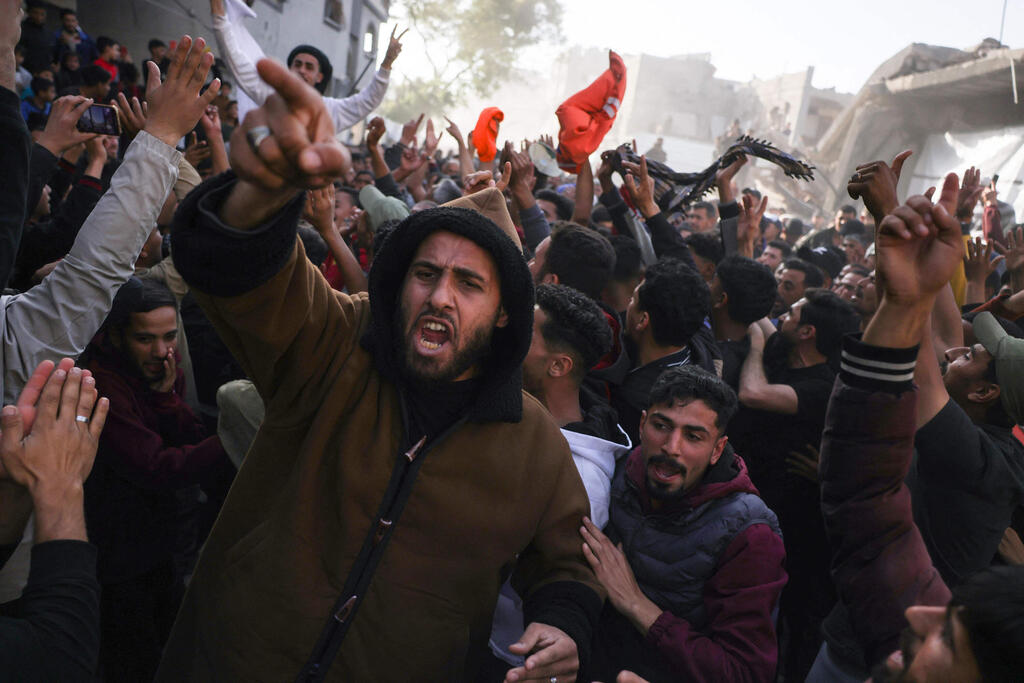
Anti-Hamas protests in Gaza
(Photo: AFP)
Hiram also addressed Hamas’ rule in Gaza, describing it as a regime more fearful of internal dissent than of external threats. “Hamas is a dictatorial regime, and more than it fears an outside enemy, it fears an internal one,” he told the residents. “For Arab rulers, their worst nightmare is the people dragging them into the streets. I believe that the last Hamas leader—if we don’t manage to kill him—will be taken out by the people, who will treat him as Libyans treated Gadhafi. When that happens, we’ll know the time is right to form a new model of governance in that area—one that isn’t Hamas.”
Hiram concluded with a candid reflection on the broader challenges facing the military. “I have no illusions. Rebuilding trust and driving the cultural changes the IDF needs will take a long time,” he said. “The failure and the disaster we experienced were enormous. But at the same time, the IDF was and remains a military made up of the citizens of this country—shaped by its culture. There is a lot we must fix. There is a lot we must improve.”
Hiram assumed command of the Gaza Division in September. His appointment sparked controversy due to his involvement in the fighting on October 7. He arrived in the Gaza border region that morning and immediately engaged in combat with Hamas terrorists. Hiram had to make rapid, life-or-death decisions—including authorizing a critical IDF counterterrorism raid on a home where terrorists were holding hostages.
To create a distraction, Hiram authorized firing two tank shells near the roof of the building. A subsequent IDF investigation later found that the decision to use four non-explosive shells near the home and its upper floor was “reasonable” and had the support of other commanders leading the negotiations. However, the report also noted several tactical errors made by Hiram amid the chaos of the situation.