

“This is the chilling story of brave Iranian men and women who paid the price for their freedom, and it reminds us that although the Islamic Republic has existed for only 46 years, Persian culture has persisted for over 2,500 years,” opened Jonathan Harounoff, a British journalist and Israel's international spokesperson to the United Nations, at the launch event of his book Unveiled: Inside Iran’s #WomanLifeFreedom Revolt held at the Lev Ganim senior residence in Netanya.
About kicking off the event in front of the founding generation, the British-Iranian author said with a smile: “It was important, even natural, for me to hold the first launch before people who remember the days of direct EL AL flights from Tel Aviv to Tehran. Honestly, I was a bit surprised. I’m used to standing in front of microphones and journalists, yet I was deeply moved to stand before the founding generation at the senior residence and receive their warm, embracing responses.”
Gazelle Sharmahd: Continuing her father’s path
Gazelle Sharmahd, born in Iran two years after the 1979 revolution, told Ynet from her home in Los Angeles about her father, Jamshid – a German-Iranian businessman, journalist, spokesperson for Iranian freedom fighters and U.S. green card holder, who was kidnapped in Dubai by Iranian authorities in 2020. Jamshid, accused of terrorism and held on death row, was executed in October last year after four and a half years. His body was returned to Germany in April 2025, mutilated and missing internal organs.
Sharmahd, a prominent activist for her people’s rights, released a video addressed to the Israeli people: “We are not enemies; we were conquered by the regime.”
“It’s so important that Israelis hear our stories. We are with you. We fight hand in hand against our common enemy – the ayatollahs,” Sharmahd shares, currently leading the effort to return her father’s body to the United States for burial. “My father and the others reminded the Iranian people who they really are and who they are fighting against. That’s why the Iranians sent assassins to Los Angeles to kidnap and murder him.”
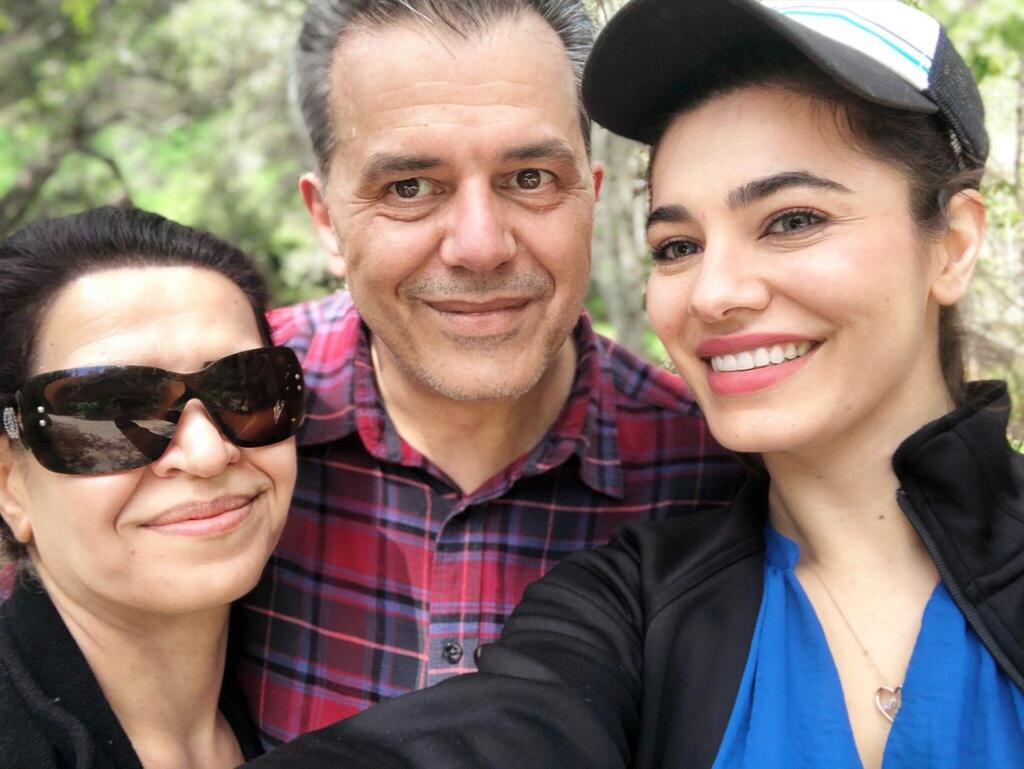
Sharmahd continues her father’s fight for the Iranian people, “who have been brainwashed”, confronting the regime publicly. “Generations of Iranians have grown up under the ayatollah regime, absorbing lies taught in schools and spread by the media. People from the older generation, like my father, who knew Iran before the revolution, understood that Jews and Iranians were allies since ancient times – for example, from the days of King Cyrus the Great, who allowed the Jews to return to Israel and rebuild the Temple. Today, the ayatollahs would call him a Zionist.”
Reminiscing about her father, she said, “He had a satellite radio that broadcast directly to Iran so the ayatollahs couldn’t block it. Being a software engineer, he created a website that protected the IPs of its visitors, making it impossible to track regime opponents listening in. My father opposed the propaganda, fought misinformation and exposed the Islamic Republic’s true face. The regime tried to remove the website and the radio, and when they failed, they kidnapped him from Dubai to Oman, and then to Iran.”
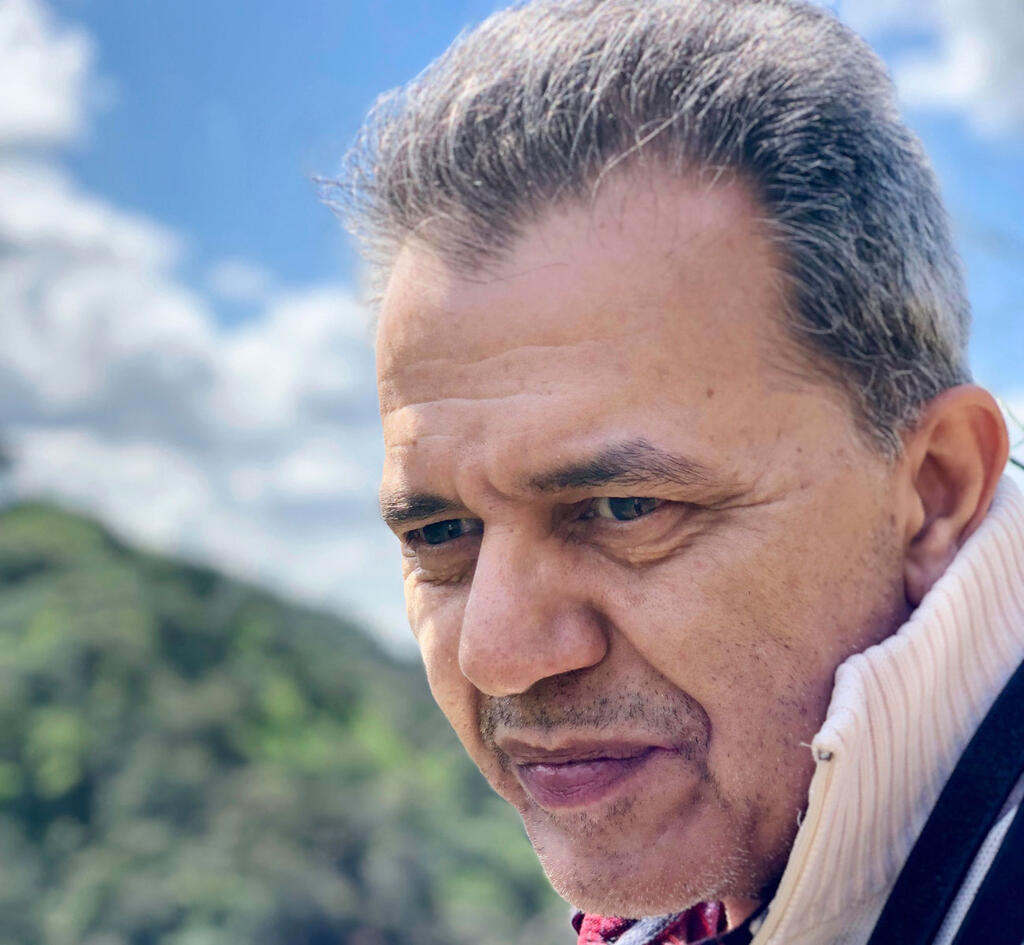
Jamshid Sharmahd
(Photo: AP)
Speaking from a fundraiser in Berlin, she shared: “Almost a year has passed, and we still haven’t managed to bring my father for burial in the United States. This isn’t like Israel, which helps its citizens, returns hostages home and the dead to burial. We are pretty much alone here. Currently, we are short $22,000 to cover costs. The Germans gave us an ultimatum: if we don’t take the body by August 31, it will be cremated. There’s a sense of panic, and we are doing everything to bring him home as quickly as possible.”
Israel’s attack in Iran – how did that strike you?
“I must emphasize that there has never been a war between Israel and Iran; it was a war between Israel and the jihadist terrorists. The ayatollahs are not the leaders of Iran; they lead Hamas, Hezbollah and the Houthis. They take the Iranian people’s money and give it to Hamas, not to the Iranian people who are starving and facing a water crisis. We have people being hanged every four hours by Islamist Arabs, and no one speaks about this genocide.
"So Israelis did not attack the Iranian people, but the enemy. Of course, this was the first time freedom fighters in Iran were happy to see someone outside Iran fighting alongside them against the ayatollahs. The message from the Israelis was: ‘We stand with you. We fight your oppressors.’ It was an emotional, spine-chilling moment not just for Iranians, who do not always receive support from the outside world. Suddenly, the connection with Israel was clear.”
When Israel ceased fighting while the current regime remained in power, how did it feel?
“The ceasefire was imposed between Israel and the ayatollahs, but there is no ceasefire between the ayatollahs and the Iranian people. For 46 years, they have executed Iranians, used sham courts and spread terror inside and outside Iran. Kidnapping, terror, nuclear threats, antisemitism, genocide against the Iranian people and assassination plots on U.S. soil against journalists, regime opponents, diplomats and even the president will never stop as long as the ayatollahs remain in power.
"The Iranian people and Israelis are already fighting the right fight, but Western policymakers continue to legitimize the regime, save them during ceasefires, negotiate with them, treat them as business partners and recognize the murderers and terrorists as a legitimate government. This leaves them in place.”
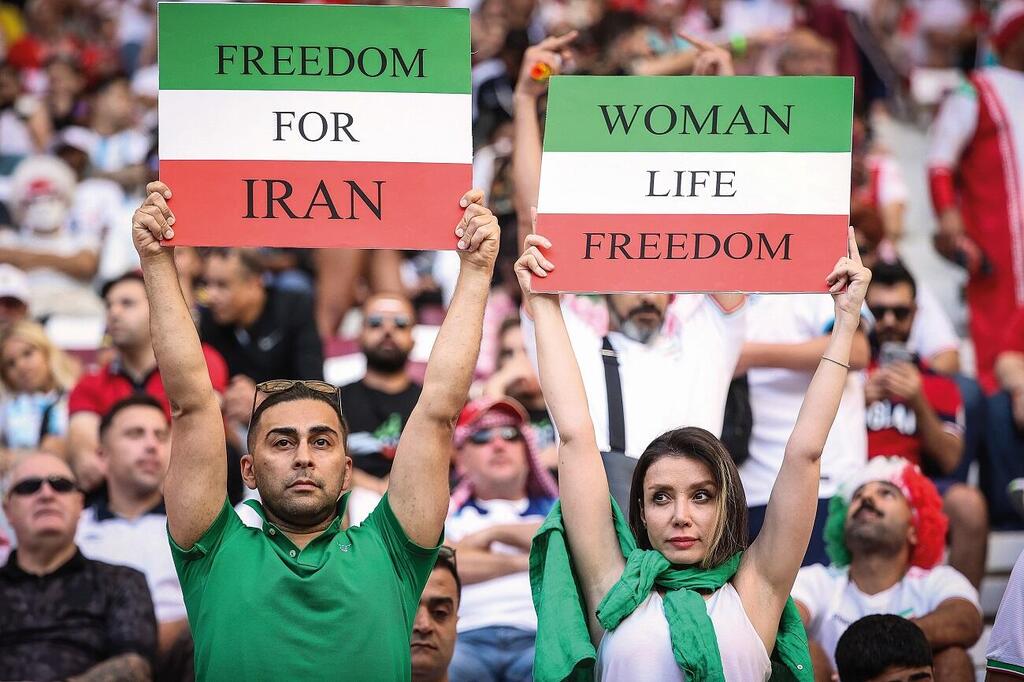
Fans hold signs reading 'Freedom for Iran' and 'Woman, Life, Freedom' during a World Cup 2022 match, echoing slogans of anti-government protests that erupted in Iran that year following the death of Mahsa Amini in police custody
(Photo: Oz Moalem)
“Do you know when Iran ran to Qatar and begged the United States for a ceasefire? It was after Israel bombed the Basij headquarters – a paramilitary force within Iran’s Revolutionary Guards responsible for brutally killing, torturing and abusing Iranian freedom fighters and regime opponents. For the ayatollahs, once the force suppressing the people was struck, it shook the regime severely. That is why the ceasefire happened. True peace cannot begin by coercion; it is not ink on paper. Peace is impossible without freedom – meaning, as long as the Iranian nation and all people worldwide are not free from jihadist domination, there will be no peace.”
Have you spoken recently with people living in Iran, especially Jews?
“We try not to contact them to avoid putting them at risk, especially during the 12-day war when reports arrived from Iranian citizens that the regime was targeting the population and shooting civilians, blaming Israel.”
Regarding the “Jewish connection,” Sharmanhd, a follower of Zoroastrianism – an ancient Persian religion and a minority within Iran’s Shiite majority – says: “From my work with Iranian Jews, I realized that we minorities must unite. We are stronger together. A great light against the darkness of the jihadists.”
Elahe Tavakolian: The voice taken from her eyes
On September 21, 2022, five days after the murder of Mahsa Amini, a 22-year-old Iranian woman detained by the Islamic morality police and killed for wearing a loose hijab, protests erupted across Iran. During a demonstration in Esfarayen, northern Iran, Elahe Tavakolian, then 32 and mother of ten-year-old twins, was shot in the eye by regime forces. She required urgent medical treatment in Turkey, Italy, and the United States.
“I was at the protest with the twins when suddenly I felt a burning sensation in my head and fell to the ground,” she recalls. “I was soaked in blood and thought I hit my head on the pavement. A few minutes later, I realized a bullet had hit my eye.”
 Elahe Tavakolian Photo: Courtesy
One of her children kept shouting, “They killed my mother.” Despite the heavy bleeding, taxi drivers hesitated to take her to the hospital for fear of being accused of aiding her. Eventually, two civilians rushed her to the hospital. She lost her sight and later her job. “My boss had connections with the Revolutionary Guards and fired me. Meanwhile, I started experiencing harassment from Iranian security forces who warned me not to speak.”
Sardar Pashaei: Sports as a political battleground
A former successful Olympic wrestler and coach of the Iranian wrestling team, Pashaei was born in the same Kurdish region as Mahsa Amini. Although he met the criteria for the 2000 Olympics, he was barred from participating due to his origin. His family was beaten, and his brother kidnapped.
Pashaei fled to the U.S., where he founded United for Navid in memory of his friend Navid Afkari, a promising wrestler from Shiraz executed on September 12, 2020, at age 27 after participating in anti-government protests. Now residing in Virginia, Pashaei serves as campaign director for United for Navid, raising awareness about the illegal politicization of sports in Iran.
“There’s a revolving door between Iran’s sports federation and the Revolutionary Guards. One example is Mohammad Reza Darvazani, head of Iran’s volleyball federation, who was also a former commander in the Revolutionary Guards and involved in various corruption scandals. These Revolutionary Guard commanders wear suits instead of military uniforms and present themselves as sports officials,” Pashaei explains.
Harounoff shares additional testimonies featured in his book, highlighting his motivation. “There is a misconception in the world about Iran and its citizens. Ninety million Iranians living in Iran are seen as sharing the same opinion, ideology, anti-America, anti-capitalist, anti-Israel stance. But that’s not the case," he said.
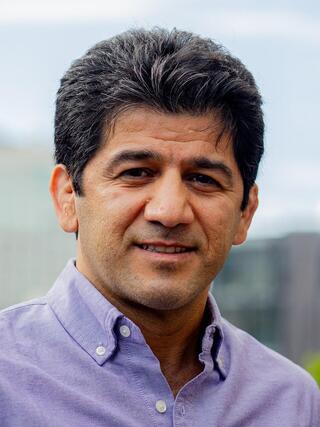 Sardar Pashaei Photo: Courtesy
"There are people within Iran who, over the past 46 years, have fought for a better, different Iran. I want to bring these voices and protest movements like #WomenLifeFreedom to the global stage. Every time we open the news from Iran, we read about the proxies Iran operates, its nuclear program and external matters, but we don’t truly discuss who the people in Iran are and what their aspirations are. That was my motivation for writing the book.”
Regarding his choice of subjects: “I sought powerful voices who could bring the Iranian narrative and tell their story. At the time, Gazelle’s father was still alive, and when I heard her in one of the interviews, it was clear that it was important to bring her voice and story to the world. For three years, I collected material and interviewed victims of the regime. I wanted to write the book accurately, as the world changed every day. It took a long time, but the result was a dream fulfilled.”
Harounoff adds that the book has been praised by prominent figures, including Pulitzer Prize winners, and has already become a bestseller in Amazon’s new releases category. It will soon be published in Hebrew and later in Persian.
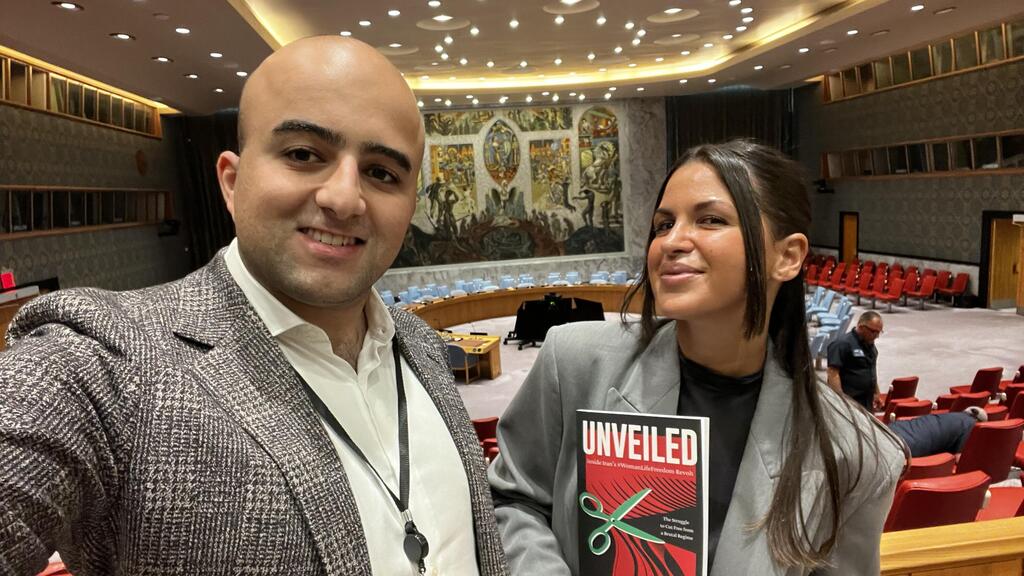
Journalist Jonathan Harounoff his book Unveiled: Inside Iran’s #WomanLifeFreedom Revolt
(Photo: Courtesy)
At the surprisingly modest launch at the Lev Ganim senior residence in Netanya, around 100 residents and curious guests attended, including 92-year-old Miriam Avidan, great-great-grandmother to 19. Waiting for the author’s signature, she said excitedly, “It was simply fascinating. As someone who remembers the period when direct flights to Iran existed, it was very important for me to attend the lecture. On one hand, we see the reality today, and on the other, we remember completely different times of prosperity and trade. I’m also glad Jonathan chose us to launch the book. It makes sense that those who remember Iran’s historical past would be the first to hear this refreshing and particularly interesting lecture.”
‘Zan, Zendegi, Azadi’ – Woman, Life, Freedom – is not just a slogan
Harounoff smiles, pleased with the audience and their interest in a topic so dear to his heart. “Three years have passed since Mahsa Amini’s murder. Iran appears calm on the surface, but beneath the surface, unrest simmers. The regime has survived, but its image has been severely damaged, both inside the country and abroad. More citizens, especially young people, see it as an illegitimate body. Despite repression, civil society has become more aware of its power and the importance of solidarity. They wanted to bury Mahsa, but they buried fear. Mahsa lives in every call for freedom, every woman walking with her head uncovered, every young person refusing to remain silent.”
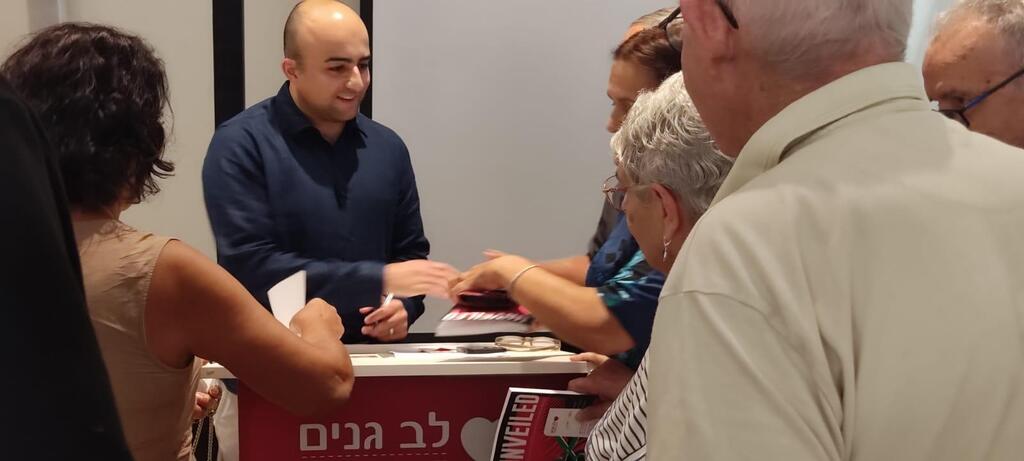
Jonathan Harounoff at the book launch held at the Lev Ganim senior residence in Netanya
(Photo: Courtesy)
He emphasizes that the Iranian protests have become a moral test for the entire world: “Governments and organizations had to decide whether to stand with the Iranian people or preserve economic and political interests with the regime.” He warns that turning one’s back on Iranians would erode trust for many years.
“No one knows when the next uprising will occur – but it will come. The struggle for equality and freedom in Iran is not a one-day battle; it is a struggle spanning a whole generation. The slogan ‘Zan, Zendegi, Azadi’ – Woman, Life, Freedom – is not just a political slogan. It is a vision for a future where every Iranian can live freely in the truest sense of the word.”
At the end of the book, he writes: “Revolutions do not happen all at once.” “Correct. They quietly build, in conversations among friends, in small acts of resistance, in the courage of ordinary people. And when the moment comes, they erupt – and the whole world sees.”
As the son of a Jewish English father and an Israeli mother living in Bnei Brak, he describes Israel’s advocacy work in these turbulent times: “It’s a daily battle, but an important one. Imagine how the UN would look if Israel did not fight these arguments. That is also what drives me daily to fight fake news on so many fronts. Spreading truth is much harder than lies.”
Where is the greatest difficulty?
“When lives are at stake, it is difficult. For example, when amplifying the voices of released hostages like Eli Sharabi and the brothers of Evyatar David and Noa Argamani. Every time the voices of these heroes, whose lives have been forever changed, reach the UN General Assembly, it hits you hard. You cannot ignore them. Not just as a Jew, but as a human being.”