


Forty ministers, lawmakers and former lawmakers will compete for a much smaller number of realistic places on Likud’s national slate, setting up an unusually fierce primary battle that could push several veteran party figures out of the next Knesset.
The party published its full list of primary candidates Thursday evening. Even after MK Eliyahu Revivo’s withdrawal, 40 people remain in the race for the national list.
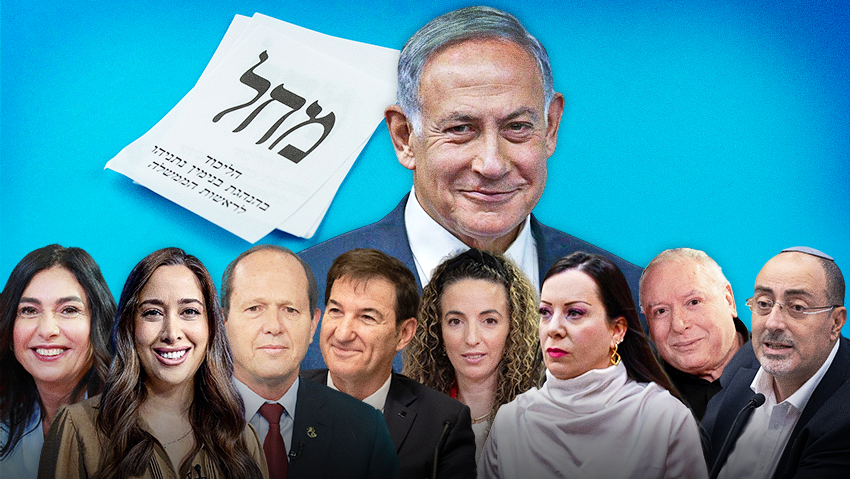
(Photo: Yuval Chen, Shalev Shalom, Alex Kolomoisky, Oz Moalem, Nadav Abas, Shaul Golan, Yoav Dudkevitch, Dana Kopel, Shutterstock)
The numbers make the contest particularly unforgiving. After Prime Minister Benjamin Netanyahu’s reserved slots and changes to the structure of the top 10, only 15 realistic places for male candidates remain through the 30th position, along with three realistic slots for women despite eight prominent female incumbents currently serving.
The practical implication is that several familiar and long-serving Likud ministers are likely to miss out, while prominent lawmakers could also find themselves pushed below a realistic place on the ticket.
Likud currently has 14 senior officeholders competing within the party’s crowded field, including Knesset Speaker Amir Ohana and a long list of ministers such as Eli Cohen, Yariv Levin, Miri Regev, Nir Barkat, Yoav Kisch, Miki Zohar, Shlomo Karhi, Avi Dichter, Amichai Chikli and Dudi Amsalem.
Four senior female ministers are also in the race: Miri Regev, Gila Gamliel, May Golan and Idit Silman.
Coalition chairman Ofir Katz, one of the most prominent figures of the outgoing Knesset term and one of Netanyahu’s closest political allies during the current term, is also competing alongside the ministers.
Beyond the 40 candidates seeking national-list positions, another 84 people will compete for reserved representation slots and regional positions.
Eight are running for the youth slot, seven for immigrant representation, six for the non-Jewish sector, five for the slot designated for people with disabilities and 13 for the new-woman slot.
Regional contests include 12 candidates in the newly merged Jerusalem, West Bank and Shfela district, 10 in the Dan and Tel Aviv district, four in the Negev, five in the Galilee and valleys, six in the coastal plain, six in regional councils and two in the Haifa district.