

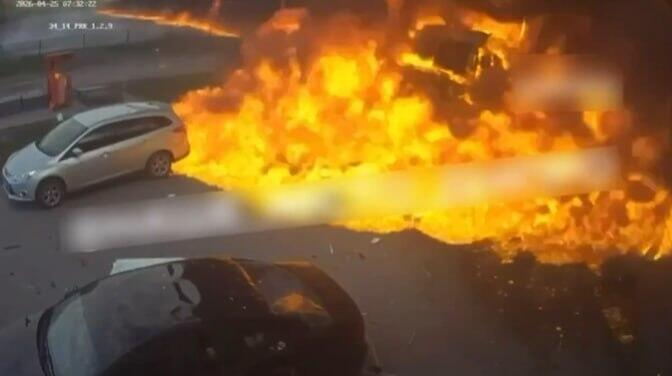
Ukraine is marking today the 40th anniversary of the Chernobyl disaster, the worst civilian nuclear disaster in history, under the shadow of continued Russian bombardment and after an especially difficult weekend in which the city of Dnipro came under near-continuous drone attacks for no less than 20 hours. At least eight people were killed and 49 were wounded. According to Mayor Borys Filatov, it was the largest attack on Dnipro since the start of the war with Russia in 2022.
This morning, Russia also attacked the Chernihiv region in northern Ukraine and the Odesa region in the south with missiles and drones. In the Sumy region in the northeast, two men, ages 48 and 72, were killed by a Russian drone. Another person was killed and four were wounded in the Dnipropetrovsk region in central Ukraine, the region whose capital is Dnipro, which endured yesterday’s prolonged attack.
Bombing of a gas station in Dnipro over the weekend


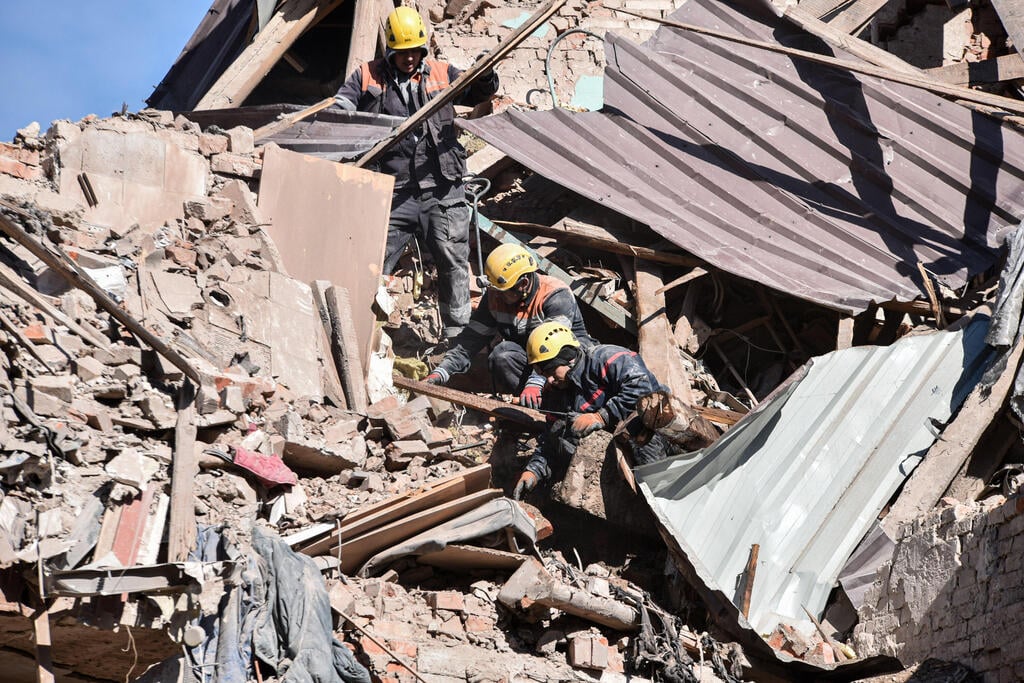
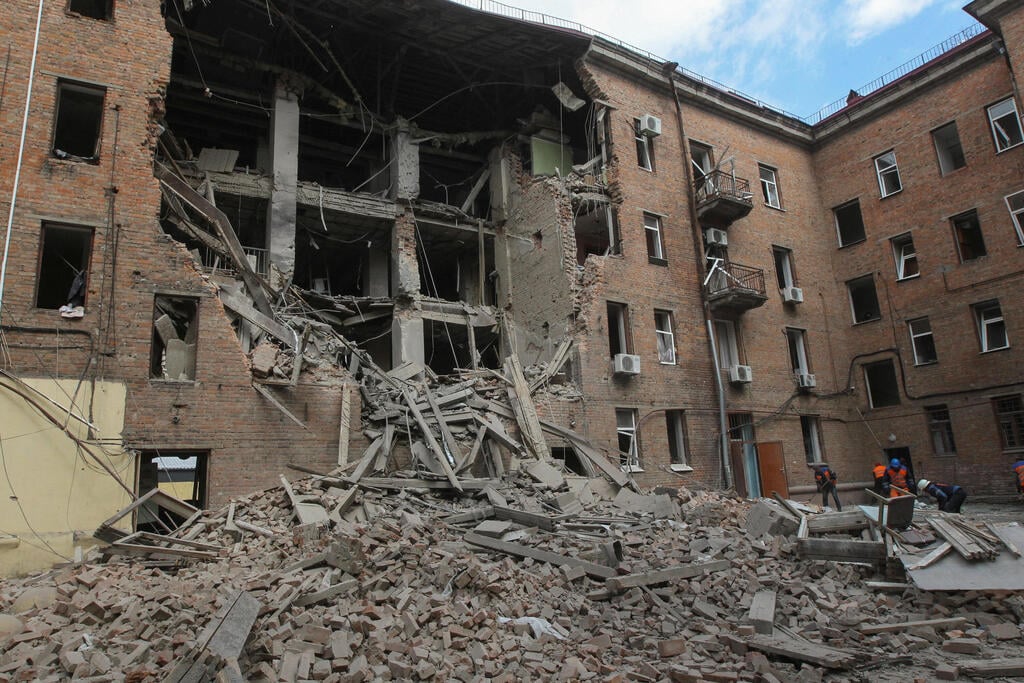
Rescuers search the ruins of a building in Dnipro
(Photo: AP Photo/Mykola Synelnykov)
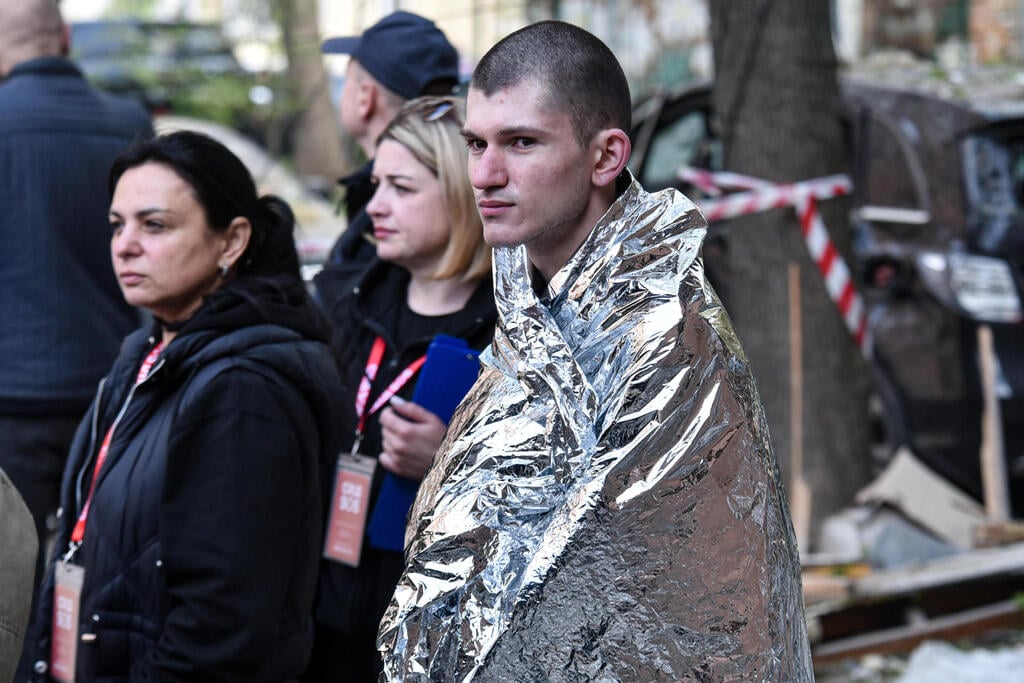
The largest attack the city has endured; evacuees yesterday in Ukraine
(Photo: AP Photo/Mykola Synelnykov)
The war between Russia and Ukraine, it should be recalled, briefly appeared in the middle of last year as though it might be nearing an end, following U.S. intervention under President Donald Trump, one of whose campaign promises was to end it. But neither his threats against Russian President Vladimir Putin nor his threats to halt aid to Ukraine brought a real breakthrough, and since the start of the year, following the outbreak of the war against Iran, U.S. mediation efforts on Ukraine have largely been suspended.
Now the war is not only continuing at full force, but is also spilling over repeatedly into neighboring countries. Yesterday, Romania said a Russian drone crashed on its territory, near the border with Ukraine, causing property damage. More than 200 residents were evacuated from the area following the strike. Russian aircraft have entered the airspace of Romania, a NATO member, several times during the war, but this is the first time fragments of a Russian drone have caused property damage there.
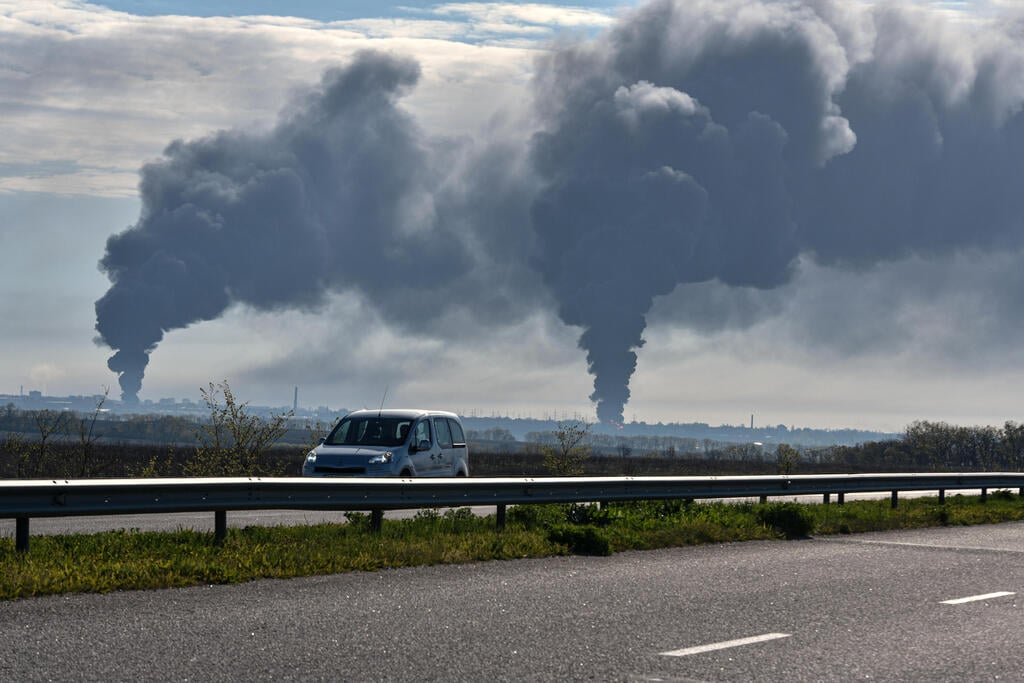
Smoke rises on the horizon in Dnipro; dozens were wounded there yesterday
(Photo: AP Photo/Mykola Synelnykov)
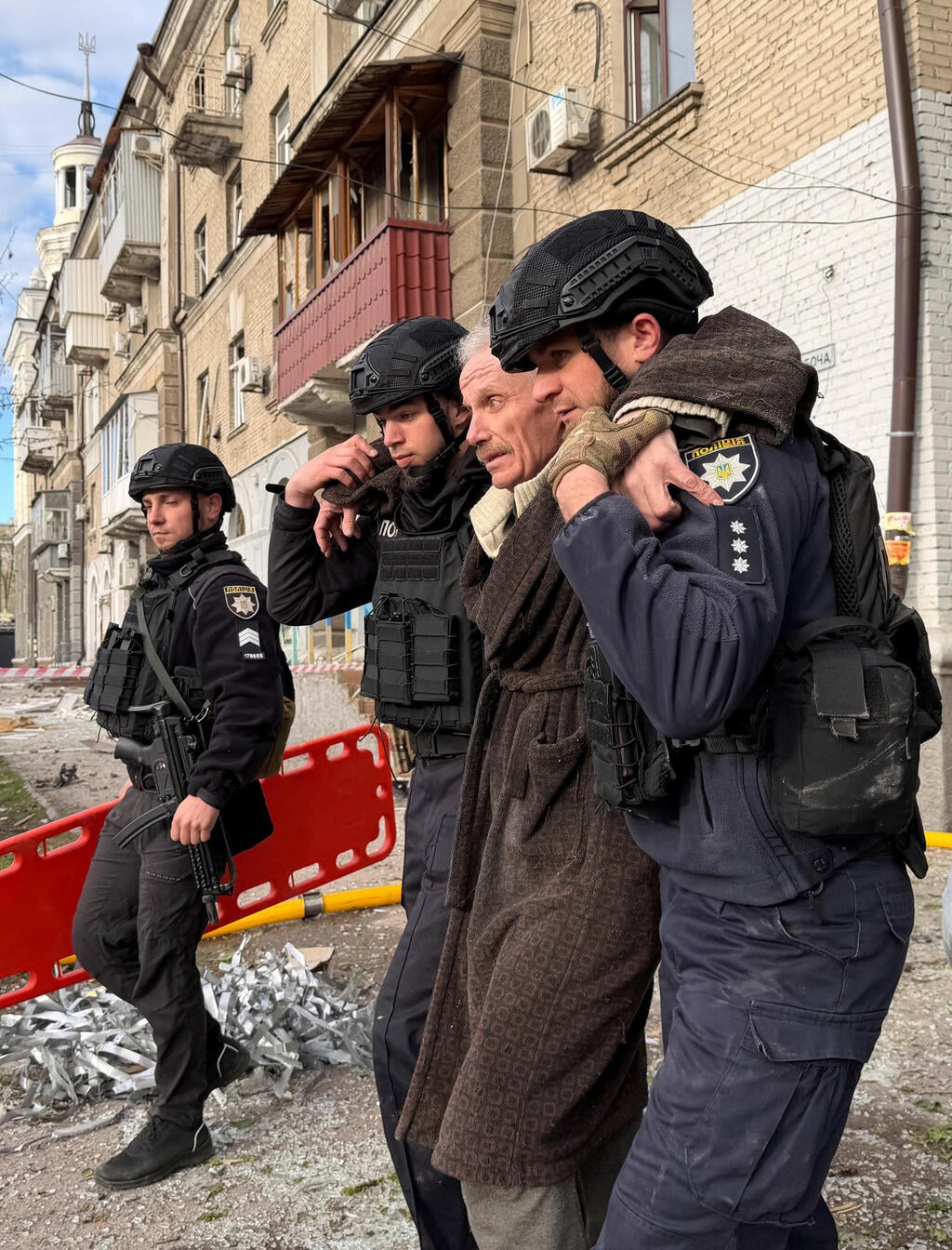
Evacuating a Dnipro resident from his home after a strike in the city yesterday
(Photo: REUTERS/Serhii Chalyi)
(Photo: REUTERS/Stringer)
On Thursday, at a summit of European Union leaders in Cyprus, a new European sanctions package against Russia was approved, the 20th of its kind. It is aimed at damaging Russia’s banking sector and imposing additional restrictions on Russian oil exports. EU leaders also intend to soon approve a critical 90 billion euro loan to Kyiv to strengthen its military capabilities — a move that until now had been blocked by Hungarian Prime Minister Viktor Orban, who maintains good relations with Putin. Now, against the backdrop of his imminent replacement by Peter Magyar, who defeated him in elections, the move will be able to go ahead.
Meanwhile, in a small moment of optimism over the weekend, 193 soldiers held in Russia as prisoners of war, some for years, were returned to Ukraine on Friday. At the exchange point in northern Ukraine, they were seen stepping off buses, draping themselves in the blue-and-yellow flags of their homeland and embracing or crying on the phone with loved ones. Most had been held in the Muslim republic of Chechnya in southern Russia. The youngest was 24, and the oldest was 60.
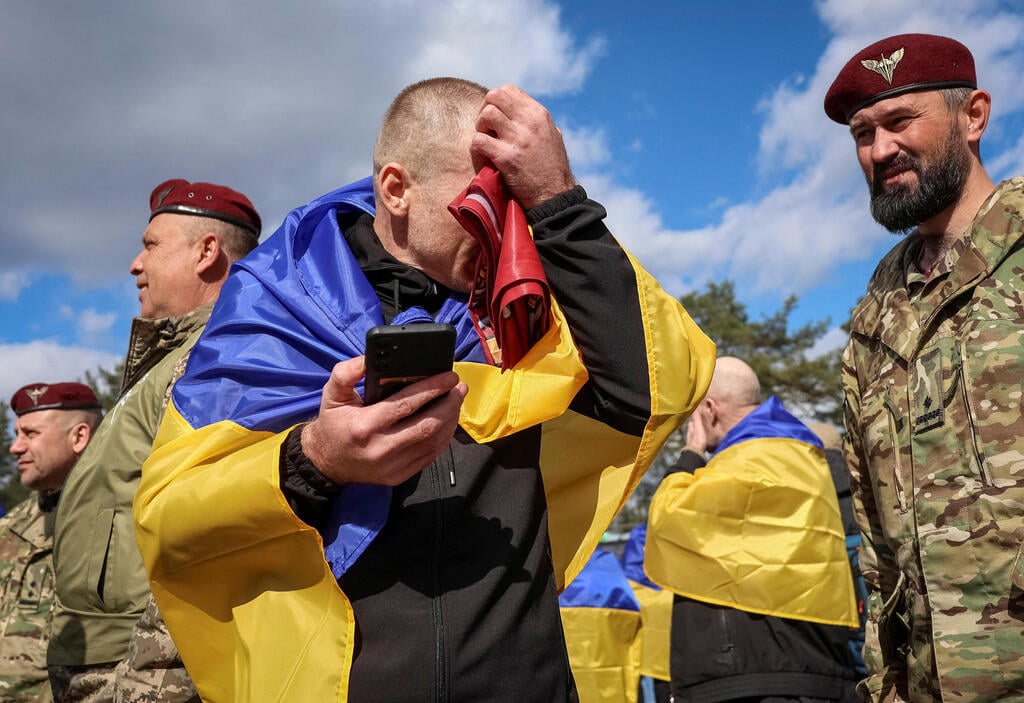
Crying on the phone upon returning home; one of the freed Ukrainian captives on Friday
(Photo: REUTERS/Anatolii Stepanov)
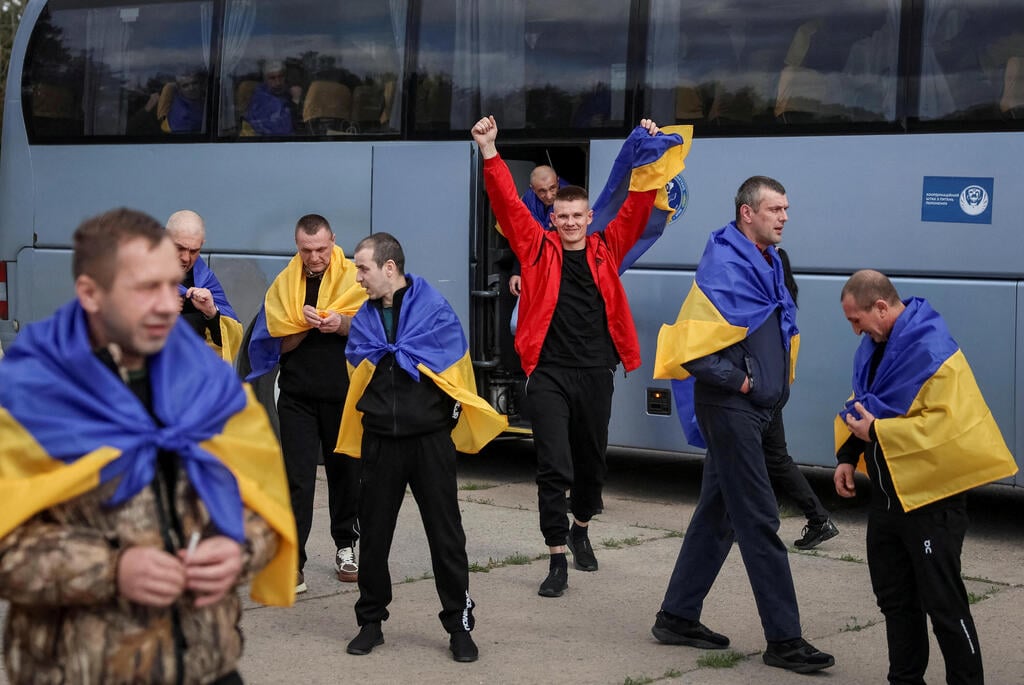
Stepping off the bus wrapped in flags; the soldiers who returned
(Photo: REUTERS/Anatolii Stepanov )
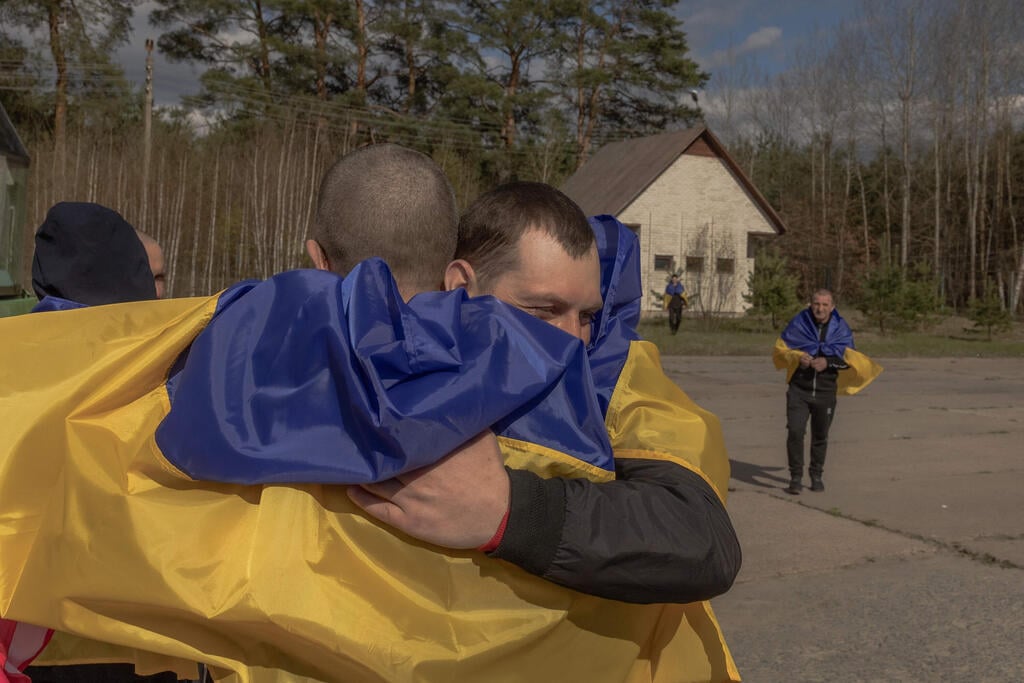
(Photo: Roman PILIPEY / AFP)
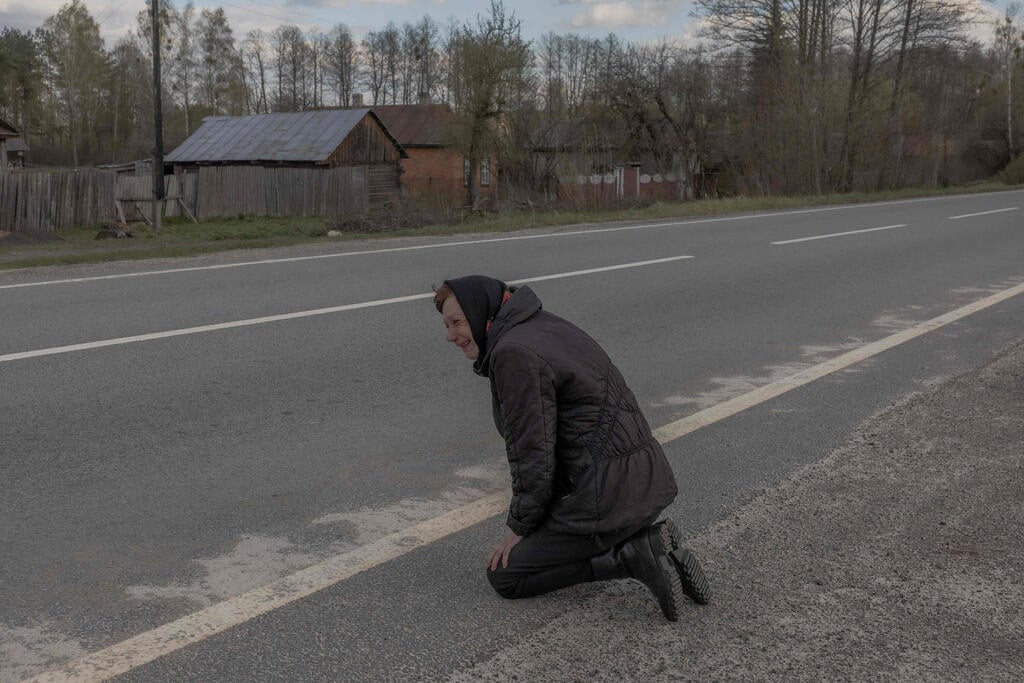
A Ukrainian woman kneels in honor of the returning soldiers over the weekend
(Photo: Roman PILIPEY / AFP)
One of the returnees, a soldier named Vadym, said he had been held captive for three and a half years, and when he was released he had one immediate request: “I want to see my son, who was born while I was in captivity.” Another returning soldier, Ruslan Osauliak, said he hoped his parents were still alive after more than three years in captivity: “What do I want? I want quiet skies above us, to drive them, the Russians, out of here as quickly as possible, all of them. Every man must defend his homeland and his family.”
Zelensky: ‘Russia is again leading to a man-made catastrophe’
Ukraine is marking today the 40th anniversary of the Chernobyl nuclear disaster, which occurred on April 26, 1986, when it was still part of the Soviet Union. In remarks for the anniversary, Ukrainian President Volodymyr Zelensky accused Russia of carrying out “nuclear terror” because of the attacks it continues to launch in the area of the damaged facility, strikes he says endanger humanity with another disaster at the site. He noted that Russian drones regularly fly over Chernobyl and that last year one of them struck the protective shell of the nuclear site.
“The world must not allow this nuclear terror to continue, and the best way to end it is to force Russia to stop its irresponsible attacks,” he said. “Russia is again leading the world to the brink of a man-made catastrophe.”
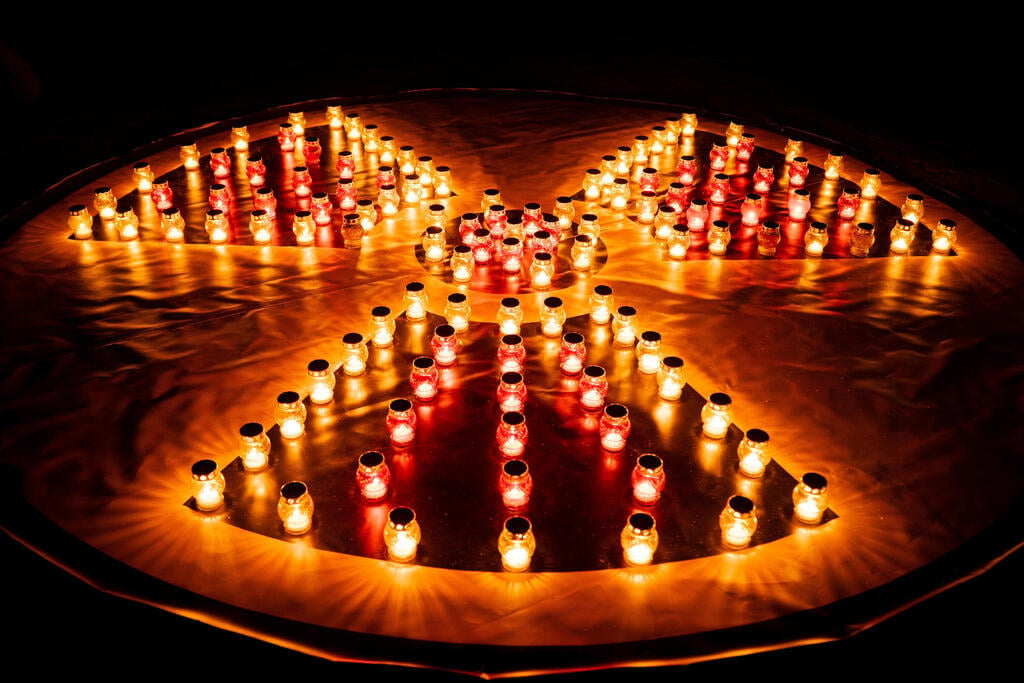
Lighting candles in memory of the victims of Chernobyl yesterday in Ukraine
(Photo: AP Photo/Dan Bashakov)
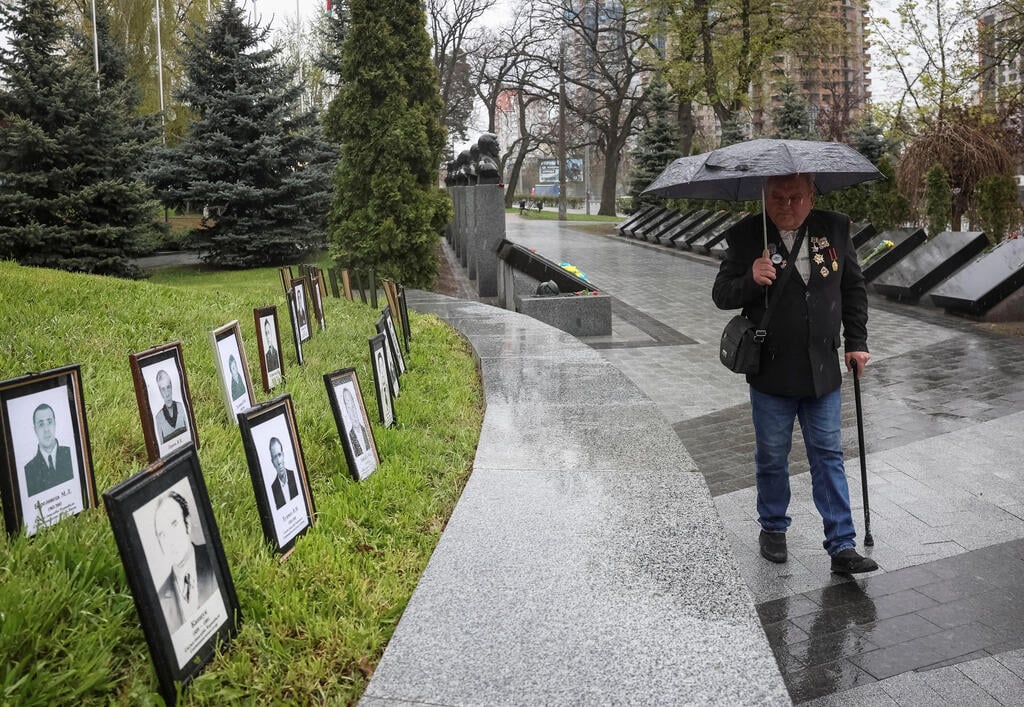
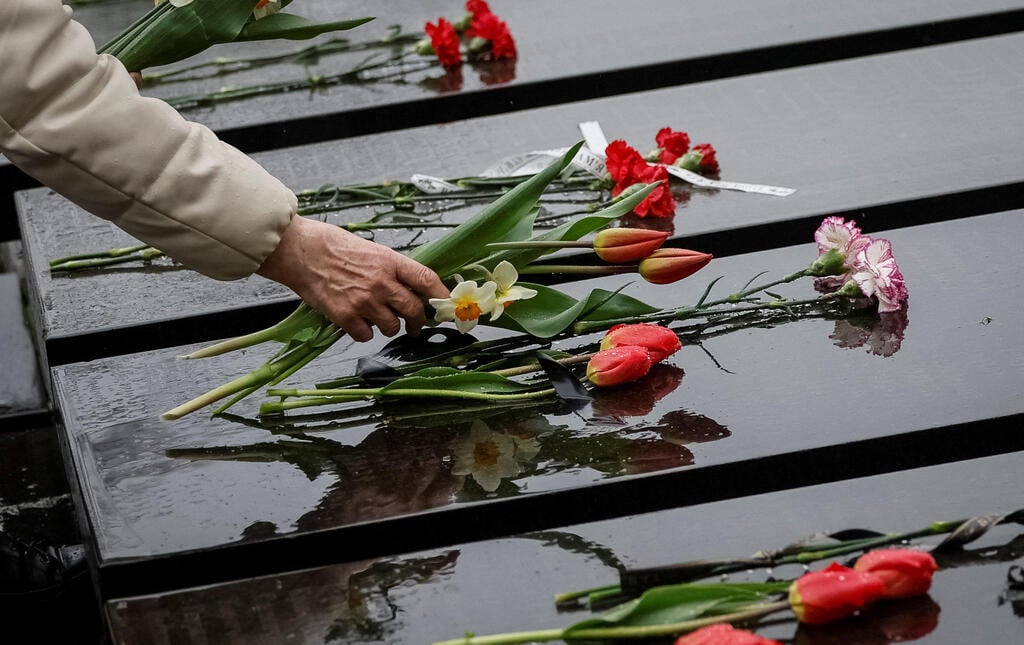
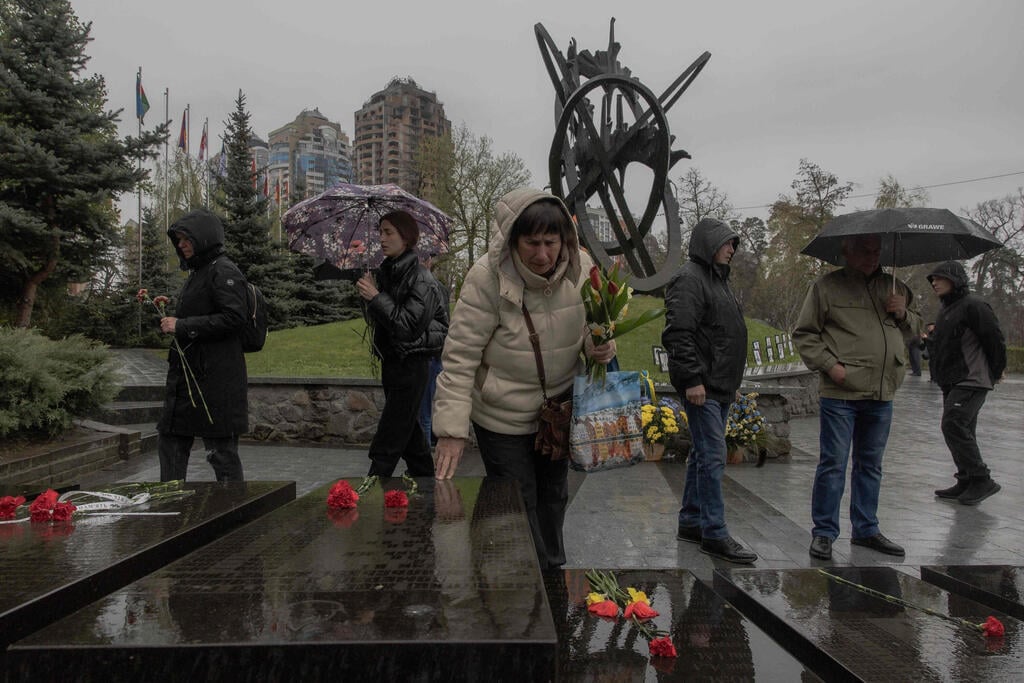
At the memorial for the victims of the disaster today in Kyiv
(Photo: REUTERS/Gleb Garanich)
(Photo: REUTERS/Gleb Garanich)
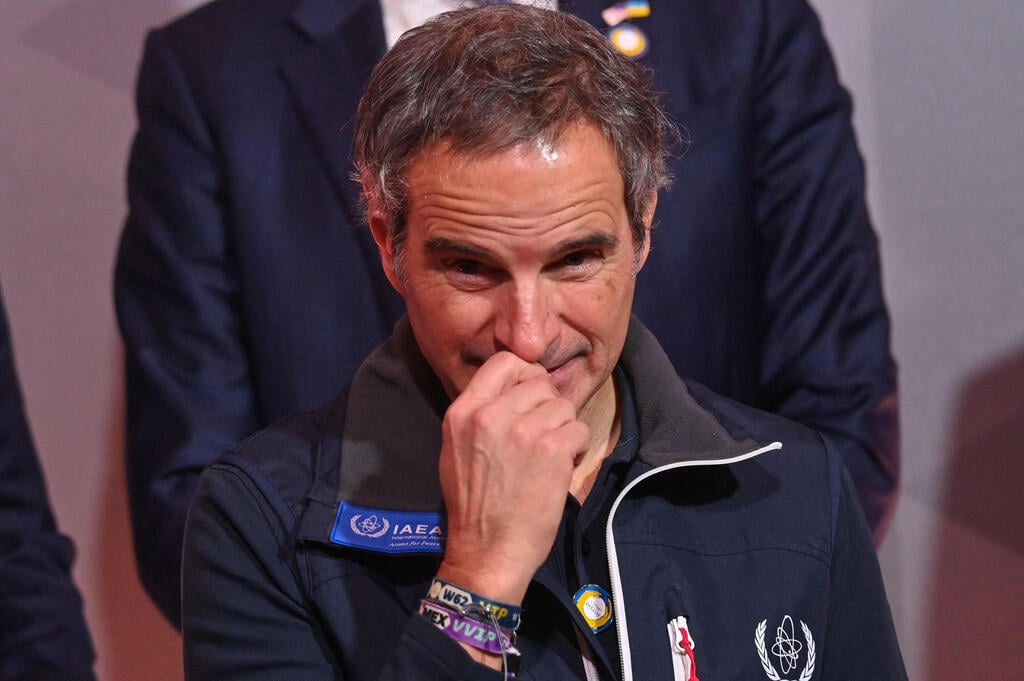
IAEA Director General Rafael Grossi pays tribute to the victims at a ceremony marking 40 years since the disaster today
(Photo: Sergei SUPINSKY / AFP)
(Photo: Roman PILIPEY / AFP)
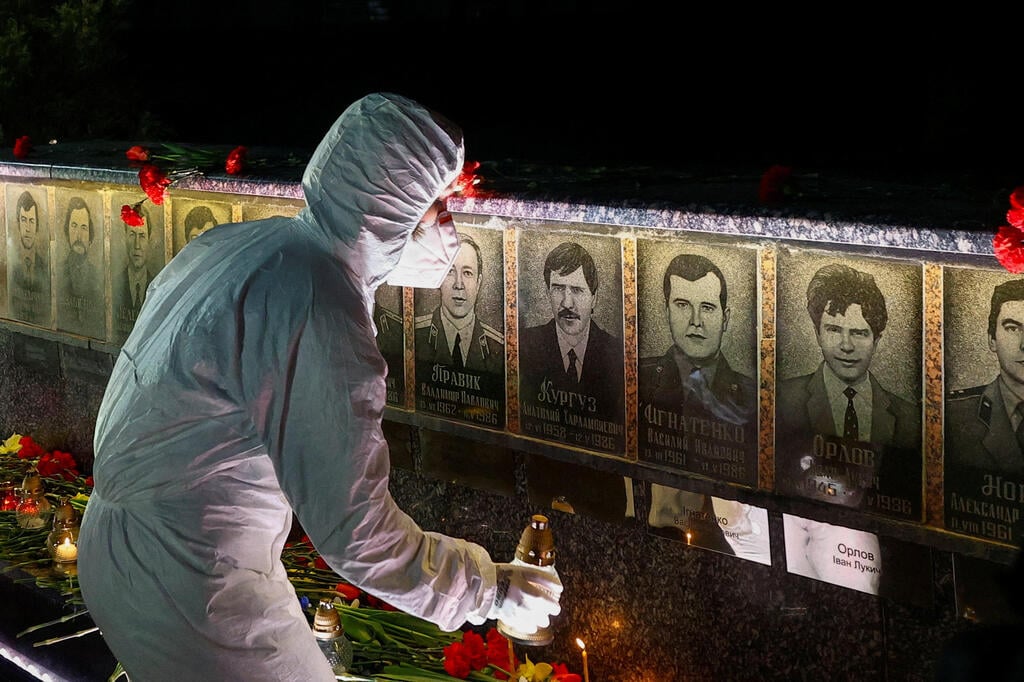
A worker at the Chernobyl nuclear facility places a candle in honor of those who sacrificed their lives exactly 40 years ago
(Photo: REUTERS/Valentyn Ogirenko)
The Chernobyl disaster, considered the worst nuclear accident in history, occurred at night 40 years ago in Reactor No. 4 of the Chernobyl nuclear power plant near the city of Pripyat in Ukraine, then still part of the Soviet Union. The disaster occurred during a safety test that went awry because of a deadly combination of flaws in the reactor’s design and serious human errors by its operators. Those led to a massive steam explosion that tore off the reactor roof and released enormous amounts of radioactive particles into the atmosphere — several hundred times the radiation released in Hiroshima after the atomic bomb was dropped there.
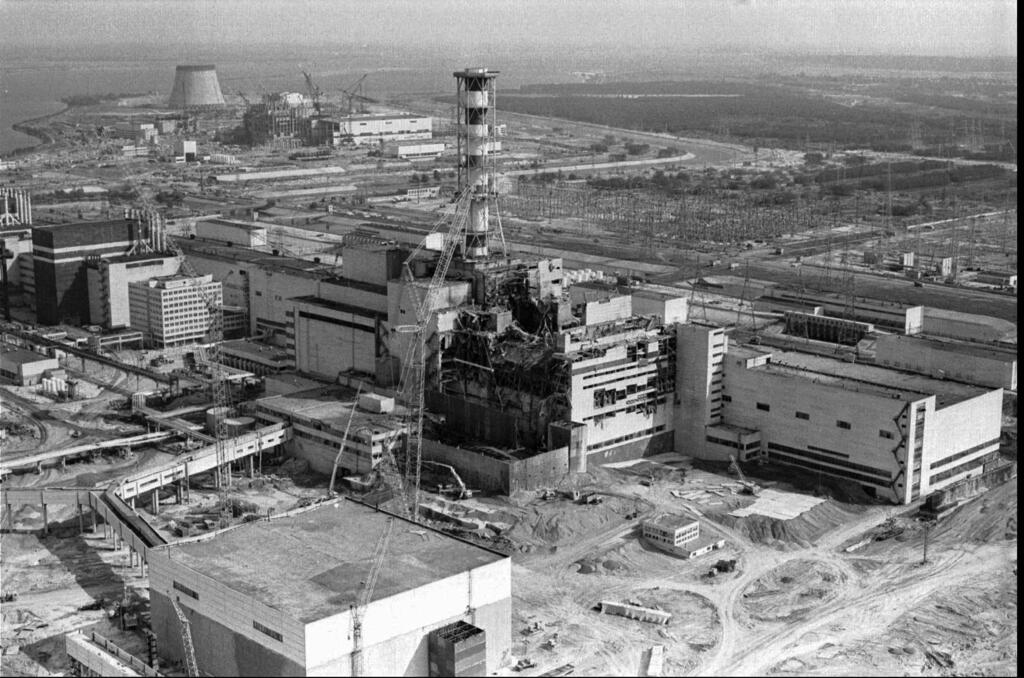
The Chernobyl nuclear reactor after the 1986 disaster
(Photo: AP)
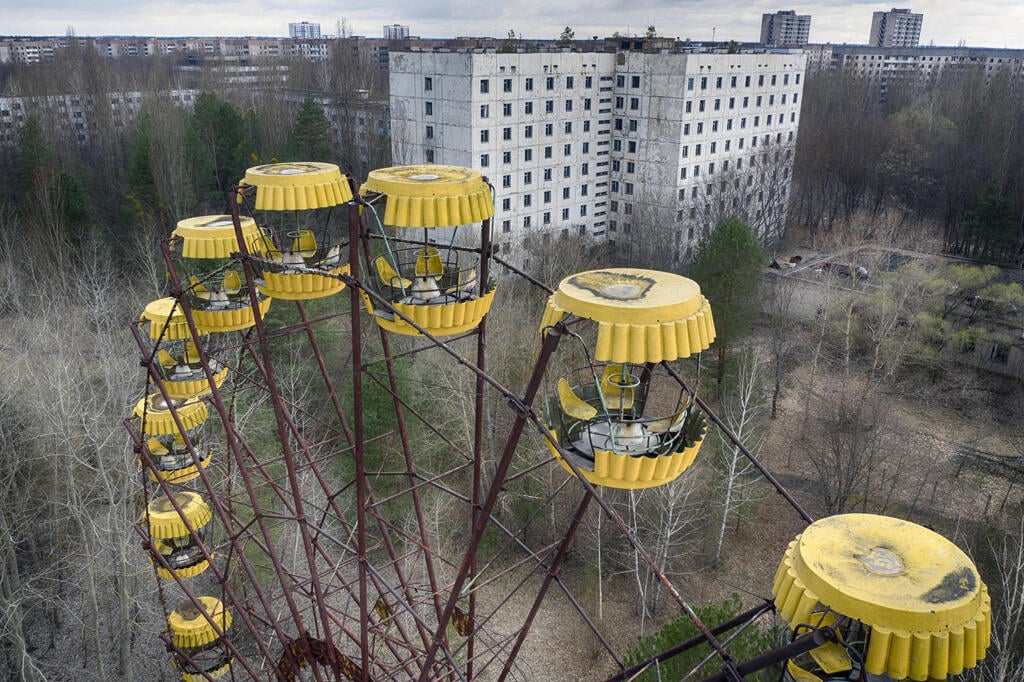
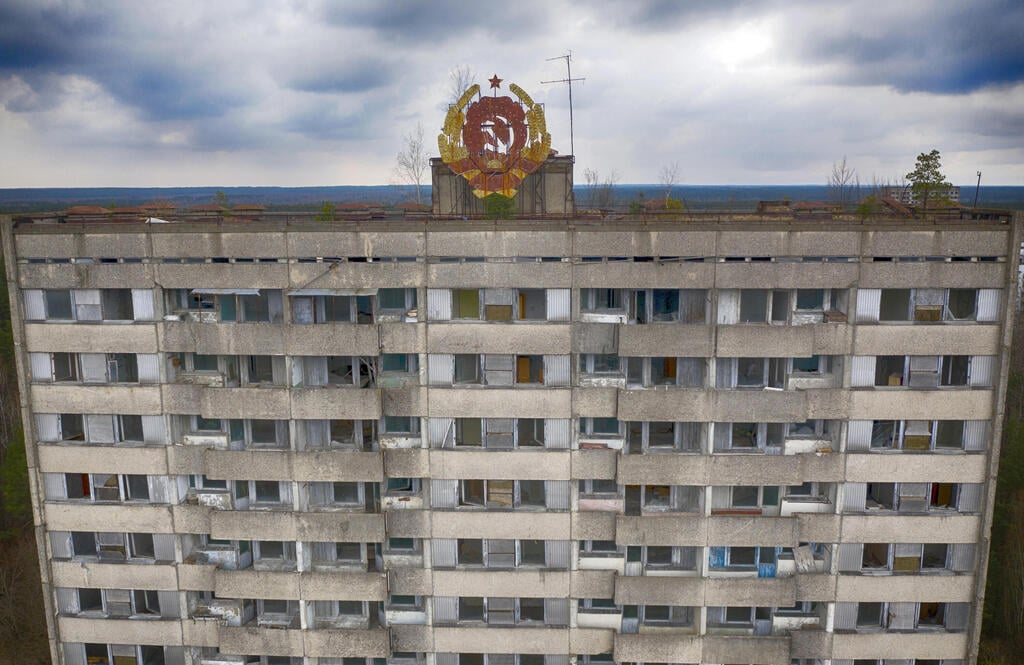
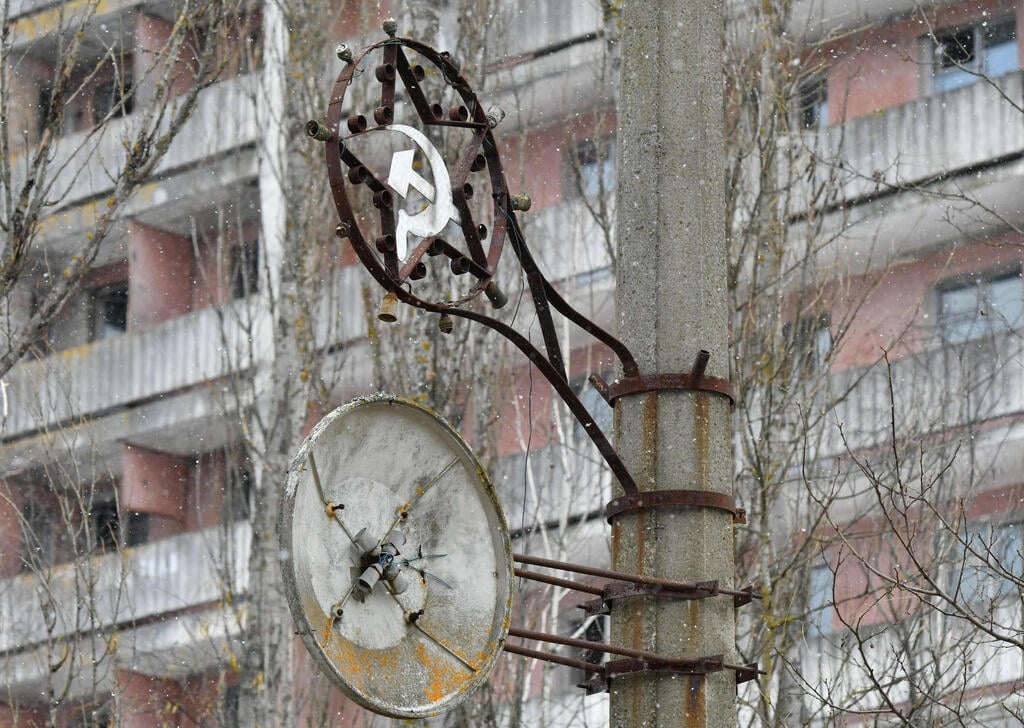
The nearby town of Pripyat, which became a ghost town frozen in time and retained its Soviet appearance
(Photo: AP)
(Photo: AP)
(Photo: AFP)
The Chernobyl disaster caused heavy loss of life: Dozens of people died immediately or within weeks, mainly firefighters and plant workers exposed to direct radiation. But according to estimates, many more died over the longer term from illnesses such as cancer caused by the radiation that spread. Estimates range from thousands of deaths to hundreds of thousands. The Chernobyl disaster, and the Moscow regime’s initial attempt to conceal it, are still seen as a key factor that accelerated the collapse of the Soviet Union because it exposed the rot in the governing system. It also permanently changed perceptions of nuclear safety around the world, halted reactor construction projects in many countries and led to the creation of strict international oversight mechanisms. To this day, a radius of about 30 kilometers around the Chernobyl reactor is defined as an exclusion zone that should not be entered without special protection.