

Hours after Saudi media outlets reported on an alleged “draft agreement” between the United States and Iran, American media reported that the draft was not credible, while Iranian officials stressed that the gaps between the sides remain “deep and numerous” and that an agreement is not necessarily close.
The reports came despite the arrival in Tehran on Friday evening of Pakistani army chief Gen. Asim Munir, who is leading mediation efforts, after a Qatari delegation also arrived there earlier in the day. At the same time, President Donald Trump announced Friday evening that he was canceling plans to attend the wedding of his eldest son, Donald Trump Jr., scheduled for Saturday in the Bahamas, saying he needed to remain in Washington because of the situation at the White House.
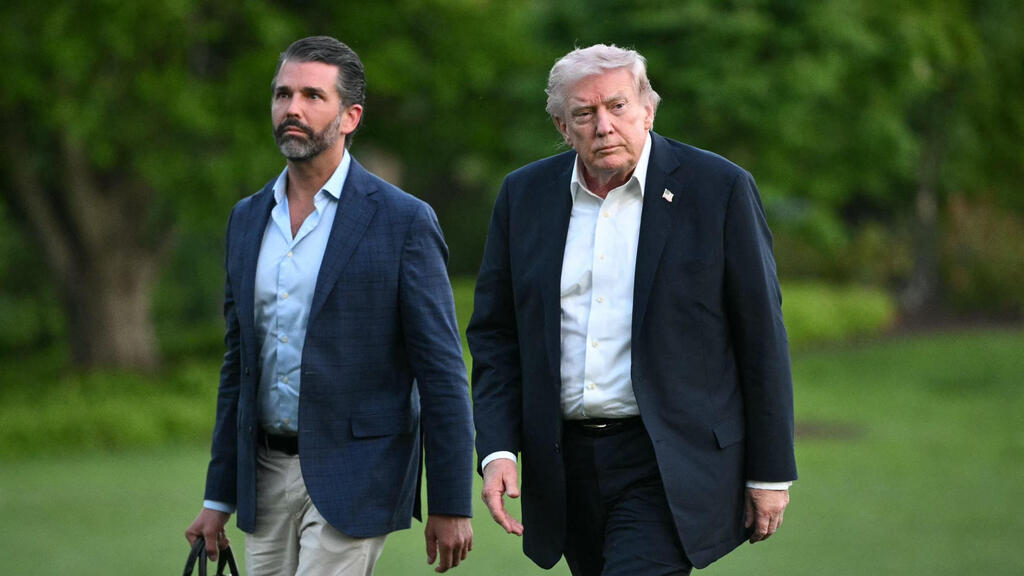
In a post on Truth Social, Trump wrote: “While I very much wanted to be with my son, Don Jr., and the newest member of the Trump Family, his soon to be wife, Bettina, circumstances pertaining to Government, and my love for the United States of America, do not allow me to do so. I feel it is important for me to remain in Washington, D.C., at the White House during this important period of time.”
Munir arrived in Tehran on Friday evening and, according to The Wall Street Journal, his visit points to a “critical juncture” in the negotiations. But it remains unclear which direction the talks are taking, despite reports earlier Friday about a “final draft” of a brief memorandum of understanding that would end the war while postponing the core disputes, chief among them the nuclear issue, to later negotiations. A Wall Street Journal correspondent reported, citing sources, that the draft was inaccurate.
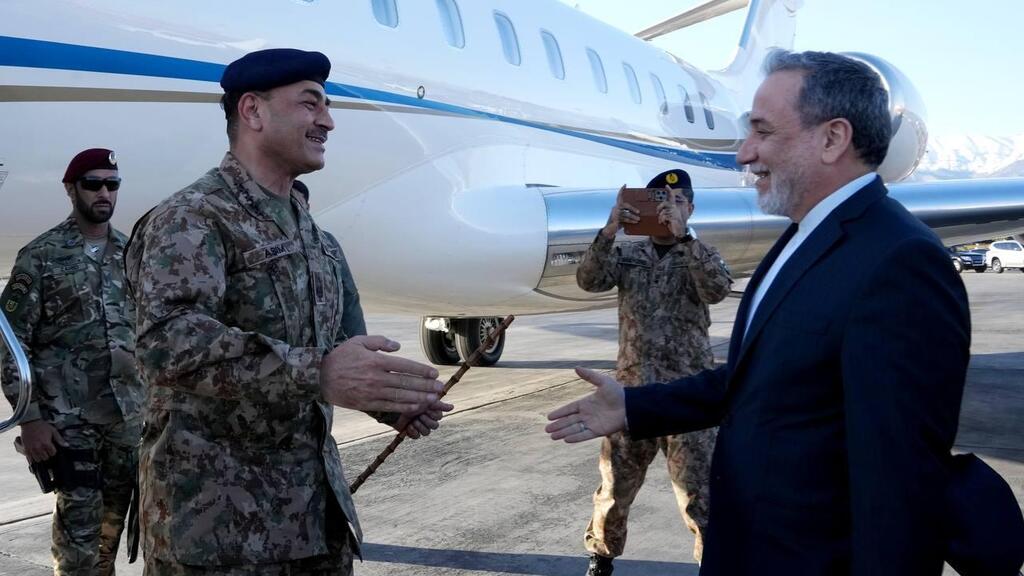
Iranian Foreign Minister Abbas Araghchi meets with Pakistani army chief Gen. Asim Munir
Another denial was later published by the Qatari newspaper Al-Araby Al-Jadeed, quoting a source familiar with the negotiations as saying: “Reports about a possible draft agreement are unfounded and merely media speculation.”
The source referred to this week’s visit to Iran by Pakistani Interior Minister Mohsin Naqvi, which preceded Munir’s arrival, and said: “He did not carry a new American message to Iran. The visits by senior Pakistani officials to Tehran reinforce Islamabad’s mediation efforts and its desire to prevent escalation. Tehran still views the American demands as excessive and unreasonable and believes the problem lies in Washington, not Tehran.”
Iran’s ISNA news agency later quoted sources sounding pessimistic, saying that “the presence of Pakistan’s army chief does not necessarily mean an understanding will be reached regarding the initial framework.”
Iranian Foreign Ministry spokesman Esmail Baghaei said Friday evening that an agreement was not close.
“These visits are a continuation of the same diplomatic process,” he said. “We cannot say we have necessarily reached a stage where an agreement is near. The differences between Iran and the United States are deep and numerous, and it cannot be said that after several visits or negotiations over several weeks we will certainly reach a conclusion. The focus of the negotiations is ending the war and, at this stage, there are no plans to discuss issues related to nuclear matters.”
Although Trump has consistently insisted on an agreement that would effectively dismantle Iran’s nuclear program, Tehran continues to demand a preliminary agreement to end the war before negotiating that issue.
The backdrop includes an unverified report that Supreme Leader Mojtaba Khamenei ordered that enriched uranium not be removed from Iranian territory — a directive that would effectively prevent an agreement because it is considered a red line for Trump.
Iran’s Foreign Ministry spokesman appeared to refer indirectly to the issue Friday evening, saying: “We will not reach a solution at this stage if we want to discuss the details of highly enriched uranium. We must first end the war, and then we can talk, or not talk, about other issues.”