

Six months after the war with Iran began, Washington is shifting from sustained military pressure toward an effort to choke Tehran economically, even as Iran refuses to surrender, traffic through the Strait of Hormuz remains disrupted and no diplomatic breakthrough appears close.
President Donald Trump said Thursday that the United States was not negotiating with Tehran despite continuing regional efforts to restart diplomacy.
Gallery
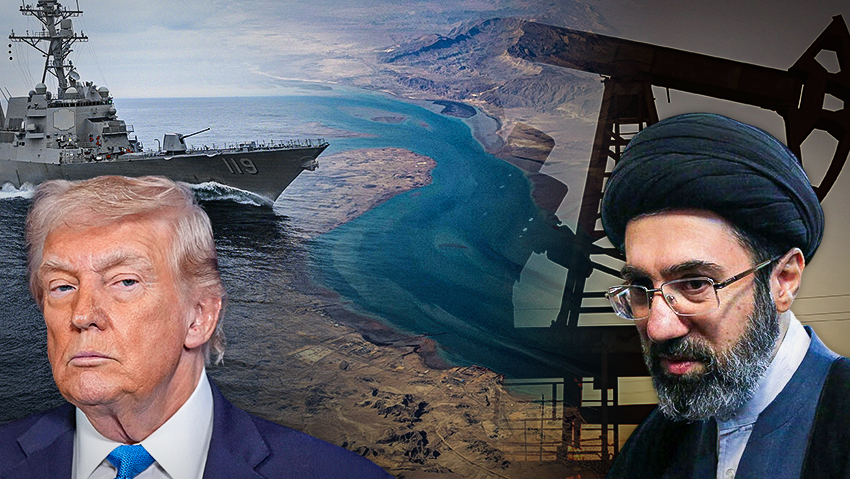
Six months into Iran war, Tehran refuses to yield as US turns to economic siege
(Photo: Shutterstock, AP/Alex Brandon, REUTERS/Stringer, Rouhollah Vahdati/ISNA/WANA (West Asia News Agency)/AFP, Lance Davis/United States Navy/Huntington Ingalls Industries)
“We don’t want to talk to them,” Trump told reporters in the Oval Office. “We’re not looking to meet with them either.”
At the same time, Qatari Prime Minister and Foreign Minister Mohammed bin Abdulrahman Al Thani arrived in Tehran for meetings with senior Iranian officials in an attempt to create what his office described as a more favorable environment for dialogue.
Al Thani met Iranian Foreign Minister Abbas Araghchi, parliament speaker Mohammad Bagher Ghalibaf and President Masoud Pezeshkian.
According to the Qatari government, Al Thani and Araghchi discussed a proposal concerning the Strait of Hormuz that includes establishing a temporary joint shipping corridor and cooperating on a mine-clearing project.
Against the backdrop of Iranian attacks in the Gulf, Al Thani stressed “the need to respect the sovereignty of neighboring states and freedom of navigation.”
In his meeting with Ghalibaf, he called for a renewal of diplomacy.
Ghalibaf, meanwhile, blamed Washington for the continuing confrontation.
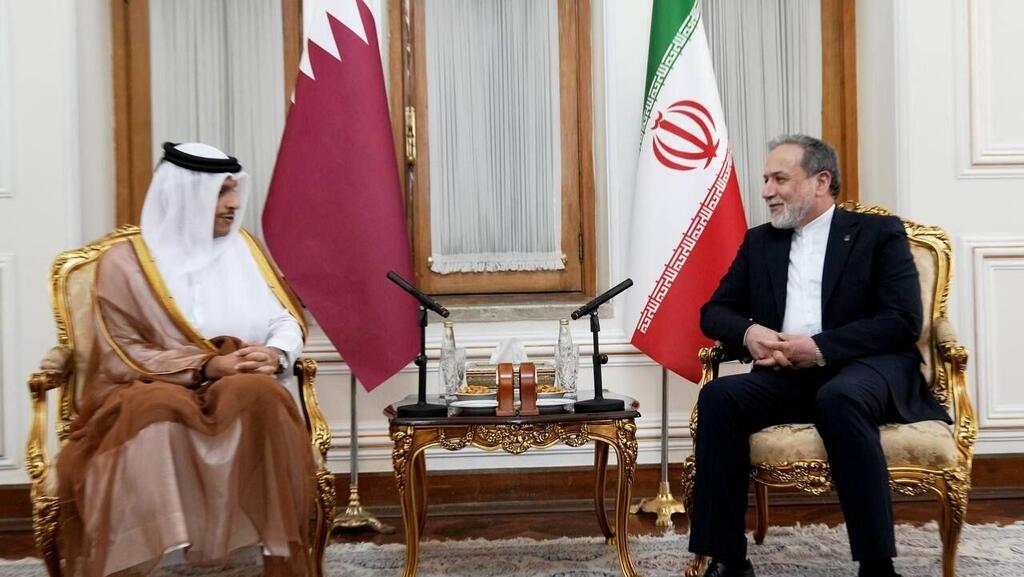
Foreign Minister Mohammed bin Abdulrahman Al Thani meets Iranian Foreign Minister Abbas Araghchi: ‘Respect neighboring states’ sovereignty and freedom of navigation’
“The Trump administration makes wrong decisions based on false information,” he said. “America’s miscalculations attack the interests of the Iranian people and contribute to expanding insecurity in the region. The economic siege plan against Iran will also fail, and the Iranian people will regain their rights.”
Iran’s Revolutionary Guards said Thursday evening that “Iranian sovereignty over the Strait of Hormuz remains firm.”
‘An operation to destroy their economy’
White House press secretary Karoline Leavitt told Fox News that Trump continues to keep “all options on the table” regarding Iran.
She said Iran’s military had been devastated during the fighting and that Washington had now moved toward an economic campaign.
“There is now an ‘economic boycott’ operation underway to destroy their economy,” she said.
Leavitt said no negotiations were taking place.
“This will continue until the president feels that perhaps they will come to the negotiating table in a meaningful way,” she said. “We have not seen that yet.”
A senior Iranian official described the U.S. measures as “all-out economic warfare” after the Treasury Department this week announced plans aimed at cutting Iran off from its trading partners, part of what Trump has called an “economic D-Day.”
Trump details economic blockade on Iran


Qatar’s intervention also strengthens its position as a regional mediator, despite having itself come under Iranian attack during the war.
The conflict began on February 28. Six months later, shipping through the Strait of Hormuz remains disrupted and Iran continues to attack tankers periodically.
Washington wants traffic through the strait restored to its prewar state, when the waterway served as one of the world economy’s most important oil arteries.
Iran, however, has refused to relinquish control and says the strait will remain closed unless the United States accepts its conditions, including an end to the blockade of Iranian ports, compensation and sanctions relief.
Six months later, no clear victory
Trump initially described the conflict as a “little excursion” and repeatedly suggested it would end within weeks.
Instead, it has become a costly stalemate with political, military and economic consequences spreading well beyond Iran.
Iran has not surrendered. Maritime traffic through Hormuz remains disrupted. There is no clear path toward ending the war.
After Washington concluded that airstrikes alone were unlikely to force Tehran to capitulate, the administration returned to economic pressure in hopes of weakening the regime further.
Reuters has mapped several of the consequences for the United States, Iran and the global economy after six months of war.
Trump’s political cost
The conflict was unpopular in the United States from the beginning, and public opposition has grown as fuel prices increased amid disruptions to oil exports through Hormuz.
Trump’s approval rating has fallen from 40% to 33% since the fighting began, according to a Reuters/Ipsos poll, putting him at a low point.
The political cost is particularly sensitive because Trump campaigned in 2024 on promises to reduce costs for Americans and to end wars rather than start new ones.
Only 31% of Americans support the war, according to the poll.
That level of support is lower than for several previous U.S. military campaigns at a comparable stage, including the war in Afghanistan, which retained support above 50% for years in Gallup polling.
Rising prices could also hurt Republicans in November’s midterm elections, when the party must defend narrow majorities in both the House and Senate.
The war has also deepened divisions inside the Republican Party.
More isolationist Republicans, including parts of the MAGA movement, want the conflict ended quickly. Others argue that Trump should maintain or even intensify military pressure on Tehran until Iran is decisively defeated.
Global economy absorbs the shock
The U.S. and Israeli attacks immediately raised fears of severe damage to the global economy because of disruptions through the Strait of Hormuz, a roughly 34-kilometer-wide passage between Iran and Oman through which about one-fifth of the world’s energy supply moved before the war.
Oil prices surged, fueling concerns over a possible global recession.
The damage remains significant because higher fuel costs affect shipping, logistics and supply chains worldwide, although the impact has been less severe than many economists initially feared.
The International Monetary Fund has lowered its global growth forecast twice since the war began. It now expects the world economy to grow by 3.0% this year, compared with a 3.3% forecast in January.
Still, the global economy has proved more resilient than during the oil shocks of the 1970s.
Reuters noted that major economies have used substantial spending and investment to soften the impact, while the continuing boom in artificial intelligence has also helped support economic activity.
Iran wounded, but not defeated
Iran’s military and economy have suffered severe damage, but Tehran retains the ability to launch attacks across the Middle East and continue disrupting traffic through Hormuz.
In May, U.S. Central Command chief Adm. Brad Cooper told Congress that American forces had destroyed 161 Iranian naval vessels and neutralized 82% of Iran’s air-defense systems.
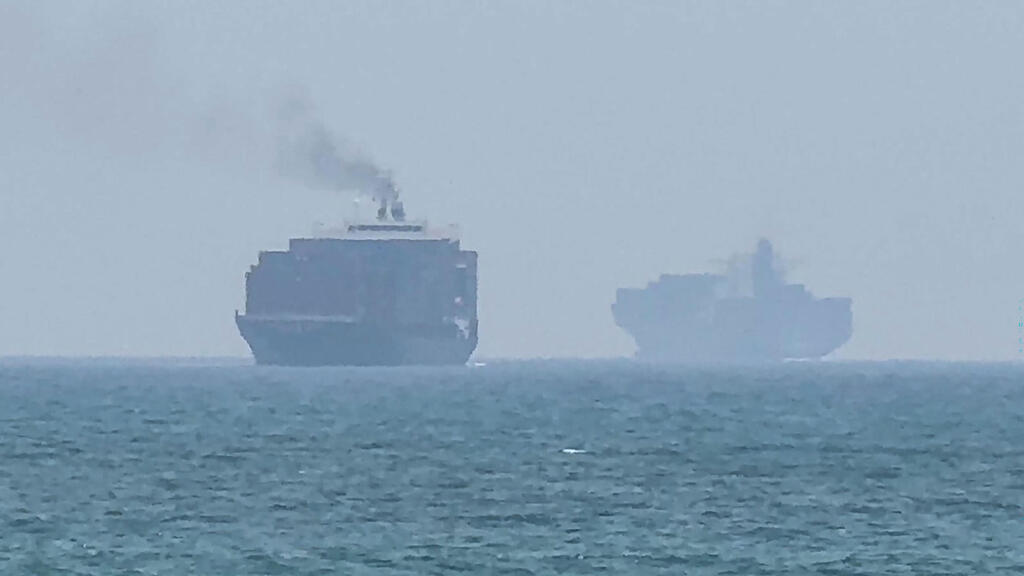
The Strait of Hormuz
(Photo: AFPTV / AFP)
Iran’s air force, which once flew as many as 100 sorties a day, was no longer conducting missions, he said.
Yet Iran still retains stocks of drones and missiles of varying ranges and has continued carrying out successful attacks on ships and U.S. military facilities around the region.
Reuters reported in March that the United States could say with certainty that it had destroyed only about one-third of Iran’s vast missile arsenal.
The fate of another third was less clear. Intelligence assessments suggested those missiles had either been damaged, destroyed or buried in tunnels and underground bunkers, according to sources cited at the time.
Thousands of members of the Revolutionary Guards and Basij have been killed during the war, while Iran’s economic crisis has deepened. Inflation has worsened and trade has been disrupted.
At the same time, the war has prompted the regime to intensify repression at home, while political divisions have been pushed aside under what authorities portray as an existential external threat.
Middle East left more unstable
The war was initially framed as an effort to remove Iran as a threat to the Middle East.
But regional officials and experts cited by Reuters believe Tehran’s position has, in some respects, strengthened and that the region is currently less secure, particularly because the conflict remains unresolved and Iran continues to issue threats and demands.
Gulf states also remain divided over how to deal with Tehran.
Iranian missile and drone attacks on Arab Gulf states, including U.S. allies, have damaged military facilities, caused casualties and disrupted regional air travel.
Iranian attacks on tankers, combined with a blockade by Yemen’s Houthi rebels targeting Saudi-linked shipping in the Red Sea, have also driven up insurance and transportation costs.
The effect stretches far beyond individual attacks, disrupting supply chains and increasing uncertainty across Gulf economies.
Nuclear threat remains unresolved
U.S. and Israeli strikes in June 2025 and during the opening phase of the current war severely damaged Iran’s three known enrichment sites at Fordow, Natanz and Isfahan, as well as sites suspected of being linked to weaponization.
Israel also killed leading Iranian nuclear scientists who played significant roles in the program.

The centrifuges at Natanz in 2024. Assessments: Iran could achieve nuclear breakout within a year
(Photo: AP)
U.S. intelligence assessments in May put Iran’s estimated nuclear breakout time, the period needed to produce enough fissile material for a bomb, at up to one year, compared with up to six months before the war.
But preventing Iran from obtaining a nuclear weapon remains Trump’s central stated objective, and that goal appears far from assured.
The true condition of Iran’s nuclear program remains unclear because inspectors from the International Atomic Energy Agency have not returned to Iranian nuclear sites.
As a result, the agency has been unable to verify the location of roughly 440 kilograms of uranium enriched to 60% since the June 2025 strikes.
That stockpile could potentially be enriched further to weapons grade at an undisclosed facility.
Iran continues to publicly deny that it is seeking a nuclear weapon.
US military under growing strain
The war has also taken a significant toll on the U.S. military.
American forces have lost drones and aircraft to both Iranian fire and accidents. A Congressional Research Service report in May said 42 U.S. military aircraft had been lost.
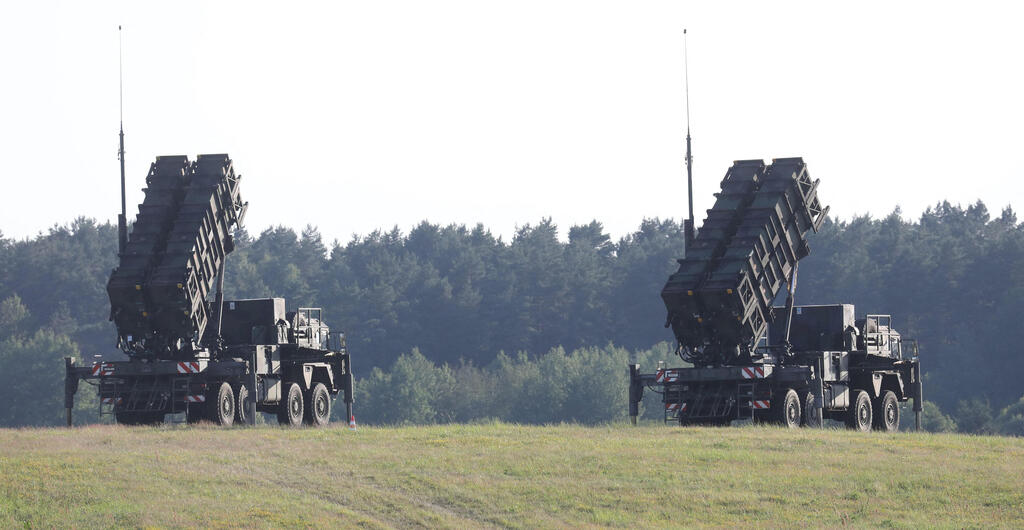
Patriot batteries
(Photo: PETRAS MALUKAS / AFP)
Munitions stocks have also become a major concern, particularly interceptor missiles.
Reuters reported that the U.S. military had used “almost all” of its global inventory of certain precision weapons.
An assessment by the Center for Strategic and International Studies said that by July, the United States had used about 65% of its Patriot interceptors and reduced its stock of THAAD interceptors by at least 38%.
Washington has moved fighter jets, warships and other military assets to the Middle East from Europe and Asia and extended deployments in the region, raising questions about readiness elsewhere.
The aircraft carrier USS Gerald R. Ford spent more than a year on deployment, its longest mission since the Vietnam War.
Lawmakers have also raised concerns about conditions aboard the USS Abraham Lincoln after 200 consecutive days at sea. The Lincoln was replaced last week by the USS George Washington, which had been operating in the Pacific.
Six months into the war, Iran is badly damaged but still fighting, the Strait of Hormuz remains a global pressure point, the nuclear issue is unresolved and the U.S. military is being stretched across multiple theaters.
And despite new diplomatic efforts by Qatar, neither Washington nor Tehran appears ready to make the concessions needed to end the conflict.