


At first glance, the D9 bulldozer moving across the demonstration grounds of Israel Aerospace Industries’ ELTA division looks familiar: a massive armored engineering vehicle of the kind used to clear routes and accompany Israeli infantry and armored forces deep into hostile territory.
Then comes the unsettling detail. There is nobody in the cab.
Gallery
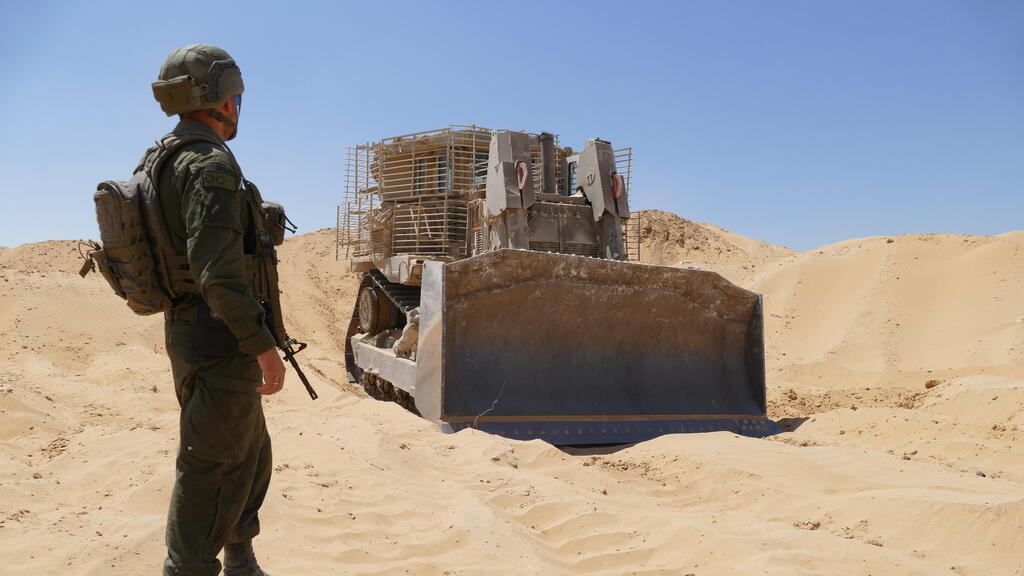
Israel’s driverless D9 enters combat as IAI pushes battlefield autonomy to the ground
(Photo: Nir Ben Zaken)
The steering wheel turns by itself. The blade moves with precision. The bulldozer advances without a driver.
The system is called Panda, and IAI says it represents the extension of a revolution Israel helped pioneer in the air decades ago into a new domain: autonomous warfare on the ground.
Panda is not a new bulldozer but a robotics and autonomy package installed on the familiar D9 platform. The technology can also be integrated into other ground vehicles, including wheeled robotic platforms used for reconnaissance and armed missions.
The goal is straightforward: send machines into the most dangerous areas first, allowing them to encounter mines, anti-tank fire and other threats before soldiers do.
A tablet, a game controller and full autonomy
Panda was designed to make operation as intuitive as possible for troops in the field.
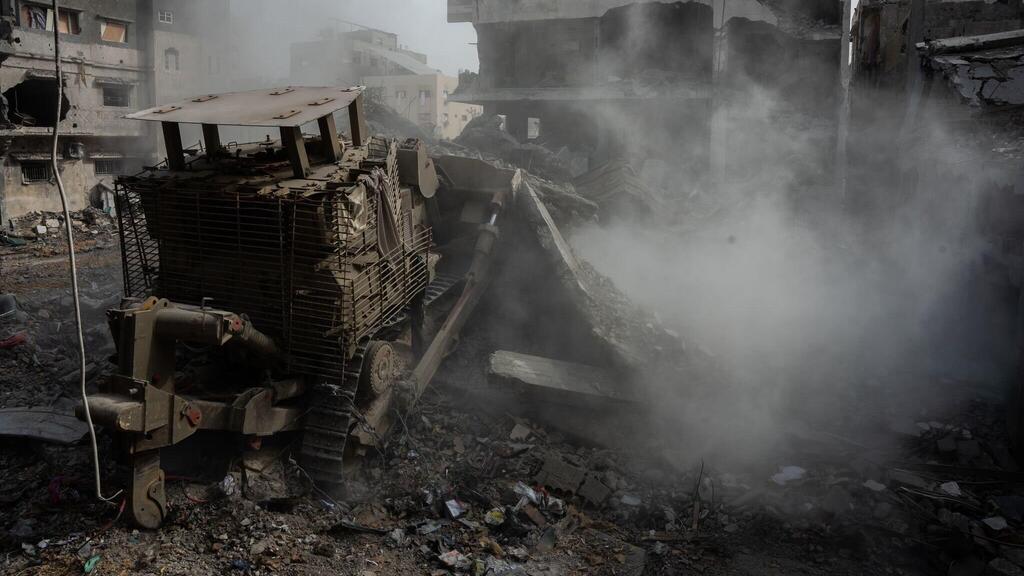
Instead of sitting inside the bulldozer under threat from explosives and anti-tank weapons, an operator can control it remotely using a portable system consisting of a ruggedized tablet and a controller resembling one used with a PlayStation.
(Photo: IDF)
The screen displays the vehicle’s route, obstacles and live video feeds from its sensors.
“We wanted to make it feel somewhat like a computer game, because today it is very easy for the younger generation to connect to that,” said Maayan, head of the Panda project at ELTA. For security reasons, she can be identified only by her first name.
But, she said, remote control is only part of the system.
“Teleoperation is only part of it, and our major advantage is autonomy,” she said.
According to IAI, the Panda shown during the demonstration was being operated from thousands of kilometers away. The company did not disclose the operator’s location, but the demonstration underscored the distances over which the system can be controlled.
More significantly, the operator can assign the vehicle a mission and allow it to carry out the task autonomously.
That could mean driving from one point to another, clearing a route or constructing an earth barrier according to predetermined dimensions.
“It is very difficult for a human operator to build a precise earth barrier at two in the morning, in fog or under fire,” Maayan said. “For the autonomous system, parameters such as fatigue, weather or poor visibility simply do not exist. It performs the task at the push of a button with much greater engineering precision.”
From experiment to battlefield system
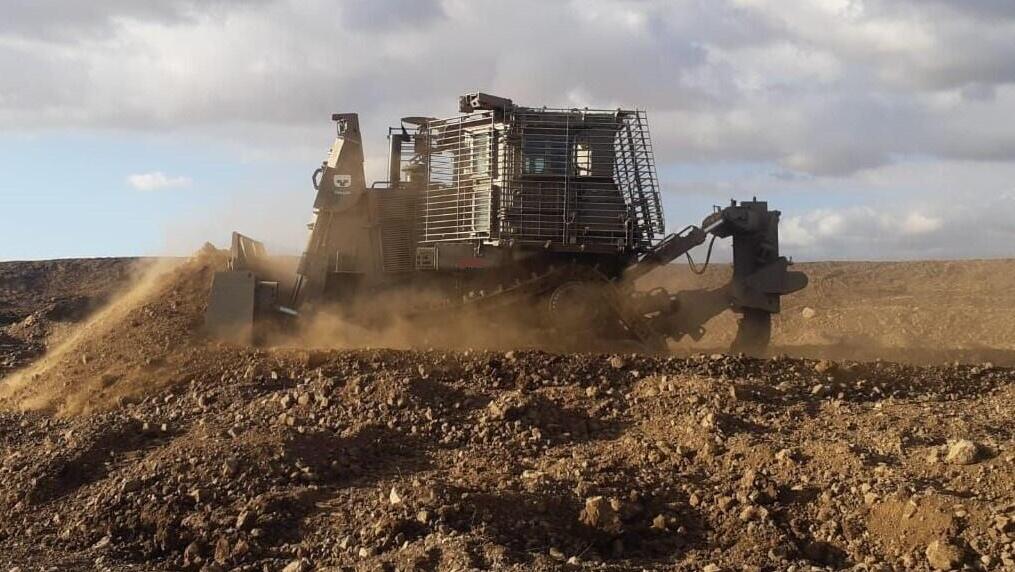
Work on robotic ground vehicles has been underway for more than 15 years, but recent combat has accelerated their development, according to IAI.
Systems that were once technology demonstrators have increasingly evolved into mature operational platforms, with battlefield feedback allowing ELTA engineers to make adjustments as they were being used.
“Panda has literally saved lives,” Maayan said.
(Photo: Israel Aerospace Industries)
“We saw vehicles return from battle with their driver compartments completely destroyed by direct hits. In the past, an incident like that would have ended in a severe disaster. Because the vehicle was controlled remotely or operating autonomously, serious injuries and loss of life were prevented.”
Beyond removing soldiers from individual vehicles, robotic systems can also change the calculations commanders make before an operation.
A mission to open a route suspected of being mined traditionally forces commanders to weigh the tactical value of the maneuver against the danger to the engineering crews sent forward first.
With an unmanned vehicle, the soldiers can remain farther back while the machine takes the initial risk.
The idea is not simply to replace a driver. It is to shift the human force one step behind the most exposed part of the battlefield.
From one robot to an entire fleet
ELTA, best known for its radar, intelligence and sensor systems, is integrating communications and multisensor capabilities into Panda and other unmanned ground platforms, including the REX MK3 and autonomous trucks.
Those systems can be operated across extremely long distances, allowing an operator abroad, according to the company, to remain involved in a mission in real time.
But IAI’s next objective goes further.
Today, remotely operated platforms generally rely on a one-to-one relationship between vehicle and operator. The company is developing what it calls a “one-to-many” model, in which a single person supervises an entire group of robotic platforms.
That could include bulldozers, reconnaissance vehicles and autonomous logistics convoys operating simultaneously, communicating with one another and coordinating their movements.
The operator would increasingly become a supervisor rather than a driver, intervening when necessary while the vehicles handle more of the mission themselves.
For IAI, the shift represents the next stage of battlefield robotics: not simply removing the soldier from the driver’s seat, but putting machines at the front of the formation altogether.
In that vision of future warfare, bulldozers and other autonomous vehicles would encounter the first mines, obstacles and incoming fire, while the soldiers remain behind them, carrying out the mission with less exposure to the battlefield’s most immediate dangers.