



Encouraged by the emerging election results, which indicate that his Likud party will remain the largest in the next Knesset, Prime Minister Benjamin Netanyahu turned his attention Wednesday morning to his next steps, planning his political moves and formulating a strategy for the days ahead.
Unlike in previous elections, Netanyahu did not speak with his political allies on exit poll night or the following day. Instead, he dealt with other matters, analyzed the results and showed no urgency to contact his partners. His only message to the leaders of his bloc came publicly, during his election-night speech, when he assured them they would be part of any political move he undertakes.
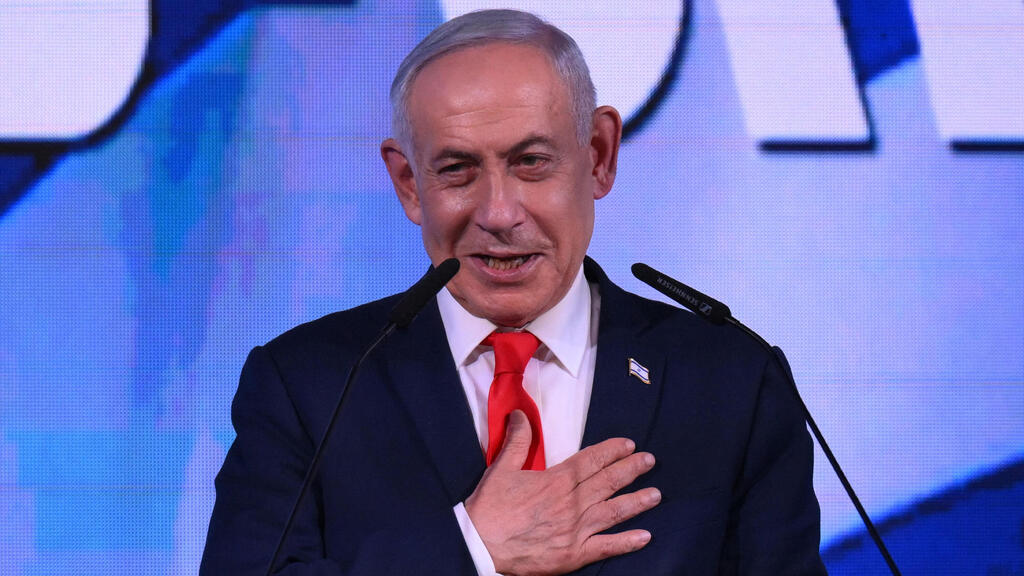
Netanyahu delivers his election-night speech
(Photo: Jewel SAMAD / AFP)
Why has Netanyahu remained silent for so long, breaking with his usual practice of calling his allies immediately after the exit polls? The likely explanation lies in his desire to preserve room for political maneuvering, as well as the need to formulate his next moves quickly to compel President Isaac Herzog to grant him the mandate to form a government, while preventing the rival change bloc from taking unilateral steps against him.
At this stage, Netanyahu is focusing his efforts on whether he can persuade a party from the opposing bloc to cooperate with him and avert another election. Senior Likud ministers attending the election-night gathering at the International Convention Center in Jerusalem were already arguing that the party should seek partnerships with Avigdor Liberman and Naftali Bennett, two right-wing figures in the rival bloc.
The prevailing assessment is that Liberman would refuse to serve under Netanyahu under any circumstances, and that Bennett would do the same. However, public opinion and mounting pressure could prove decisive. In the coming days, intermediaries, likely acting on Netanyahu's behalf, are expected to approach members of the opposing bloc to explore the possibility of cooperation and determine whether an alternative government could be formed.
The focus of both the pressure and the potentially attractive offers will be two of Netanyahu's former political partners. At the same time, he is expected to launch a broad public campaign against the change bloc and its intention to gain control of the Knesset speakership and parliamentary apparatus with the support of Arab parties.
The change bloc is preparing for the possibility that Netanyahu will stop at nothing, mounting an aggressive campaign against anyone who cooperates with its parliamentary initiatives. He is also already considering ways to drive a wedge between members of the opposing bloc and persuade some to abstain if those measures are brought before the Knesset plenum for a vote.