

A senior U.S. official said Sunday that Iran had rejected demands to end uranium enrichment and dismantle its major enrichment facilities.
The official, speaking to Reuters, also said Tehran had refused to stop funding allied armed groups in the Middle East and to open the Strait of Hormuz.
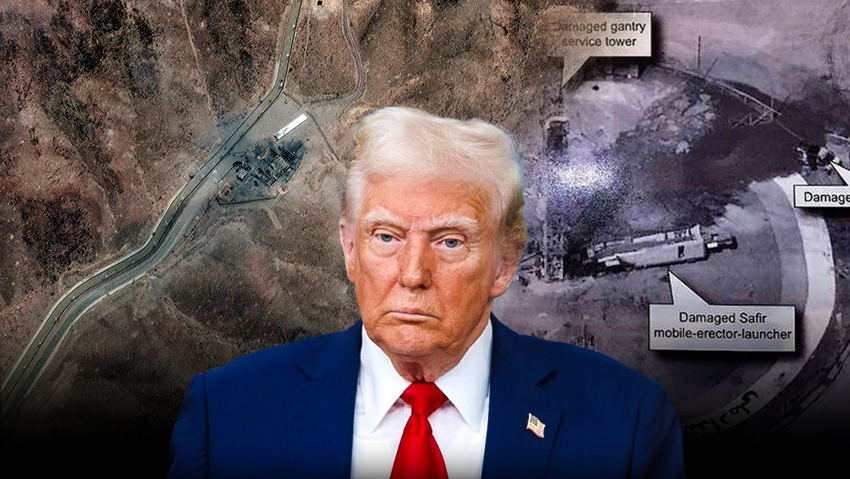
(Photo: MAXAR TECHNOLOGIES/Handout via REUTERS, SATELLITE IMAGE ©2025 MAXAR TECHNOLOGIES / AFP)
In a statement, Iran’s Revolutionary Guard said military vessels approaching the Strait of Hormuz would be considered a breach of the ceasefire and would be dealt with forcefully. The Guard also said the strategic waterway was under control and under the “smart management” of the navy of the Islamic Revolutionary Guard Corps.
Iranian President Masoud Pezeshkian discussed the ceasefire and progress in negotiations in Islamabad during a phone call with Russian President Vladimir Putin, according to Iranian statements. Pezeshkian said the biggest obstacle to reaching a fair agreement was what he described as double standards and hegemonic tendencies on the part of the United States.
“We are ready to reach a balanced and equal agreement that guarantees lasting peace and security in the region,” Pezeshkian said. “Our red line is national interests. If America adheres to international legal frameworks, it will not be difficult to reach an agreement.”
Putin, according to the Iranian readout, said Moscow supports diplomatic efforts to resolve the current crisis and is prepared to help find a political and diplomatic solution. He also reaffirmed support for Iran’s positions, including those related to compensation for losses resulting from what Iran described as aggression and to obtaining security guarantees.