

The Hamas terrorist network in the United States has spent more than two decades working to infiltrate America’s media and college campuses. The goal: to hijack the narrative and secure unintentional support for terrorism from the broader public.
According to Lara Burns—an attorney and retired federal agent—the strategy worked.
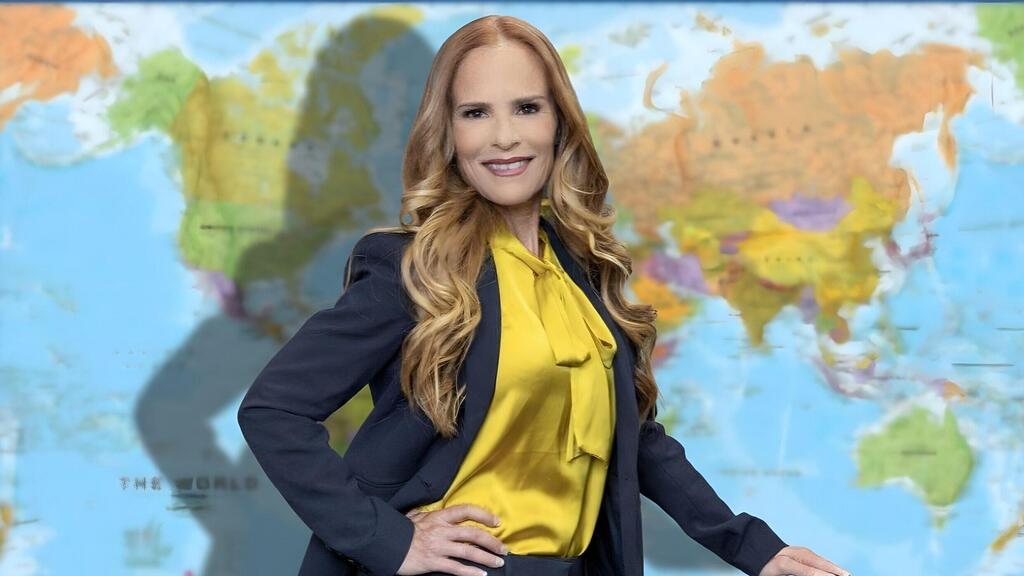
Between 1993 and 2004, Burns interviewed more than 800 people affiliated with the Muslim Brotherhood and Hamas. Through these investigations, she developed deep insight into the network Hamas was building inside the United States. She also played a key role in shutting down the Holy Land Foundation and labeling it a domestic terror organization.
This month, Burns traveled to Israel to meet with leaders, share her knowledge, and educate the media. She aimed to explain why U.S. news outlets and college campuses may be framing the story of Oct. 7 and the ongoing two-year war with Hamas the way they are.
Burns joined the FBI in 2000, just before the 9/11 attacks and former U.S. President George W. Bush’s declaration of a “war on terror.” At the time, the war targeted not only al-Qaida but also other groups, including Hamas. Burns was assigned to investigate Hamas’ U.S. funding apparatus, which ultimately led to the 2008 conviction of the Holy Land Foundation for funneling more than $12 million to Hamas.
Guilty verdicts on all 108 counts against the Holy Land Foundation for Relief and Development were announced in federal court in Dallas, Texas, representing the most significant victory against terrorist financing in the U.S. since 9/11.
Burns explained that U.S. authorities initially pursued Hamas aggressively, shutting down its funding, arms and key organizations. But once it became clear that Hamas was not conducting operational activity on American soil, the focus shifted elsewhere.
“American society and the U.S. government, in my opinion, failed to understand the strategy of groups like the Muslim Brotherhood and Hamas and that they plan hundreds of years in advance, and nothing deters them from pursuing that ultimate goal,” Burns told a group of journalists who met last week in Tel Aviv. “I think because they weren’t conducting overt military operations on U.S. soil, they were deemed to be less of a threat” than the Islamic State, Hezbollah and Iran, who were clearly active on U.S. soil. “They took a back seat. But to me, when organizations like Hamas are quiet, that’s when they’re the most lethal.”
"FBI priorities changed, and we stopped looking at Hamas. … When Oct. 7 happened, and when I woke up to hear the news of the attack, I was devastated, because I had always known how evil the terrorist organization was."
Burns said that by 2008, the government was “exhausted” from the lengthy investigation into Hamas funding and felt it had achieved a significant victory by dismantling the group’s U.S. fundraising arm.
“FBI priorities changed, and we stopped looking at Hamas,” she admitted. “When Oct. 7 happened, and when I woke up to hear the news of the attack, I was devastated, because I had always known how evil the terrorist organization was, and then immediately turned on the television and checked social media and saw individuals that were part of that original U.S.-based infrastructure driving false narratives and hate and praising the attacks.”
She said the false narrative portrays the atrocities as “a resistance operation” rather than acts of brutal terror.
Burns compared Hamas to the dorsal fin of a shark.
“If you’re at the beach and your kids are in the water and you see that dorsal fin, most people can recognize that it is dangerous and get out of the water,” she said. “But where is the real heart and soul? Where is this danger? It’s underneath the water. It’s what you can’t see. It’s the heart and mind that drive that beast. That is Hamas’ radicalization model. That is the propaganda piece they use to garner support, co-opt groups and magnify their numbers so that false narratives like Oct. 7, a resistance operation, start resonating with people.”
She said FBI wiretaps going back as far as 1993 prove that this strategy was always Hamas’ plan.
Hamas was founded in December 1987 during the First Intifada by the international Muslim Brotherhood to destroy Israel. At that time, Burns explained, Musa Abu Marzouk—then studying at Louisiana Tech—was appointed by the Brotherhood to establish a U.S.-based infrastructure to support Hamas.
Internal Brotherhood documents later seized by the FBI described this infrastructure as providing political, media and financial support.
Musa Abu Marzouk
According to Burns, Marzouk helped create three leading front organizations: the Islamic Association for Palestine, which became Hamas’ propaganda arm; the Occupied Land Fund, later renamed the Holy Land Foundation, which became Hamas’ financial arm; and the United Association for Studies and Research, which served as the political/academic arm. These groups operated under the U.S. Muslim Brotherhood’s Palestine Committee, with major centers in Indiana; Richardson, Texas; Chicago, Illinois; and Northern Virginia.
In 2004, the FBI seized thousands of Arabic documents detailing Hamas’ U.S. network. A chart from 1991 listed the 28 top U.S.-based mosque leaders connected to Hamas. Burns noted that many still run Islamic societies and schools in the U.S. today.
Marzouk also used this infrastructure to counter Fatah’s influence, funneling money to fund weapons to fight Yasser Arafat’s forces. FBI documents from 1990–1992 also reveal his meetings with the Iranian regime. By 1992, Marzouk had secured Iranian financial support for Hamas’ activities from inside the U.S.
Burns said a wiretapped emergency meeting in October 1993—held as Hamas was focused on derailing the peace process—revealed the group’s U.S. strategy. Leaders discussed the need to support jihad and Hamas; derail the peace process and annihilate Israel; infiltrate U.S. politics, universities and media; establish Islamist influence in academia to counter Jewish influence, including training professors to teach Hamas’ narrative; control charities, hospitals,and education (K–12) in Gaza and the West Bank, and eventually in the U.S.; and create a clean Washington, DC-based organization to defend them, intimidate critics and shape the narrative.
Burns said the group emphasized repackaging their goals for American audiences, avoiding direct references to eliminating Israel and instead using language Americans would accept. The meeting focused heavily on universities, journalism, law, politics, media, education and investment as arenas of influence.
“In 2008, the theory was that ‘you’ve dismantled their fundraising arm, you’ve taken away the money, they’ll go away,’” Burns said. “But the money was only a small component. It was the propaganda piece that they needed. And they needed it not just to radicalize the children in the schools they built in Gaza and the West Bank, which they were absolutely doing. They needed it to drive their radicalization of narratives in the U.S., to recruit individuals and entities to support their cause without realizing that they were actually supporting terror.”
"The money was only a small component. It was the propaganda piece that they needed."
In 2010, Hamas’ U.S.-based leaders decided to focus more on student activism, leading to the establishment of National Students for Justice in Palestine (NSJP).
“This was an important event, because this really kicked off their aggressive maneuvers on U.S. campuses,” Burns said.
According to Burns, the movement’s messaging also began to sharpen. The Boycott, Divestment and Sanctions movement was gaining traction, and Hamas operatives adopted its themes: accusing Israel of genocide, labeling it an apartheid state and framing the conflict as “oppressor versus oppressed.” These slogans resonated with groups in American society that generally would not align with terrorist organizations.
“Don’t you feel oppressed? You’re an oppressed group. Don’t you feel oppressed? We are oppressed as well. And it is one of those things where you find intersectionality between groups, and all of a sudden you see non-terrorist-supporting groups out there with [terror-supporting groups] on campus,” Burns explained.
Burns noted that Islamist groups with very different ideologies, such as the Popular Front for the Liberation of Palestine and Hamas, willingly joined forces.
“When do they come together?” she asked. “They come together against a common enemy, and the common enemy is Israel. But it’s bigger than Israel. The common enemy is the West, because anti-imperialism and those narratives, that’s what they come together on.”
When Oct. 7 occurred, Burns said, NSJP was already prepared.
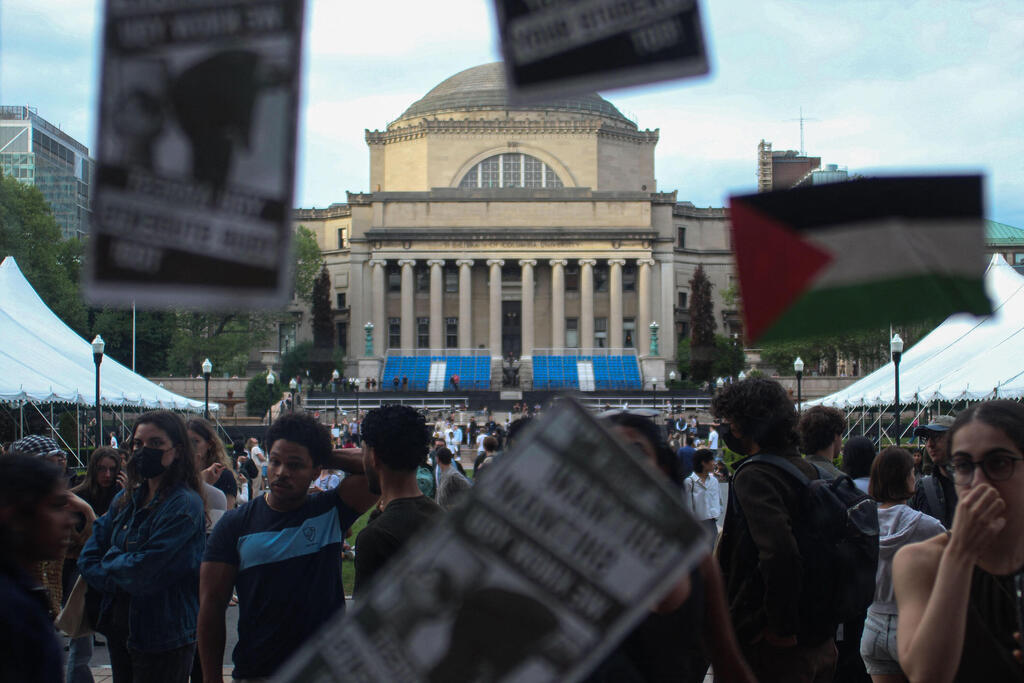
Pro-Palestinian protest at Columbia University
(Photo: AFP, INDY SCHOLTENS)
“The graphics were amazing,” she recalled. “They were ready to go and very organized in their campus activities and things like that.”
Burns stressed that many of the same individuals she investigated during the original war on terror are still active today in Hamas’ infrastructure. While she expressed faith that the U.S. government is trying to distinguish between good and evil in this conflict, she acknowledged the complexity of the challenge.
“We believe in free speech, we believe in constitutional rights. We want everyone to be able to do that. We don’t believe that terror organizations should knowingly disseminate propaganda. I have faith that the government is trying to counter that,” she said.
Burns added that civil litigation can be a powerful tool in holding individuals and organizations accountable. Unlike federal prosecutions, civil cases can expose information without requiring criminal charges.
“When you have civil litigation like that, information comes to light, and that’s what we need,” she said. “We need information and education, because many false narratives have been going on for so long, unchecked, without us paying attention.
“We were looking for the fin, and the shark was swimming below the water.”
She warned that America is already years behind in confronting this threat, and only a collective effort can reverse the damage.
“It is going to take everyone’s voice who understands the truth to speak it and have courage,” Burns said. “I don’t think that’s happening right now, because I think a lot of people believe that the problem doesn’t impact them, that they’re not affected. Law enforcement can’t begin to address a problem if they have no idea what it is … This is not a political thing. We’re just trying to bring the facts to you so you’re informed and can make responsible decisions based on facts.”
Burns concluded with a reminder: “Whatever your politics are, one thing that is not disputed in the United States is that Hamas is a terrorist organization, and what took place on Oct. 7 was terror.”