


Brig. Gen. Sivan Bloch, the new commander of the IDF's Bashan Division, had barely a week to settle into his position before facing a series of incidents along the Syrian border that soldiers and local officials fear may be more than a coincidence.
The first occurred Sunday night, when a 22-year-old Palestinian living in Damascus attempted to infiltrate an IDF outpost near the Syrian village of al-Hamidiyah. A soldier from the Carmeli Reserve Brigade shot and killed him. Only a mobile phone and cash were found in his pockets. Hours later, on Monday afternoon, two Syrians riding a motorcycle approached a police outpost in the Quneitra area. Neither was armed, but both ignored calls to stop under the military's suspect-arrest procedure, prompting soldiers to open fire. One was wounded and taken to Israel for medical treatment, while the other was detained for questioning.
The confrontation between IDF troops and residents in Abdin, and the displacement of local residents


"They're testing the terrain," a reserve officer serving in the sector said this week, stressing that these were not the first incidents involving people approaching Israeli military positions in recent weeks. Several weeks earlier, a Syrian civilian armed with a knife climbed onto an IDF position at the Nahal Golan outpost. He was captured and taken for questioning. The military said the suspect had mental health problems, but along Israel's northern border, incidents involving seemingly erratic individuals sometimes raise suspicions of organized reconnaissance, similar to patterns soldiers recall from Lebanon and Gaza before October 7, 2023.
"They send individuals and cells, doing all kinds of things to see where we're operating and how we respond," the officer said. "It reminds me of the period before October 7. Disturbances, one person here, another there. They're checking how long it takes you to respond, how you respond and from where you detect them." He is not alone. Many soldiers serving in the area suspect that the Syrians who entered the buffer zone, where unauthorized entry is prohibited, were attempting to gauge the military's response at positions located just a few kilometers apart.
The working assumption: someone is testing Israel
So far, the IDF can point to its successful responses to the incidents. But the willingness of individuals to approach military positions remains troubling. Investigators hope questioning the suspects will clarify what prompted the incidents and whether any connection exists between them. For now, the military says that despite the concerning circumstances, no common link has been established. Officials say they need several more days to determine whether a particular organization or other actor was behind the incidents and whether they signal a change in the security situation.
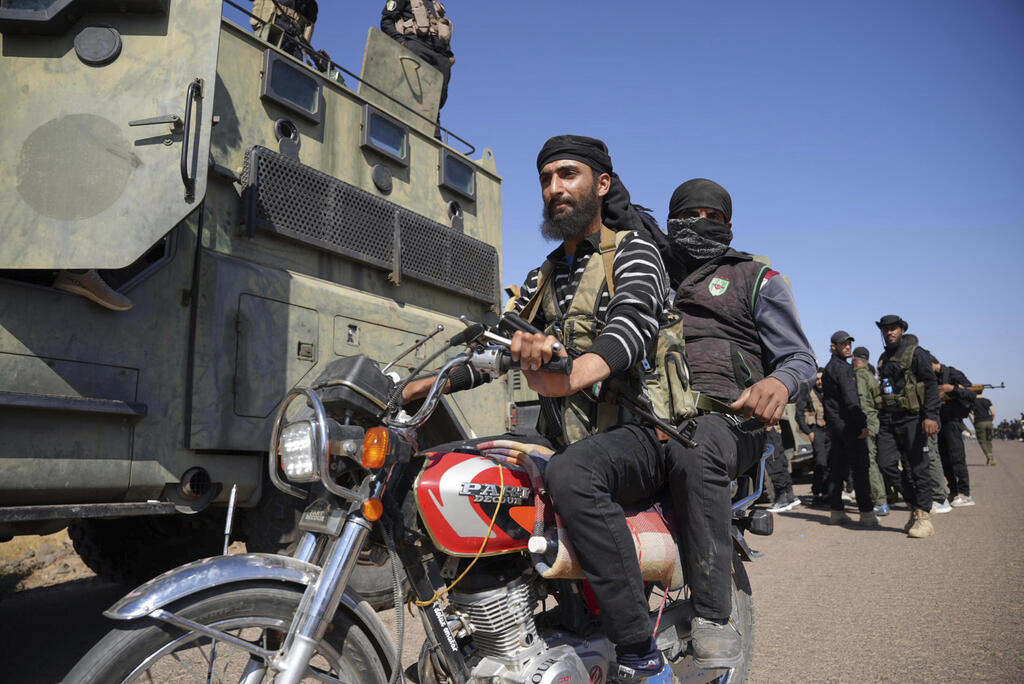
The IDF acknowledges that it cannot conclusively rule out the possibility that the latest infiltration attempts were intended to harm soldiers. Regardless of their motives, the suspects entered areas where they were not permitted to be, leading troops to open fire. Another detail raising concern is that all three suspects in the latest incidents came from the Damascus area, relatively far from the border. So far, however, investigators have found no connection between them and previous terrorist activity or specific organizations.
The military insists it is not complacent. Its working assumption is that Israeli positions are being tested, and commanders acknowledge that no amount of preparation can guarantee complete protection against an attack. Military officials say there is no shortage of organizations interested in attacking Israeli forces and potentially civilians. Iran-linked groups, Palestinian organizations, ISIS, Hamas, Hezbollah and other actors operate in Syria and could seek opportunities along the border.
Accordingly, operational procedures have been tightened, and troops have been briefed on possible attack scenarios. The military is preparing on the assumption that further attacks will eventually be attempted. That, according to the IDF, is also the rationale for maintaining soldiers inside Syrian territory: any attempted infiltration would first encounter military forces rather than Israeli civilians. In recent months, Israeli troops have identified individuals gathering intelligence and documenting military activity in southern Syria. Some were civilians, while others were believed to have been operating on behalf of organizations seeking vulnerabilities in Israel's defenses.
The latest encounters are part of a broader pattern that has characterized the sector since the beginning of 2026. The buffer zone east of the Golan Heights has become an area of persistent, low-intensity military activity. Since the collapse of Bashar Assad's regime, the IDF has established approximately 10 company-sized outposts inside Syrian territory. Soldiers patrol open terrain and villages populated by Sunni Muslim civilians. Particularly in the southern Golan sector, military officials describe local attitudes toward Israel as deeply hostile, more so than among some Druze, Christian and Circassian communities. "Ultimately, there is no real, effective control over this area by any Syrian authority," a reserve officer said.
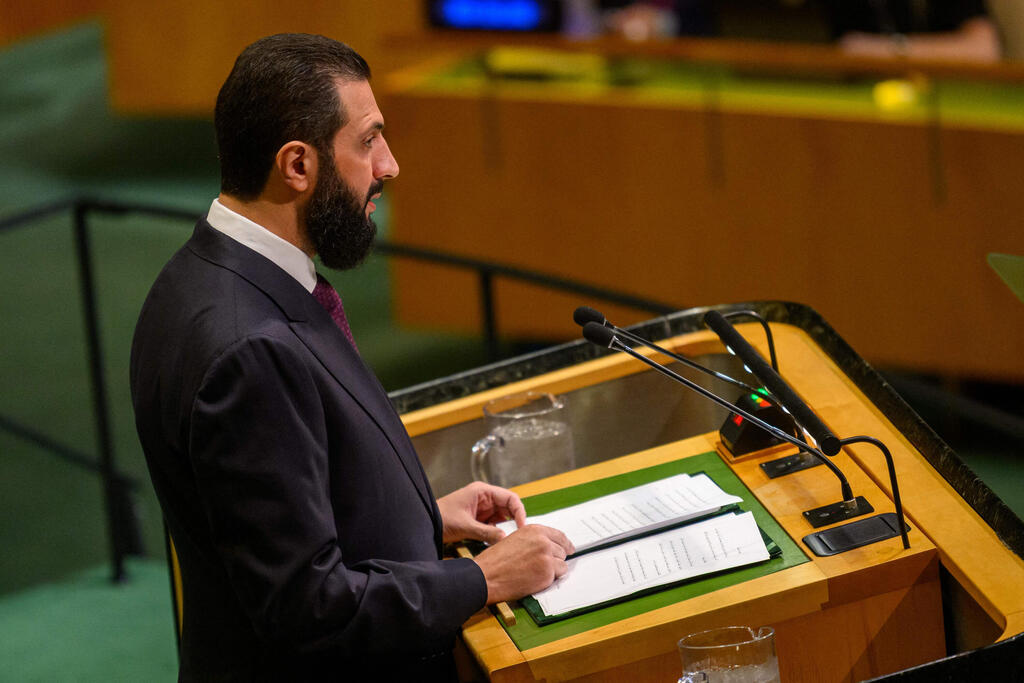
Syrian President Ahmed al-Sharaa at the UN
(Photo: Alexi J. Rosenfeld / GETTY IMAGES NORTH AMERICA / AFP)
Syrian President Ahmed al-Sharaa's government has sought to demonstrate that it is taking steps to distance potential threats from Israel. In late September, for example, Syrian authorities announced the arrest of three Hezbollah-affiliated terrorists accused of attempting to position missile launchers near the Israeli border. At the same time, Syrian local media have increasingly carried hostile messages toward Israel, while negotiations over a security agreement between the two countries remain stalled.
‘The army is preparing for 500 pickup trucks, but 1,500 will come’
While the IDF investigates the incidents, civilian leaders on the Israeli side of the border are unconvinced by suggestions that the incursions could be unrelated. They are demanding that the military treat them as potential elements of an organized hostile operation. "It's exactly like the kites," said Golan Regional Council head Uri Kelner, referring to incendiary kites used along the Gaza border before the October 7 attack. "When one thing happens, you say it's a drop. When several things happen, it's already rain."
Kelner believes the incidents amount to organized testing of Israel's defensive readiness. "In my understanding and assessment, someone is pushing this. Someone is learning from it, someone is watching it. That is clear to us," he said. "On the other side, they are watching. They don't like the fact that the IDF is in the buffer zone, and they're preparing for days when they will begin harassing our forces over this."
Despite the danger of explosives and close-range confrontations, Kelner views the buffer zone itself as a crucial protective barrier for Israeli communities. "These are good incidents," said Kelner, a reserve lieutenant colonel and former deputy commander of the IDF's 55th Reserve Brigade. "An attacker arrives, encounters the IDF's forward security line and doesn't get near the fence. That's our lesson from October 7. We don't wait for them to reach us. We're ahead of them."

‘There are 21 divisions in the Syrian army that are training and growing stronger.’ Uri Kelner (left) and Yehuda Dua
(Photo: GPO)
For Kelner and other regional leaders, the greatest danger is that international pressure could eventually force Israel to withdraw from the buffer zone. U.S. President Donald Trump recently addressed the issue, saying the Syrians did not want Israeli forces in their territory and that Israel should redeploy its troops. He also spoke about Israeli deployments in Lebanon. After Israel's upcoming elections, any new government could face comparable or even greater pressure.
Kelner is therefore demanding a commitment from candidates across the political spectrum that the IDF will remain on the Mount Hermon ridgeline and deep inside the buffer zone "forever." Katzrin Local Council head Yehuda Dua also opposes withdrawal, warning that such a move would endanger not only the Golan Heights but Israel's security as a whole. "Leaving here would simply be security madness," a reserve officer serving in the area added.
Kelner is proposing a three-stage strategy designed to institutionalize Israel's existing deployment. The first stage involves strengthening ties with Syria's Druze population. "The IDF operates there and, according to foreign reports, arms them, while also taking care of quite a few civilian needs," Kelner said. He argued that allowing Syrian Druze to work in Israel would serve both economic and security interests. "We need those Druze to come work in Israel, because if they don't work for us, someone from Hezbollah or Iran will pay them $100 a month. With us, they earn that in two days of work."
The second stage would make Israel's physical presence in the buffer zone permanent, with no withdrawal permitted. The third would designate Israeli communities along the border fence as a forward defensive line, providing them with substantial weapons and ammunition so they could withstand an attack without allowing it to spread farther into Israel.
For Kelner, the lessons of October 7 leave no room for complacency. "We're not preparing for the previous war, but for the next one," he warned. "There are 21 divisions in the Syrian army that are training and growing stronger. The IDF is preparing to stop an assault by 500 pickup trucks, but 1,500 pickup trucks will come. And then we could find ourselves back on October 7, big time."
‘There could be a much bigger plot taking shape here.’ Hamas pickup trucks near the Gaza border, one month before the surprise attack
The military, however, offers a more restrained assessment. Although the IDF acknowledges that a large-scale attack from Syrian territory is technically possible, it currently assesses the probability of such an assault as relatively low. Military officials say the capability to launch an attack involving 1,500 pickup trucks may exist, but they do not believe such an operation would serve the interests of the actors on the other side of the border at present. The possibility cannot be dismissed, they stress, but it is not considered a highly likely scenario.
Where are the motorcycles heading?
Katzrin council head Yehuda Dua remains deeply concerned. He says the explanations offered by the military following the latest incidents have done little to reassure him. "The army doesn't view this as something major, and senior officials in the National Security Council say these attempts to approach our forces do not become a strategic threat to the State of Israel," Dua said, describing the assessments he has heard in closed discussions.
He believes the relatively limited concern over motorcycles approaching Israeli positions echoes the attitudes that prevailed near Gaza before October 7. "I think we're starting to become a little like the Gaza Strip 20 years ago," he said. "It started there, too, with a trickle of stones, Molotov cocktails and infiltration attempts. Where do these motorcycles want to go? They're probably not coming to have coffee in Ein Zivan. They apparently want to reach a soldier or carry out an attack, and learn our responses and how we operate in the area."
Dua suspects that individuals approaching Israeli positions may be paid by larger organizations to test the military's defenses. He suggested that such networks could be associated with al-Sharaa's government, Hezbollah or Iranian-backed militias, although no evidence has yet established such connections in the latest incidents. "There are murderous terrorist cells here that send these attackers, paying them to test Israel's borders and understand how far they can get," he claimed. "There could be a much bigger plot taking shape here."
Dua is demanding that Israel impose a cost on Syria if the incidents continue. "Today, the State of Israel needs to be the side that initiates, not the side that reacts," he said. "We need to send a very clear message that if these incidents continue and escalate, Israel will also escalate its responses against Syria as a sovereign state, against government institutions, public institutions and gas, water, electricity and oil infrastructure."