

Very few words have appeared as often in Donald Trump’s statements in recent years as the term “ceasefire” — most recently earlier this week in reference to Israel and Lebanon. The U.S. president, who has repeatedly promised that he “ends wars” rather than starts them, has turned ceasefire announcements into a hallmark of his foreign policy: a dramatic post on his social media platform, ceremonial language about a “historic agreement,” personal attribution of the achievement to himself — and then, quite often, a far more complicated reality on the ground.
In some cases, Trump was indeed a central player who applied pressure, mediated or created economic and diplomatic incentives to halt fighting. In other cases, his announcement was far broader than the actual agreement — and sometimes it came before the details, the monitoring mechanism or even the consent of all parties.
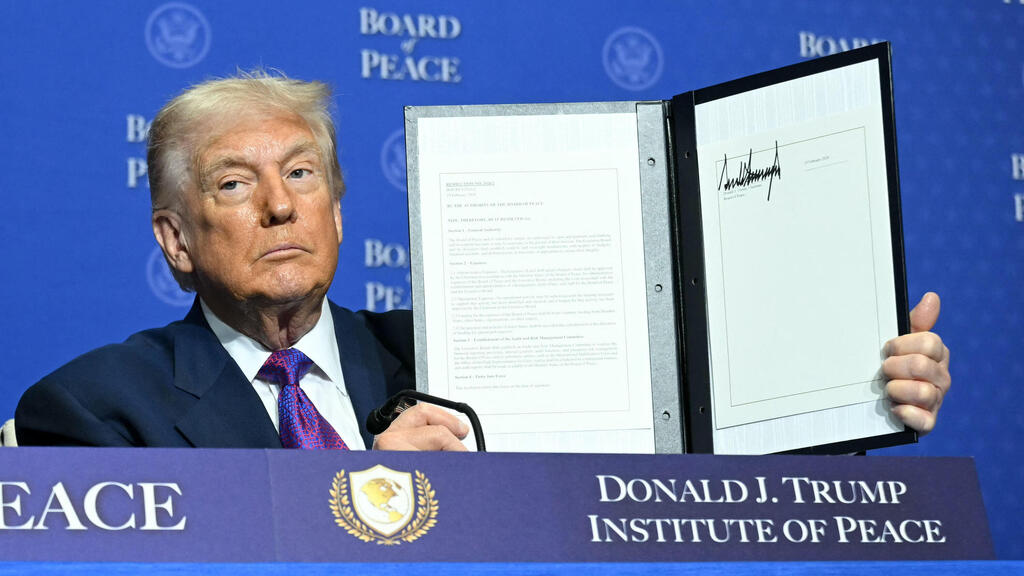
That gap underscores a key point: For Trump, a “ceasefire” is not always the end of a war. Sometimes it is a short humanitarian pause. Sometimes it is a hostage deal. Sometimes it is a tactical withdrawal by one side. And sometimes it is a declaration of a peace agreement that has yet to be implemented.
At times, it is primarily a political announcement designed to create a sense of victory before the guns have actually fallen silent.
Syria, 2019: A 'permanent ceasefire' — or a Kurdish withdrawal?
One of the first instances in which Trump used the “ceasefire” brand came in October 2019 after his decision to withdraw U.S. forces from northeastern Syria. The move opened the way for a Turkish operation against Kurdish forces, Washington’s primary allies in the fight against the Islamic State group, and drew sharp criticism in the United States, including from Republicans.

(Photo: Turkish Defense Ministry, AP)
Several days later, the U.S. administration announced that Turkey had agreed to “pause” the operation for 120 hours to allow Kurdish YPG forces to withdraw from the area Turkey had designated as a “safe zone.” The White House said Turkey had agreed to a permanent ceasefire once the Kurdish withdrawal was completed. Trump presented it as a major diplomatic achievement and later announced the removal of sanctions imposed on Ankara.
On the ground, however, this was not a classic ceasefire between two equal parties. For the Kurds, it was viewed more as a forced arrangement that allowed Turkey to achieve its primary objective, pushing Kurdish forces away from the border. For Trump’s critics, it was a moment when the United States abandoned longtime allies and then wrapped the outcome in celebratory language about “peace.”
While the announcement halted a particular phase of the operation, it did not resolve the Syrian war, stabilize the region or prevent continued tensions and military activity in northern Syria, including between Turkish and Kurdish forces.
The first lesson was already clear: Trump likes to present a ceasefire as a final solution, but in practice it is often only a temporary freeze of a problematic situation.
Nagorno-Karabakh, 2020: A US-brokered ceasefire that collapsed almost immediately
A year later, in October 2020, came an even sharper example. At the height of the war between Armenia and Azerbaijan over Nagorno-Karabakh, the United States announced a humanitarian ceasefire between the sides.
The pause was intended for humanitarian purposes after two previous ceasefires brokered by Russia and France failed to hold. Once again, Washington sought to present an achievement, but the truce collapsed almost immediately. Within hours, both sides accused each other of violations, with Armenia and Azerbaijan each claiming the other had continued attacks.
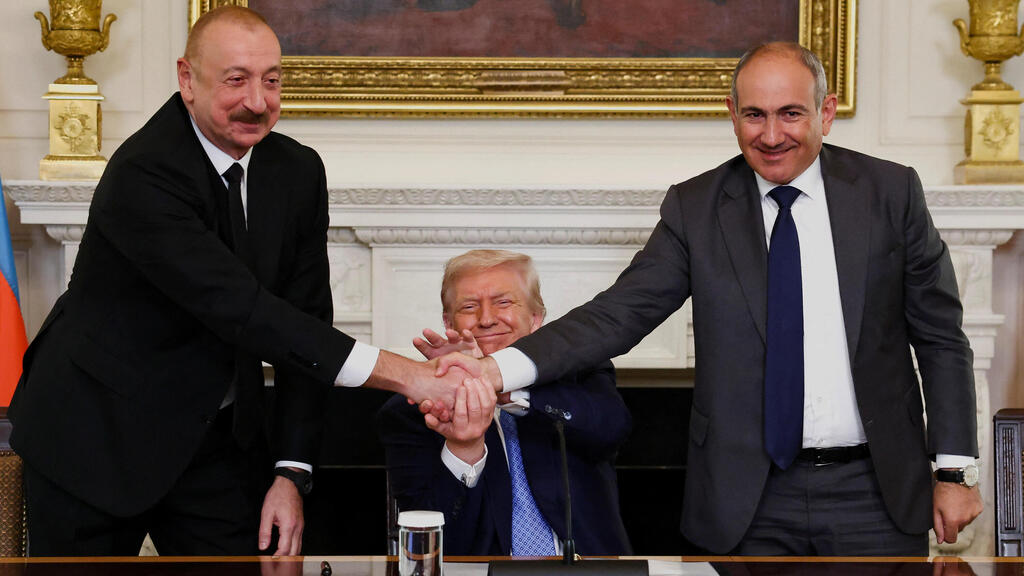
Trump alongside the leaders of Armenia and Azerbaijan
(Photo: REUTERS/Kevin Lamarque)
Asked about the collapse, Trump said it was “disappointing” but expressed hope that the parties would “get back to it.”
In this case, Trump’s announcement was almost a textbook example of a ceasefire that sounded good in Washington but failed to survive the morning after.
The conflict later ended through a different ceasefire agreement brokered by Russia after Azerbaijan achieved significant military gains. Only five years later, in 2025, did Trump succeed in bringing the leaders of Armenia and Azerbaijan to the White House to sign a joint declaration and preliminary peace agreement, an important American diplomatic achievement, but not the one that ended the 2020 war.
India and Pakistan, 2025: The shooting stopped — but who really mediated?
In May 2025, Trump announced that India and Pakistan had agreed to a “full and immediate ceasefire” after days of dangerous escalation between the two nuclear-armed neighbors.
The announcement followed mutual strikes, exchanges of fire, fears of a broader regional escalation and U.S. involvement in discussions. Trump was the first to make the announcement, praised both countries for their “common sense” and presented the development as a triumph of American mediation.
In the most basic sense, the escalation did stop, and both India and Pakistan confirmed that they had reached an understanding to halt firing and military operations. Yet within hours of the announcement, explosions were reported in Kashmir and the sides accused one another of violations.
Beyond that, a dispute emerged over who had actually produced the agreement. Pakistan thanked Trump and gave him credit, while Indian officials rejected the claim that it was the result of full American mediation and emphasized that the understandings had been reached through direct military channels.
In this case, the ceasefire did halt a highly dangerous confrontation, making it difficult to dismiss as an achievement. But the narrative Trump sought to establish, that he was the man who ended the conflict, was not accepted by all parties. The ceasefire worked better than the story Trump told about it.
Israel and Iran, 2025: The ceasefire that held after a chaotic beginning
In June 2025 came one of the most dramatic moments of Trump’s foreign policy. After nearly two weeks of direct exchanges between Israel and Iran during Operation Rising Lion, and after the United States struck nuclear facilities in the Islamic Republic, Trump announced that Israel and Iran had agreed to a “complete ceasefire.” He even gave the conflict his own name, the “12-Day War”, and presented himself as the leader who ended it.
Here, too, however, the announcement preceded clarity. Iranian Foreign Minister Abbas Araghchi initially said there was no formal “agreement” on a ceasefire, though he indicated Iran would halt its operations if Israel stopped attacking.
Trump after announcing the ceasefire in June 2025
(צילום: רויטרס )


In the first hours after the announcement, Iran continued firing at Israel. Trump publicly lashed out at both sides, especially Israel, saying the two countries “don’t know what the hell they’re doing.” He later halted a significant Israeli Air Force response in Iran by calling to “bring the pilots home now!” Yet unlike some other cases, this ceasefire held. After several chaotic hours, direct fighting between Israel and Iran stopped.
As a result, this is one of the cases in which Trump can credibly claim an achievement. Even if the announcement was messy, the details were vague and the arrangement fell far short of peace between the countries, the direct war did in fact end.
Even here, however, the achievement was limited. The ceasefire did not resolve the nuclear issue, eliminate the strategic conflict between Israel and Iran or prevent continued instability across the region. And in February of this year, fighting resumed when the United States itself entered the confrontation on a full scale.
Gaza, 2025: A hostage deal, a ceasefire — and many unanswered questions
Last October, Trump announced that Israel and Hamas had agreed to the first phase of his Gaza plan: a ceasefire, the release of hostages and an Israeli withdrawal to an agreed line.
This was the opening stage of Trump’s proposal, intended to create a pathway toward ending a war that had lasted two years. Trump presented the agreement as a historic step, declared that all hostages would be released and spoke of the beginning of a “strong, stable and lasting peace.”
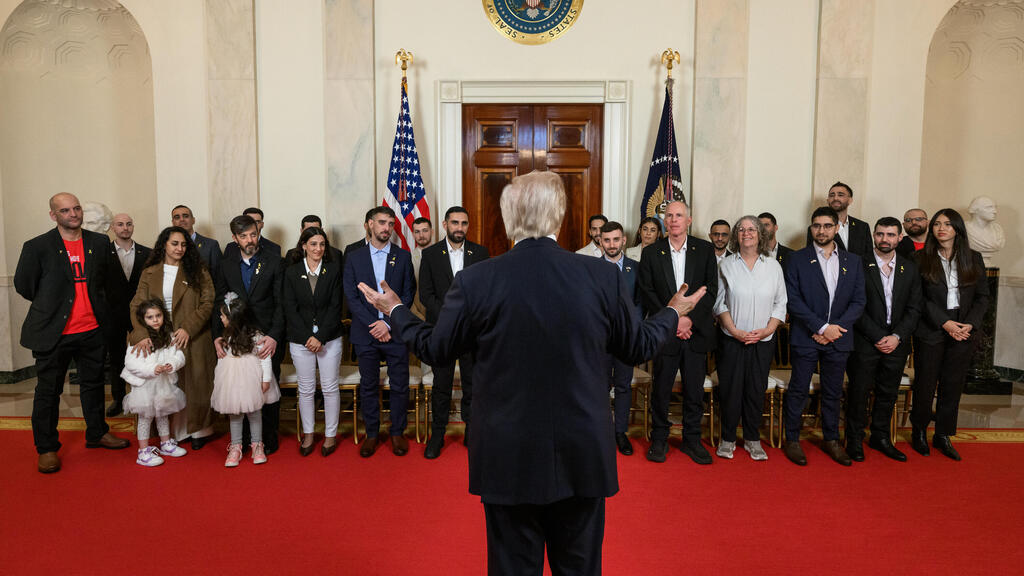
Trump meets with former hostages at the White House in January
(Photo: Official White House Photo by Molly Riley)
In this case, the achievement was tangible. A ceasefire was reached, a hostage-prisoner exchange took place and the war entered a new phase.
Yet even at the time of the announcement, it was clear the agreement left major questions unresolved: Hamas’ disarmament, the future governance of Gaza, the scope of an Israeli withdrawal, monitoring mechanisms, humanitarian aid deliveries and the question of moving to the next phase.
Over time, the Gaza ceasefire became another example of the gap between declaring “the end of the war” and reality. It reduced the intensity of fighting, enabled humanitarian measures and secured the return of hostages, but the pause remained dependent on political and military decisions by Israel, Hamas, the United States, Egypt, Qatar and other actors.
In other words, it was not an empty declaration, but neither was it a final endpoint.
Thailand and Cambodia, 2025: Trump threatened, the sides signed — then the agreement was frozen
One of the lesser-known but most revealing cases involved the border dispute between Thailand and Cambodia last year. Trump intervened, threatened heavy tariffs if the fighting continued and later presented the agreement between the sides as one of the conflicts he had succeeded in “ending.”
At first glance, it appeared to be a quintessential Trump success: not merely traditional diplomacy, but a combination of economic pressure, trade threats and a display of leadership.
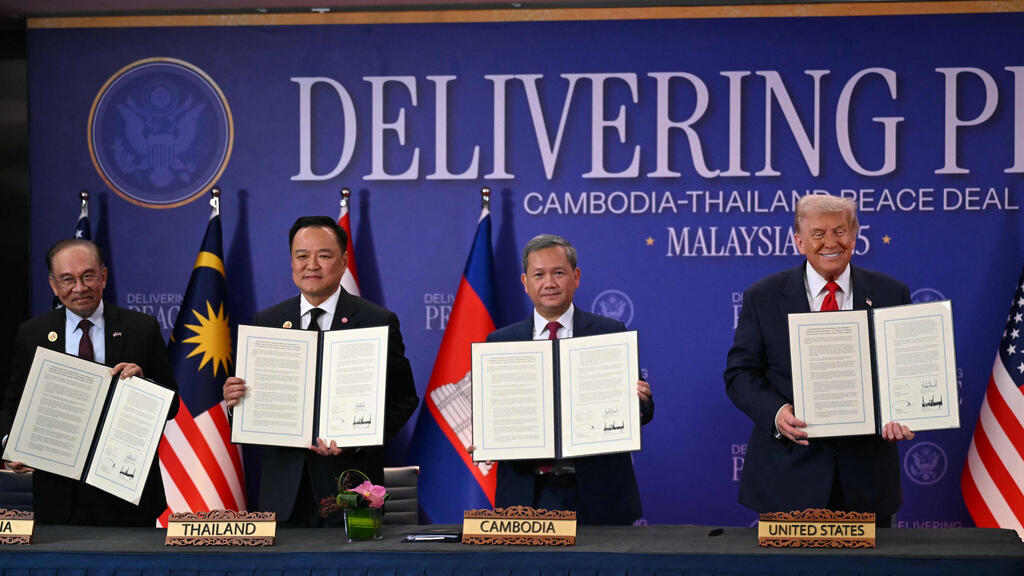
Trump alongside the leaders of Thailand and Cambodia during the signing ceremony for the ceasefire agreement
(Photo: ANDREW CABALLERO-REYNOLDS / AFP)
The agreement, known as the Kuala Lumpur Agreement, was signed with assistance from the United States and Malaysia, and Trump included it among the wars he claimed to have ended.
But shortly afterward, Thailand suspended implementation of the agreement following a land mine explosion that wounded Thai soldiers. Thailand’s prime minister said that “de-escalation did not occur as expected,” and implementation efforts were frozen. Fighting later resumed.
The case illustrates an important point: Trump may succeed in bringing parties to the signing table, but a signature alone does not erase a historic border dispute, land mines, mutual distrust, mobilized armies and domestic political considerations. Here too, the announcement moved faster than reality.
Congo and Rwanda, 2025: A peace agreement in Washington, fighting on the ground
Africa also became part of the list Trump likes to cite. In June 2025, a peace agreement was signed in Washington between the Democratic Republic of Congo and Rwanda. In December, Trump invited the leaders of both countries to the White House to reaffirm their commitment to the agreement and a broader economic framework.
He presented it as an effort to end a conflict that had lasted for decades. But even during the ceremonies, it was clear that conditions on the ground remained far from resolved. Fighting continued in eastern Congo as leaders prepared to sign the understandings in Washington, and the parties had yet to implement the agreed framework.
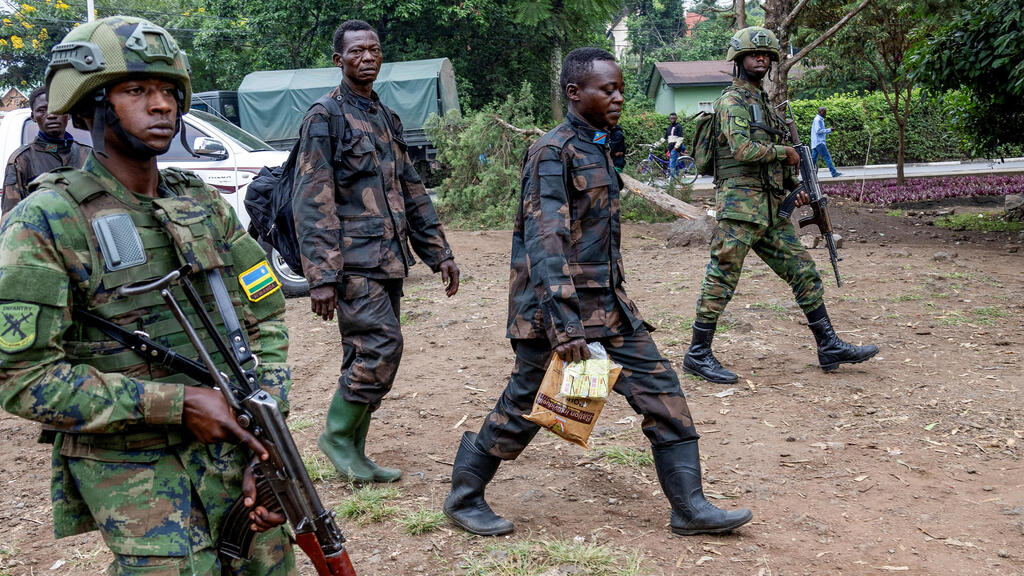
Rwandan soldiers surround Congolese troops who surrendered during the fighting
(Photo: REUTERS/Jean Bizimana)
The day after the signing ceremony, additional heavy fighting was reported in eastern Congo. The M23 rebel group, backed by Rwanda but not a party to the Washington agreement, remained a major force on the ground. This was not exactly a “ceasefire” in the narrow sense, but it is important because Trump included it within his broader brand: “I end wars.”
In practice, the agreement was a diplomatic and economic framework, not an immediate end to violence. Once again, the gap between the White House signing room and the villages, militias and displaced civilians of eastern Congo became apparent.
The United States, Iran and Israel, 2026: A 'two-week' ceasefire
Last April, Trump announced another dramatic ceasefire, this time in the broader conflict with Iran, one that also affected Israel and the global energy market. Tehran confirmed that it had accepted a two-week ceasefire and would enter negotiations with the United States in Islamabad, talks that ultimately failed.
Trump talking last week
(Video: The White House)
Even in Iran’s announcement, it was emphasized that this was not the end of the war and that “the finger remains on the trigger.” Questions and competing interpretations immediately emerged regarding any possible agreement, as Tehran insisted it would continue controlling the Strait of Hormuz and enriching uranium, precisely the issues at the heart of the crisis.
In other words, Trump announced a ceasefire, markets breathed a sigh of relief and the region received a respite. But it was a respite marked by vague conditions, unresolved disputes and an explicit threat of renewed fighting.
Once again, the announcement marked the beginning of a chapter, not its conclusion. In the meantime, those “two weeks” have continued without a full resumption of hostilities and without a finalized agreement. More recently, limited exchanges of fire between the United States and Iran resumed and spilled over into Gulf states.
Ukraine and Russia, 2026: Three days of relative quiet, not the end of the war
Last month, Trump announced a three-day ceasefire between Russia and Ukraine from May 9 to May 11, which also included a large prisoner exchange involving 1,000 captives from each side. Trump wrote that he hoped it would be the “beginning of the end” of a long, deadly and difficult war. Russia and Ukraine confirmed both the pause and the prisoner exchange.
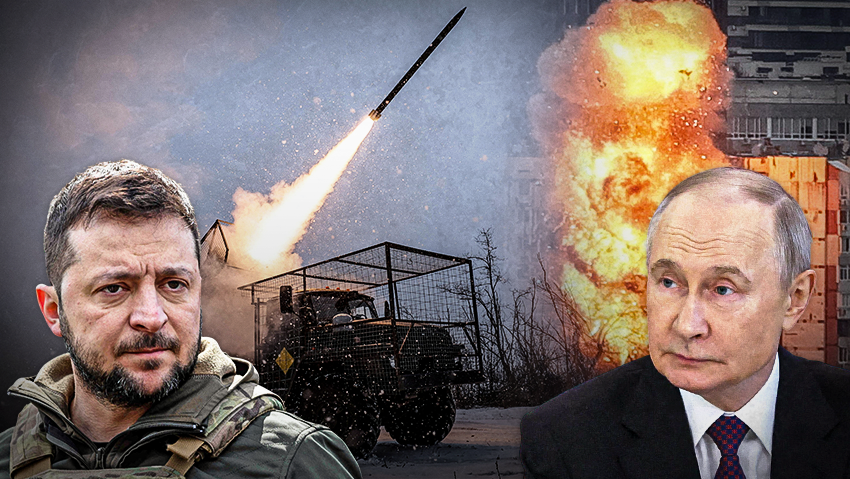
(Photo: REUTERS/Evgenia Novozhenina, REUTERS/Gleb Garanich, AFP, Oleg Petrasiuk/Press Service of the 24th King Danylo Separate Mechanized Brigade of the Ukrainian Armed Forces/Handout via REUTERS)
But this, too, was far from a political settlement. Russia had already announced a unilateral ceasefire around Victory Day commemorations marking the defeat of Nazi Germany, while Ukraine had proposed a broader pause.
Negotiations remained deadlocked over the core issues of the war, chief among them the future of territories in eastern Ukraine occupied by Russia and Moscow’s desire to control the entire Donbas region. Moscow and Kyiv, it should be noted, had already accused one another in the past of violating ceasefires they themselves had declared.
Thus, the ceasefire represented an important humanitarian achievement, especially because of the prisoner exchange. But turning three days of quiet into the “beginning of the end of the war” was far removed from reality. Meanwhile, Trump, who promised during his election campaign to end the war in Ukraine “within 24 hours,” has yet to do so.
Lebanon, 2026: Several 'ceasefires' in two months — and the fire keeps burning
The Lebanese arena has become, in recent weeks, the clearest example of Trump’s approach.
Since mid-April, the U.S. president and the State Department have repeatedly announced ceasefires, extensions and understandings between Israel and Lebanon, most recently overnight Wednesday into Thursday. On the ground, however, fighting between the Israeli military and Hezbollah has not truly stopped, and exchanges of fire continue.
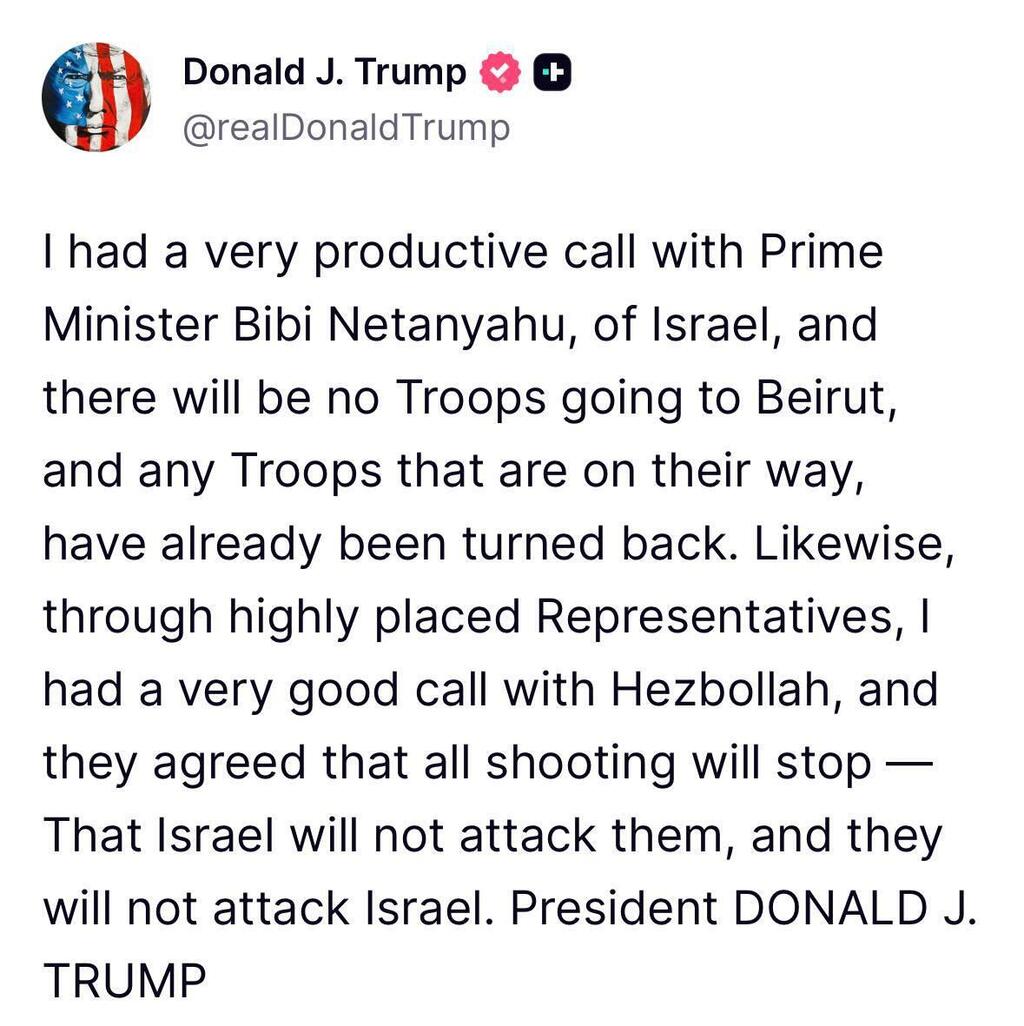
(Photo: Truth)
The gap between announcements and reality became even more apparent over the past week. Hezbollah expanded the range of its attacks, firing toward Karmiel, Safed, Nahariya and Acre. Israeli forces seized the Beaufort Castle in southern Lebanon. Prime Minister Benjamin Netanyahu also declared that he had ordered strikes in Beirut’s Dahieh district, Hezbollah’s stronghold in the Lebanese capital.
Shortly afterward, Trump announced that he had spoken with Netanyahu and that Israel had agreed “not to send forces into Beirut”, in other words, not to strike there, while Hezbollah had agreed, according to Trump, that “all firing will stop.” In effect, it was a ceasefire based on the formula that “quiet will be met with quiet.”
Yet even the latest announcements did not halt the fighting in practice. Hezbollah rejected the understandings, arguing it had not been a party to the talks, and continued launching attacks, albeit at a lower intensity. Fighting in southern Lebanon continues at full force.
At a Cabinet meeting two days ago, Netanyahu said Israel was effectively waiting for Hezbollah’s approval of the ceasefire terms, despite the fact that the group’s leader, Naim Qassem, had rejected them.
“Right now there is no agreement. Hezbollah opposes it, so I am not bringing it for a decision. If it agrees, I will bring it for your approval,” Netanyahu said.
Lebanon has thus become a distilled example of Trump’s broader pattern: dramatic ceasefire announcements, partial understandings behind the scenes and a reality in which, at least for now, the fire has not truly stopped.
The Method: First the announcement, then the mechanism
Taken together, these cases reveal a consistent method. Trump does not operate like a traditional diplomat who prefers to announce an agreement only after the document is signed, the mechanisms are finalized and the parties have prepared public opinion.
Instead, he often works in the opposite direction: first make the announcement. First create momentum.
Trump: I told Netanyahu he was ‘f***ing crazy’
(Video: Pod Force One, New York Post)
First declare that the war is over, that the parties have shown “common sense,” that this is “the beginning of lasting peace.” Only afterward come the “small details”: Who withdraws? Who monitors compliance? What happens if there is a violation? Did all parties even agree to the same version?
The approach has advantages. At times, a public American announcement creates pressure on the parties, gives each side a face-saving exit and allows rivals to present a halt in fighting as an achievement rather than a surrender.
Trump understands very well the power of a television moment, a dramatic social media post or an economic threat — and sometimes it genuinely works.
But the method also carries costs. When the announcement becomes too ambitious, it can create expectations that realities on the ground cannot meet. When Trump describes a temporary pause as “the end of a war,” he blurs the distinction between a moment of calm and a durable settlement. And when he takes personal credit for conflicts that have not truly been resolved, he turns diplomacy into a branding campaign.
That may be the essence of Trump’s diplomacy: He does not necessarily invent ceasefires, but he certainly brands them. He turns a pause into an achievement, a partial deal into a victory and the opening of negotiations into “the end of a war.”
Sometimes reality aligns enough to justify at least some of the credit. And sometimes it blows up in his face within hours.
First published: 17:50, 06.06.26