


Hamas announced Monday that Khalil al-Hayya, a close associate of Yahya Sinwar and a senior ally of Iran, had been elected head of the terrorist organization’s political bureau. Al-Hayya defeated Khaled Mashal, the former political bureau chief who currently leads Hamas’ operations abroad, in the internal leadership contest.
He will replace the temporary five-member council that has led Hamas since Sinwar was killed by Israeli forces in the southern Gaza Strip in October 2024.
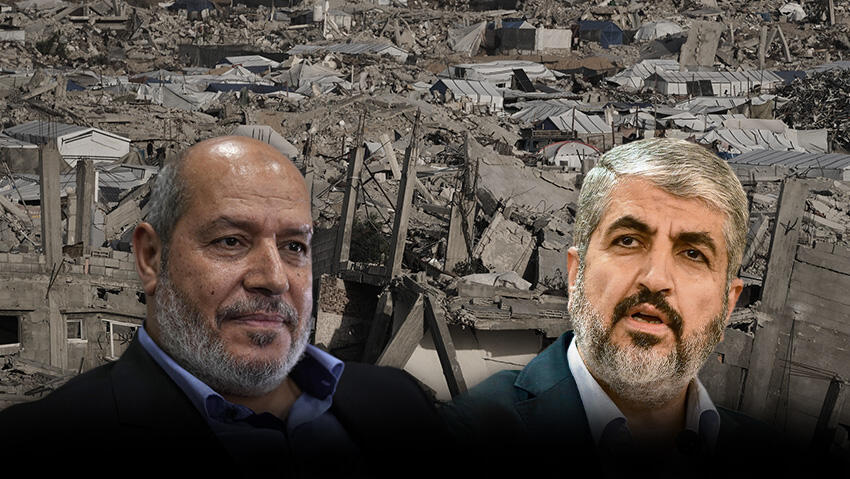
Al-Hayya and Mashal
(Photo: AP Photo/Jehad Alshrafi, Osama Faisal, AP, Khalil Hamra/AP)
Al-Hayya serves as Hamas’ de facto leader in Gaza and has headed the terrorist organization’s negotiating delegation in talks over ceasefires and hostages. He was regarded as one of Sinwar’s closest allies and maintains strong ties with Iran and the broader Iranian-led regional axis.
Mashal, by contrast, has traditionally represented a more independent position toward Tehran and maintains closer links with Qatar and Turkey.
Hamas sources said Sunday that members of the organization’s Shura Council in Gaza had voted almost unanimously for al-Hayya.
The final result was determined after votes from council members in the West Bank and abroad were included, according to the reports. Members of Hamas who are serving security sentences in Israeli prisons also participated in the process, reportedly transmitting their votes through covert channels.
Al-Hayya’s election is expected to keep the organization’s center of political gravity tied to Gaza despite much of its senior leadership operating outside the enclave. Ali al-Amoudi is expected to succeed him as head of Hamas’ political bureau in Gaza, while Zaher Jabarin is expected to retain responsibility for the West Bank portfolio.
Under Hamas’ internal regulations, the organization is supposed to conduct leadership elections every four years. The latest process was delayed because of the war and the severe damage inflicted on Hamas’ senior command structure.
After Sinwar’s elimination, the organization formed a temporary five-member leadership council because operational conditions did not allow it to conduct regular elections. The council was headed by Mohammed Darwish, also known as Abu Omar Hassan, who chairs Hamas’ General Shura Council. Its other members represented the organization’s three principal regions: Gaza, the West Bank and its foreign leadership.
The fifth member was the political bureau’s secretary, whose identity Hamas kept secret for security reasons. Al-Hayya’s victory over Mashal signals that Hamas has chosen a leader closely identified with Sinwar’s camp and its continued alignment with Iran rather than the comparatively independent course associated with the organization’s foreign leadership.