

Iran has yet to confirm whether it will take part in a new round of talks with the United States, even as preparations continue in Pakistan, with American officials warning that U.S. President Donald Trump’s public approach to negotiations is complicating efforts to reach an agreement.
Officials in Trump’s administration told CNN overnight that his method of conducting negotiations with Iran through public statements and media appearances is damaging the process. They pointed to the sensitivity of the talks and Tehran’s deep mistrust of Washington.
US President Donald Trump talks about Iran
(Video: The White House)


One official said Iranian leaders are wary of appearing weak domestically, and the Iranians did not appreciate the U.S. president negotiating through the media and making it look as if they had agreed to things they have not agreed to and that are not popular at home.
Uncertainty over next round of talks
Despite logistical preparations in Islamabad, it remains unclear whether and when the next round of talks will take place. Iran has not officially confirmed its participation.
While a senior Iranian official told Reuters a day earlier that Tehran was “positively considering” joining the talks, Iranian Parliament Speaker Mohammad Bagher Ghalibaf, who is involved in the negotiations, said overnight that Iran will “not accept negotiations under the shadow of threat.”
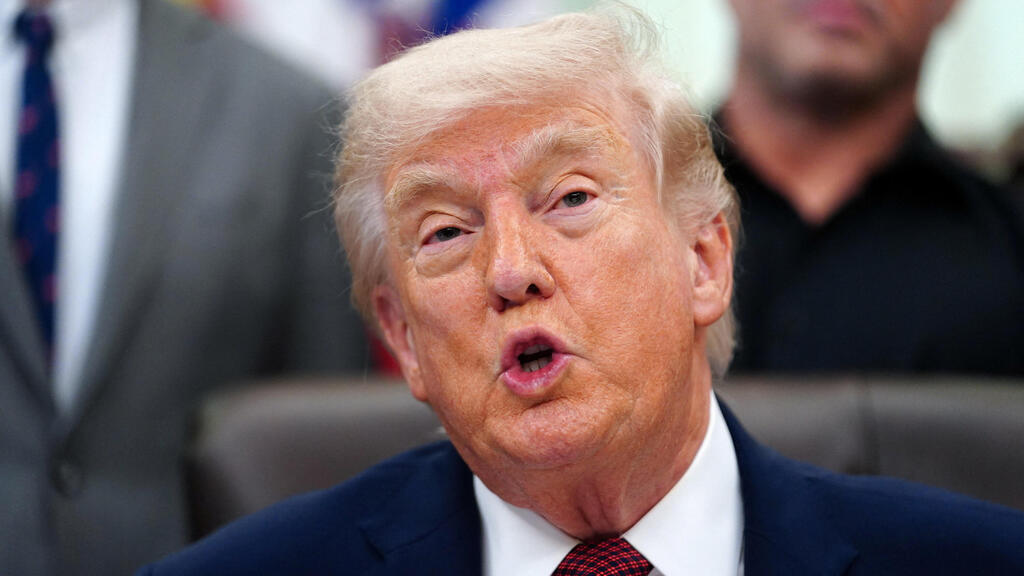
US President Donald Trump
(Photo: Nathan Howard/ Reuters)
Trump, by imposing a siege and violating the ceasefire, seeks to turn this negotiating table— in his own imagination— into a table of surrender or to justify renewed warmongering.
We do not accept negotiations under the shadow of threats, and in the past two weeks, we have prepared to reveal new cards on the battlefield.
In a post on X, he did not directly address the planned talks but accused Trump of trying to turn diplomacy into coercion. “Trump, by imposing a siege and violating the ceasefire, seeks to turn this negotiating table— in his own imagination— into a table of surrender or to justify renewed warmongering,” he wrote, adding that Iran has been preparing to “reveal new cards on the battlefield.”
Conflicting messages and public pressure
At the same time, Axios reported that Vice President JD Vance is expected to arrive in Pakistan and take part in the talks, alongside envoys Steve Witkoff and Jared Kushner. Trump had earlier incorrectly stated that the delegation was already on its way.
CNN noted that just as recent days had suggested, both sides were moving closer to an agreement, Trump launched a series of posts on his Truth Social platform, along with interviews and public statements outlining positions, threats and claims about the negotiations.
Among those claims, Trump said Iran had agreed to several conditions that sources involved in the talks say have not been finalized. He also asserted that Tehran had accepted key U.S. demands still under dispute, including handing over enriched uranium, and predicted the conflict would end soon.
Iran publicly rejected those claims and denied it was preparing for another round of talks, quickly dampening the sense of momentum that had begun to build.
Internal divisions and key sticking points
Another complicating factor cited in the report is U.S. suspicion of internal divisions within Iran, between political leadership figures such as Ghalibaf and Foreign Minister Abbas Araghchi, and the Islamic Revolutionary Guard Corps. The divide raises questions about who ultimately has the authority to approve any agreement.
Trump has continued to issue a series of firm and sometimes conflicting statements in recent days. He said the naval blockade is “completely destroying Iran” and will not be lifted without an agreement. In an interview with Bloomberg, he said there was a “very low chance” he would extend any deadline if a deal is not reached and indicated the blockade around the Strait of Hormuz would remain in place.
In other remarks, he claimed Iran had agreed to an “indefinite” freeze of its nuclear program and to cooperate with the United States in removing enriched uranium. In comments to Axios, he said a meeting would “probably happen this weekend” and added, “I think we’ll have a deal in a day or two.”
Gaps remain wide
According to CNN, during earlier talks the United States proposed a 20-year freeze on uranium enrichment. Iran rejected that offer and proposed a five-year freeze, which Washington also dismissed.
Trump has denied reports about time-limited arrangements, saying he is seeking a permanent halt to enrichment and would not accept even a 20-year freeze.
The administration is also reportedly considering unfreezing $20 billion in Iranian assets as part of a potential agreement, in exchange for Iran handing over its stockpile of highly enriched uranium.
Fragile ceasefire adds urgency
A Pakistani official said that if the current ceasefire is not extended, it is set to expire at 8 p.m. Eastern Time on Wednesday, which corresponds to 3 a.m. Thursday in Israel.
A senior Iranian official told Reuters that Pakistan is making “positive efforts” to bring an end to the U.S. blockade on Iranian ports, which Tehran says violates the terms of the temporary ceasefire.
For now, with Iran stopping short of confirming participation and both sides exchanging conflicting messages, the prospects for a breakthrough remain uncertain.