

IDF Chief of Staff Lt. Gen. Eyal Zamir told Prime Minister Benjamin Netanyahu and Defense Minister Israel Katz during a closed security briefing this month that Hamas has been “defeated” and is now a “defeated organization,” even as Military Intelligence warned that the terror group is still trying to rebuild its strength in Gaza.
Zamir made the remarks during a visit by Israel’s political leadership to the Gaza Division earlier this month, as senior officers presented assessments of Hamas’ current military and governing capabilities.
Gallery
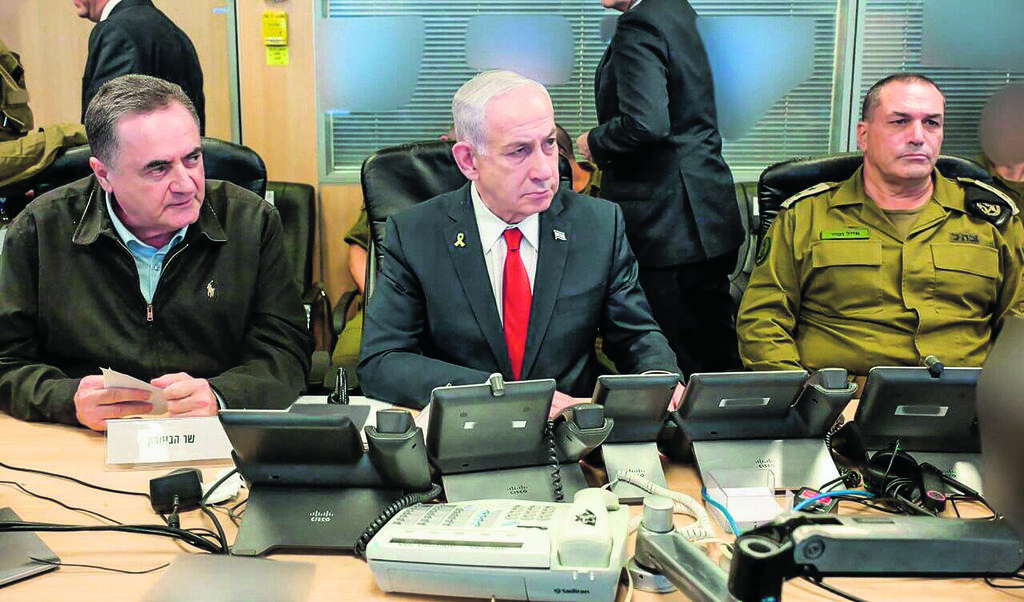
IDF Chief of Staff Eyal Zamir alongside Prime Minister Benjamin Netanyahu and Defense Minister Israel Katz
(Photo: GPO)
During the discussion, Brig. Gen. Ofir Mizrahi, head of the Research Division in the IDF Intelligence Directorate, warned that Hamas was still trying to restore its rule in areas under its control, recruit personnel and rebuild its military capabilities.
“We identify a desire by Hamas to renew governance in the Red Line area, recruit people, build up its strength and restore its capabilities,” Mizrahi said. “We need to pay attention to the fact that Hamas is still a threatening organization.”
Zamir qualified that assessment. “I understand the statement by the head of the Research Division. It is correct because those are their intentions,” he said. “But alongside that, I am telling you, prime minister, Hamas is a defeated organization.”
“It does not fire. We are eliminating its weapons depots, we are eliminating its senior figures and those who carried out October 7. It does not respond, and therefore it can be said that Hamas has been defeated.”
Zamir’s assessment is significant, but the IDF chief was not saying that Hamas had been destroyed or disarmed. The military intends to continue operating against the group until it is demilitarized, while Hamas remains active in efforts to restore its governance, recruit new members, repair infrastructure and rebuild its weapons capabilities.
According to the assessment presented in the briefing, the IDF now controls more than 64% of the Gaza Strip, including key entry points and crossings. That control, the military believes, has sharply limited Hamas’ ability to smuggle weapons and rebuild its arsenal.
Zamir’s assessment also rests on the extensive series of targeted killings carried out against Hamas commanders, the destruction of much of the group’s military infrastructure and what the IDF views as a deterioration in Hamas’ diplomatic and political position compared with the period before the war.
Hamas nevertheless remains armed and has not abandoned the ideology on which it was founded or its stated goal of destroying Israel.
Its organized fighting formations have been severely degraded, according to the Israeli assessment, and much of its current activity is focused on restoring local governance and rebuilding a presence across parts of Gaza.
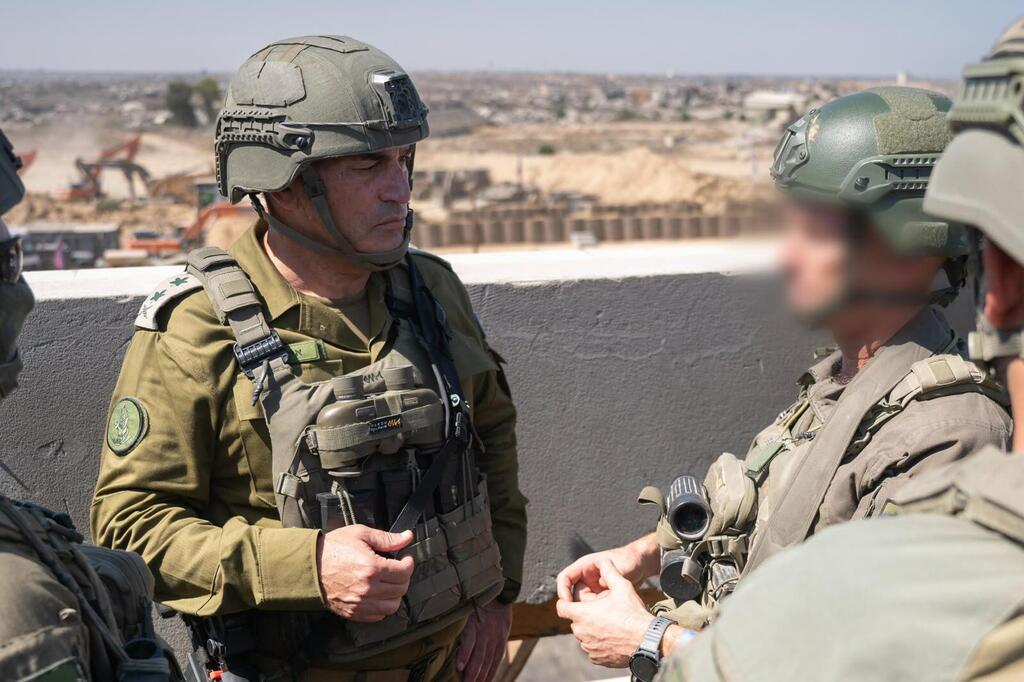
IDF Chief of Staff Eyal Zamir in Gaza
(Photo: IDF)
Around 600 aid trucks enter the Strip each day. Hamas, according to the assessment, is trying to restore its financial footing by levying taxes to fund recruitment and demonstrate a visible presence on Gaza’s streets.
The group is also believed to retain some remaining weapons stockpiles, though Israeli officials assess that these may now amount largely to residual capabilities. At the same time, Hamas is struggling to recruit replacement commanders amid repeated targeted killings carried out by the IDF Southern Command.
The terror group has still attempted to harass Israel in other ways. One recent effort involved launching kites toward Israeli communities near Gaza, but the activity stopped after a series of warnings from Israel’s political and military leadership.
Hamas is also exploiting delays in implementing U.S. President Donald Trump’s plan for ending the Gaza war, allowing it to postpone disarmament.
At the same time, the organization is trying to rebuild legitimacy among Palestinians and is pushing to participate in Palestinian Authority elections that are expected in roughly two months, though it remains unclear whether they will take place.
Unlike in earlier periods, Hamas is not currently receiving the same support from regional states and organizations that previously backed it, according to the Israeli assessment, in part because many of those actors are themselves under pressure from Israel.
Recruitment and the restoration of governance are viewed by the IDF as the first steps in any attempt by Hamas to rebuild its military power. Southern Command is therefore maintaining intense pressure on the organization and what remains of its infrastructure.
Since October of last year, more than 700 terrorists have been killed in Gaza, according to the IDF. But Hamas has still not disarmed, and armed terrorists continue trying to challenge Israeli forces operating in the Strip.
That distinction is at the heart of Zamir’s assessment: Hamas, in his view, has been defeated as the military organization Israel confronted before and during the war, but it has not disappeared and is still trying to reconstruct the foundations of power that would allow it to become a significant threat again.