

Since its inception, Iran’s ayatollah regime has been known for its extensive use of proxy groups. Alongside Hezbollah operating from Lebanon and the Houthi movement in Yemen, pro-Iranian militias also operate in Iraq. Since the start of the war, these militias have significantly resumed attacks and have been careful to claim responsibility for them.
One Telegram channel linked to the pro-Iranian militias, which had been inactive since November 2024, has resumed posting claims of responsibility for attacks carried out by the group known as the “Islamic Resistance in Iraq.” In practice, this is an umbrella organization made up of several militias that was also highly active during the war in Gaza and in recent years has targeted various sites in Israel and American interests in the region.
Attacks by pro-Iranian militias in Iraq


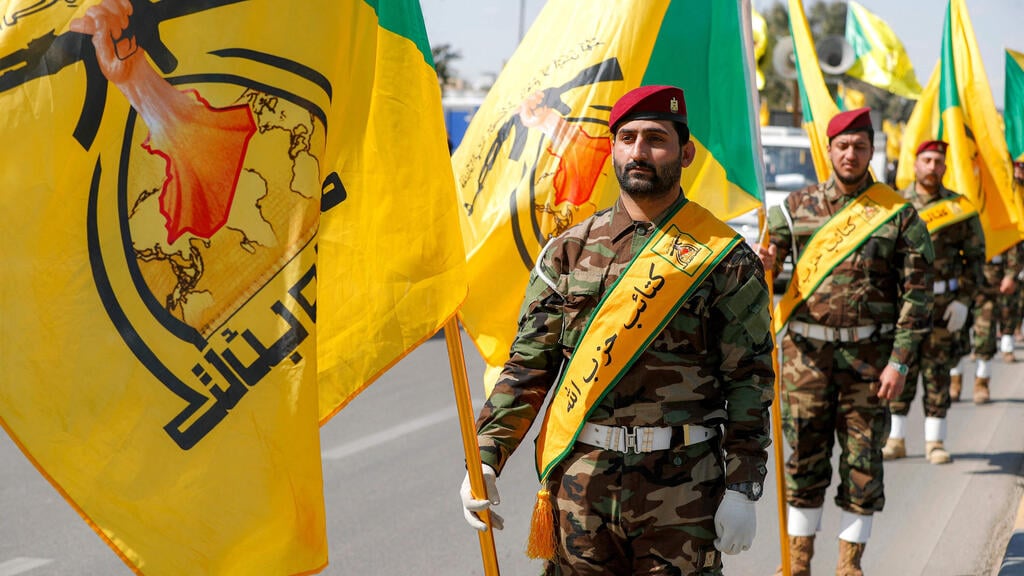
Since the start of the war in Iran, the Islamic Resistance in Iraq has issued four official claims of responsibility, one each day. Previous reports have said that the Islamic Resistance in Iraq is a relatively new framework, established in October 2023 as a coalition of several longstanding militias backed by Iran. Militias taking part in the group include Kataib Sayyid al-Shuhada, Kataib Hezbollah in Iraq, Harakat al-Nujaba, Ansar Allah al-Awfiya and the Imam Ali Brigades.
However, this definition is not absolute. These are the most prominent militias, but additional militias in Iraq operate around the same ideology of the “Islamic Resistance.” In addition, other umbrella frameworks built around the same concept exist in Iraq, with some militias belonging to more than one umbrella organization.
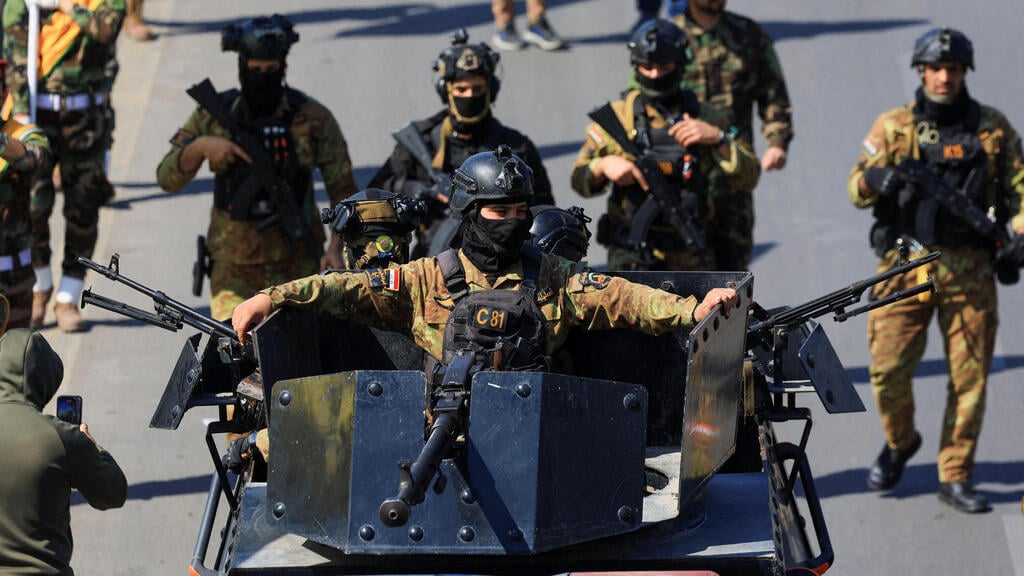
Kataib Hezbollah in Iraq
(Photo: REUTERS/Thaier Al-Suda TPX IMAGES OF THE DAY)
The pro-Iranian Iraqi militia Saraya Awliya al-Dam also defines itself as part of the country’s “Islamic Resistance.” It has been particularly prominent since the start of the current war with Iran and in the months beforehand did not conceal its activities, while other militias kept a lower profile.
This morning, the militia released a video and a claim of responsibility for an attack on what it described as a “vital target in Jordan” using a swarm of drones, citing the “assassination of Khamenei and an attack that led to the deaths of four members of the Iraqi militias.”
Overnight, two additional claims of responsibility accompanied by videos were published: one for an attack using a swarm of drones on a U.S. base near the airport in Erbil in Iraq’s Kurdistan region and another targeting a hotel in Erbil. Since the start of the war, the group has issued nine official claims of responsibility.
Over the past year and a half, the pattern of activity by pro-Iranian militias in Iraq has changed. They operated less frequently and far more quietly due to internal and external pressure, fears of direct attacks on Iraq and sanctions, as well as assurances that the United States still plans to withdraw its forces from the country.
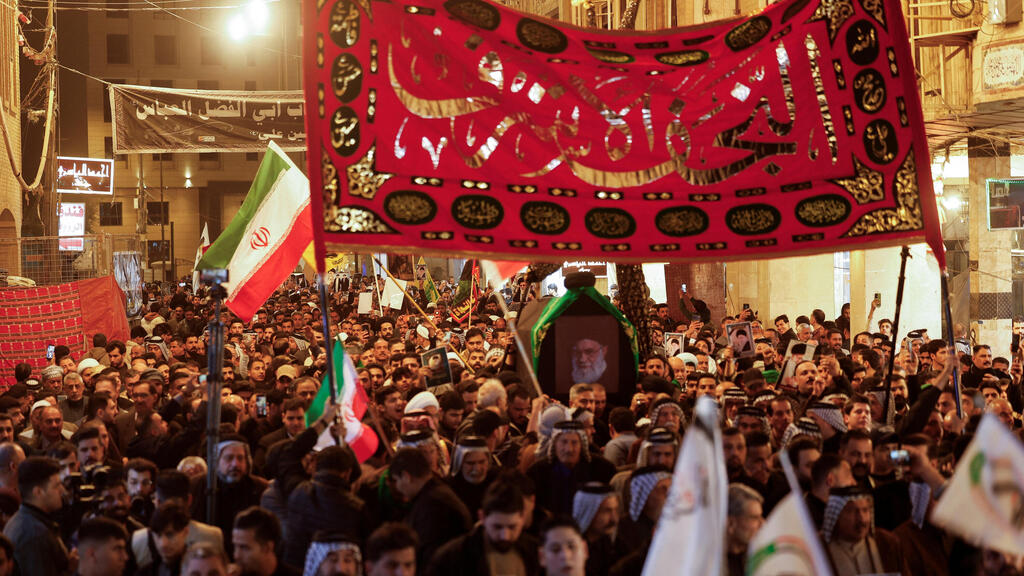
A demonstration in support of Iran in Iraq
(Photo: REUTERS/Alaa Al-Marjani TPX IMAGES OF THE DAY)
In recent months, there have been reports that some pro-Iranian militias were preparing to stand alongside Iran in the event of war. However, it has also been reported that the militias are divided, with some refusing to intervene in a possible conflict. On the first day of the war, the operations command of the militia Kataib Hezbollah in Iraq announced: “We will soon begin attacking American bases in response to their aggression.”
The question of the Houthis
The Houthis are effectively the only one of Iran’s proxies that has not yet joined the fighting. In recent days they have held demonstrations in support of Iran and against the killing of Khamenei, issuing statements saying they stand with Iran and with Lebanon following the strikes, but they have not announced a formal entry into the conflict.
It should be noted that the Houthis are involved in a long-running conflict with Saudi Arabia, which has also been targeted by Iran in recent days, and these regional dynamics also influence any decision about entering the conflict.
This morning, the Lebanese newspaper Al-Akhbar, which is affiliated with Hezbollah, reported that the Houthi leadership is closely monitoring regional developments and weighing whether to enter the confrontation between Iran and Israel directly, depending on how events unfold. The sources said Sanaa believes Iran’s military posture is stronger than ever but hinted that the Houthis could join the regional conflict if they come under significant attack by the United States or Israel.
A source in Sanaa opposed to the Houthis told ynet: “The authorities in Sanaa are preparing for war, as if there is coordination between them and Tehran regarding the timing of their involvement. At the same time, they are trying to assess the situation, understand where things are heading and learn from every mistake. Preparations are underway on a large scale and many meetings are being held.”