


Beginning this weekend, a new line operated by the “Na'im Busofash” initiative will connect Shoham and Tel Aviv, stopping at Terminal 1 of Ben Gurion Airport. It marks the first time a direct public transportation route to the airport will operate on Shabbat.
Until now, although flights have continued to depart and land on Saturdays, reaching Ben Gurion Airport by public transportation was not possible, neither by bus nor by train. Travelers were forced to rely on taxis or private shuttles, an expensive solution not accessible to everyone. Starting this weekend, Route 711 will stop at Terminal 1, where free shuttles operated by the Israel Airports Authority provide service to Terminal 3.
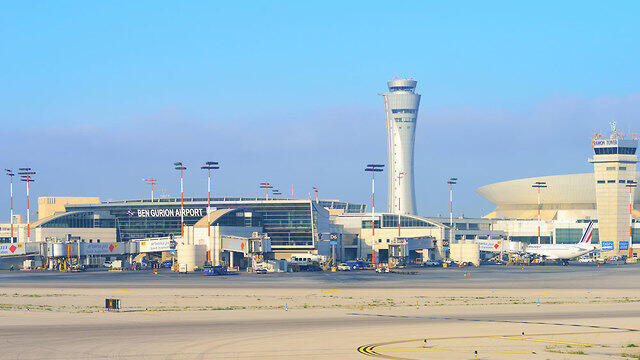
Ben Gurion Airport
(Photo: Shutterstock)
The “Na'im Busofash” initiative began operating at the end of 2019 with four municipalities. Until recently it included 13, but the Yehud-Monosson council voted to discontinue the service in the city. As a result, 12 local authorities now fund the Shabbat transportation network. Last year, the initiative recorded 1,817,000 passengers, 44,209 trips and more than 1 million kilometers traveled. In 2026, ridership is expected to grow by an additional 14%, along with expanded frequencies and services on main routes.
Tel Aviv Deputy Mayor and transportation portfolio holder Meital Lehavi said the Shoham route had previously passed along Route 461 and through Yehud-Monosson. “At their last council meeting in Yehud, they decided not to continue with ‘Na'im Busofash,’ so we said there was an opportunity here to add a stop at the airport instead,” she said. “A bus will depart every two to three hours, and passengers can check arrival times on the app. There will be a total of 17 trips each weekend.”
Lehavi added: “In a world where the skies are open for departures and landings in Israel, it is only appropriate that the gateway to Israel be open for those flying and returning. The route’s extension to Ben Gurion Airport was made possible thanks to cooperation with Shoham Mayor Dafna Ravid-Rabinovich, who agreed to divert it not only to Highway 1 but also to Terminal 1. This is a necessary and essential step for residents and tourists who do not understand how the skies are open but the buses are shut down, except for ‘Na'im Busofash’ and ‘Sababus.’ Where the government leaves a vacuum, local authorities step in and provide solutions to proven needs. The ride is free, and we hope to meet the demand.”
The background to these initiatives is the absence of state-run public transportation on Shabbat. Since a 1991 amendment to the Traffic Ordinance granted the transportation minister authority to prohibit bus operations on the day of rest, most bus and rail lines do not operate. The few that do are mainly longstanding routes licensed before the amendment or isolated lines granted special approval, often in Arab communities or mixed cities.
In response to the transportation gap, additional municipal initiatives have emerged in recent years. In Ramat Gan and Givatayim, the “Sababus” project operates free routes, while in Haifa and the Krayot area, the “Shabus” service runs on a similar model. Like “Na'im Busofash,” these services are funded by local authorities and do not charge fares, meaning they do not require a public transportation license from the Transportation Ministry.
However, these are regional solutions and do not replace a comprehensive national system. Most Israelis remain without an alternative to private vehicles on weekends. The new connection to Ben Gurion Airport underscores growing demand for public transportation on Shabbat, particularly as Israel’s main international gateway continues operating while public transit to it remains largely suspended.