

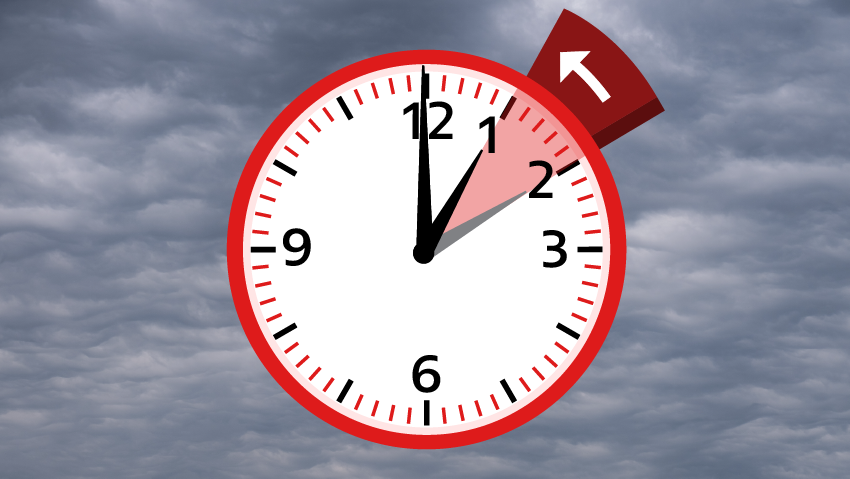
Israel will move its clocks back one hour overnight between Saturday, Oct. 25, and Sunday, Oct. 26, 2025, marking the official start of standard time. At 2 a.m., clocks will be turned back to 1 a.m., giving Israelis an extra hour of sleep.
The change will remain in effect until the country returns to daylight saving time on March 27, 2026.
(Photo: Shutterstock)
The switch, regulated under Israel’s Time Determination Law of 2013, takes place every year on the last Sunday of October. The law also stipulates that daylight saving time begins on the last Friday of March.
The transition marks the shift to shorter days and cooler weather. Under standard time, sunrise occurs earlier in the morning and sunset earlier in the evening.
Experts note that the reduction in daylight hours can affect the body’s production of melatonin, the hormone that regulates sleep, and serotonin, which influences mood. Increased darkness during winter months can lead to fatigue or lower energy levels.
Adjusting the clocks helps align daily activity with available daylight, allowing people to make better use of sunlight during the morning hours.
The debate over whether to keep daylight saving time year-round resurfaces regularly in Israel. Supporters argue that extended daylight improves quality of life and economic efficiency, while opponents of standard time say the early sunsets shorten family time, increase the risk of traffic accidents, and cost the economy hundreds of millions of shekels.
Several regions around the world, including most of Asia, Africa, and South America, no longer change their clocks seasonally. In Europe, the European Parliament voted in 2019 to allow member states to decide whether to remain permanently on standard or daylight saving time. In the United States, lawmakers have proposed similar measures.
For now, Knesset has opted to maintain the current system.
Standard time will remain in effect until 2 a.m. on Friday, March 27, 2026, when clocks will move forward one hour to mark the return of daylight saving time.