

Prosecutors on Tuesday concluded their cross-examination of Prime Minister Benjamin Netanyahu in his long-running corruption trial, bringing his testimony closer to an end after months of court hearings.
Netanyahu has testified over 94 court sessions, including 59 days of questioning by prosecutors. His testimony is expected to conclude next week following a brief redirect examination by his defense attorneys that is expected to last about two days.
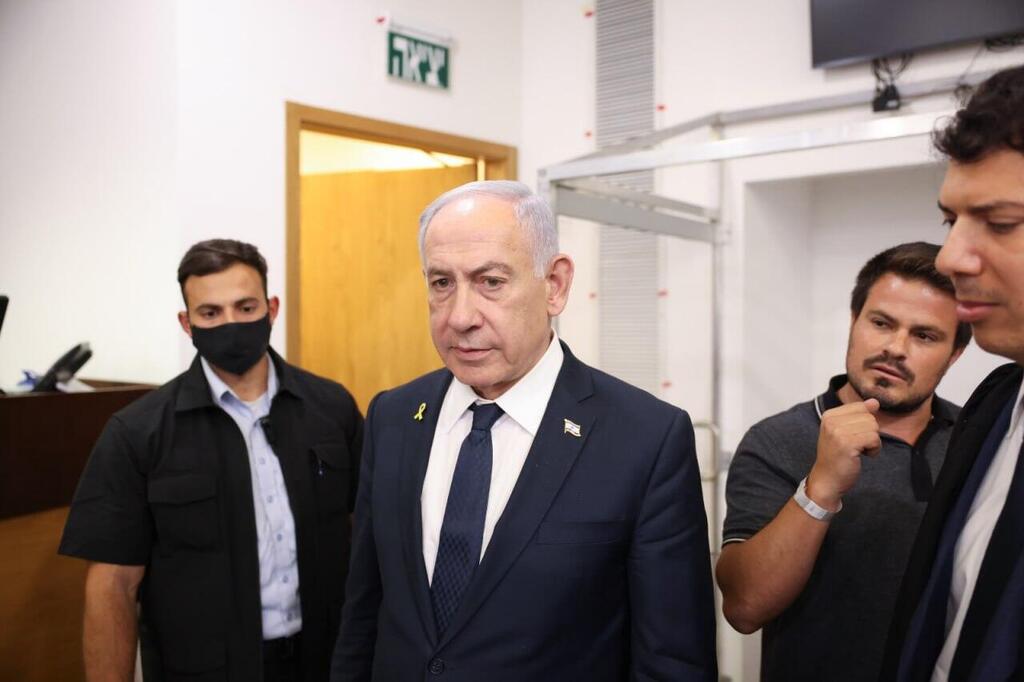
Prime Minister Benjamin Netanyahu in court
(Photo: Moti Milrod)
In recent sessions, prosecutor Yonatan Tadmor focused on Case 2000, one of three corruption cases against Netanyahu. The case centers on conversations between Netanyahu and Arnon "Noni" Mozes, publisher of the Yedioth Ahronoth media group, which also owns ynet, over a possible arrangement in which Yedioth would provide more favorable coverage in exchange for legislation that could weaken rival free daily newspaper Israel Hayom. Netanyahu and Mozes have denied wrongdoing.
During Tuesday's hearing, Tadmor referred to a December 2014 meeting and alleged that Netanyahu sought to make Mozes believe he was attempting to advance legislation commonly known as the "Israel Hayom Law," which would have restricted the distribution of free newspapers.
"What led you was causing Mozes to believe you would make efforts to pass the law during the parliamentary recess so that he would think it was not worthwhile attacking you," Tadmor said.
"He can think whatever he wants," Netanyahu replied.
Netanyahu said he had previously told Mozes the legislation would not advance during the recess and denied misleading him. "I wanted to reach an understanding on a softened version of the law, which, if not passed during the recess, could be addressed after the elections depending on coalition results," Netanyahu said.
Tadmor argued that Netanyahu sought to reduce hostile media coverage ahead of elections. Referring to statements Netanyahu made during police questioning, the prosecutor noted that Netanyahu had described the period before elections as a "cold war" rather than a "hot war."
Netanyahu responded by describing Mozes as "a political rival with extremely hostile tools."
"Yedioth Ahronoth and ynet crossed the line during those elections," Netanyahu said. Citing the phrase "Keep your friends close and your enemies closer," he said his contacts with Mozes were intended to limit attacks rather than establish an agreement.
The prosecutor also questioned Netanyahu about his decision to secretly record conversations with Mozes. Netanyahu has previously testified that he made the recordings to document what he described as improper proposals and to have "a card" against Mozes.
Asked what threats he uncovered, Netanyahu said Mozes operated through a system of "carrots and sticks."
"No one thought positive or negative coverage was a matter for criminal law," Netanyahu said. "This construct is something you invented, and it is absurd."
Pressed by prosecutors and by presiding Judge Rivka Friedman-Feldman on what he meant by threats, Netanyahu said media organizations sometimes publish false stories or threaten to expose information, but added that he did not view such conduct as criminal.
Tadmor later addressed a period in early 2015 when negotiations between Netanyahu and Mozes allegedly collapsed after Netanyahu failed to advance the Israel Hayom legislation.
The prosecutor argued that intensified criticism in Yedioth Ahronoth reflected Mozes' frustration that the discussions had not produced an agreement.
"I am not responsible for what Mozes thinks," Netanyahu replied. He said he had blocked the legislation while pursuing a moderated version of the bill.
Prosecutors also presented a Facebook post in which Netanyahu publicly criticized Mozes. Netanyahu rejected claims that the deterioration in relations reflected a failed deal.
"There is no connection to the law," he said. "He knew for a long time there was no law, and the coverage was negative all along."
Netanyahu argued that increasingly negative coverage by Yedioth Ahronoth and ynet was tied to the approaching election campaign and alleged that Mozes sought to defeat him politically.
"I am fighting him because he is fighting me," Netanyahu said. "He is a political rival directing all the political fire against me, and of course I can attack him back."
Case 2000 is one of three corruption cases against Netanyahu. Prosecutors accuse him of fraud and breach of trust in the case, alleging that discussions with Mozes constituted an improper attempt to influence media coverage. Netanyahu denies all charges and says he is the victim of a politically motivated prosecution.
- Disclosure: ynet is owned by Yedioth Ahronoth Group, whose publisher, Arnon "Noni" Mozes, is a defendant alongside Netanyahu in Case 2000. Both men deny wrongdoing.