

An American citizen was rescued last week in a daring medical evacuation from Antarctica, as the continent was experiencing almost complete darkness and temperatures dropped to around minus 40 degrees Celsius (−40°F), CNN reported Friday. The evacuation was carried out by an Australian aviation team from Skytraders, a company specializing in flights to the frozen continent.
Antarctica is the southernmost continent on Earth, covering an area of about 14 million square kilometers. Most of it is covered by a thick layer of ice and it is the coldest continent in the world. It has no permanent residents other than scientists stationed at research facilities.
Gallery
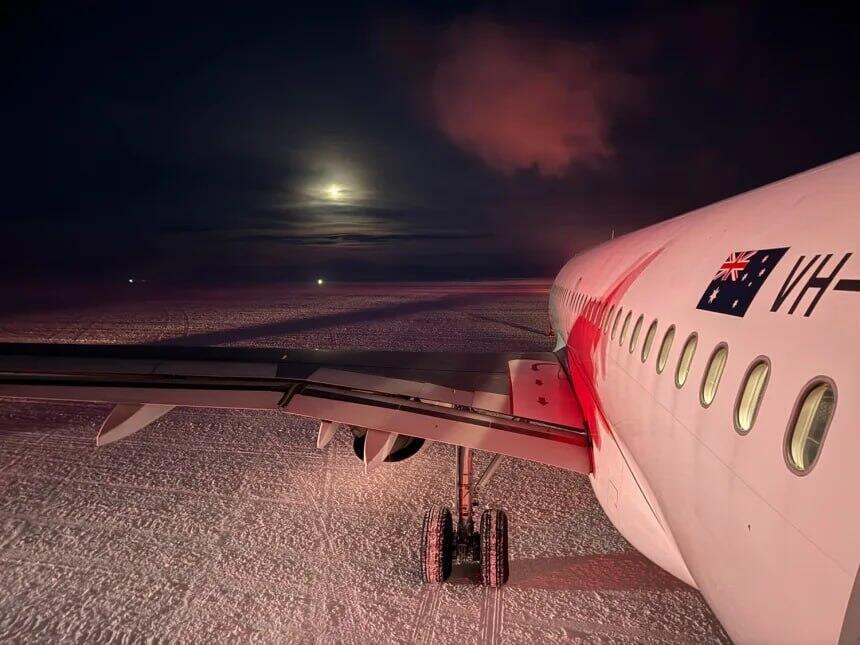
The evacuation was carried out by an Australian aviation team from Skytraders, a company specializing in flights to the frozen continent
(Photo: Skytraders)
According to the report, on July 28 the Australian aviation company received an "urgent request for assistance" for a medical evacuation from the U.S. research station McMurdo. The team’s departure was initially delayed due to extremely harsh weather conditions and only three days later did the Australian crew reach the research station after a five-hour flight. According to the company, the aircraft landed "under extremely challenging conditions," in almost complete darkness and at a temperature of minus 43 degrees Celsius (−45.4°F).
According to Skytraders, after the American patient was transferred onto the aircraft, the expedition left the frozen continent "before conditions deteriorated." The American citizen was flown to Christchurch, New Zealand, where they received medical treatment. The company declined to provide details about the patient’s identity or medical condition, but said the individual was "recovering well."
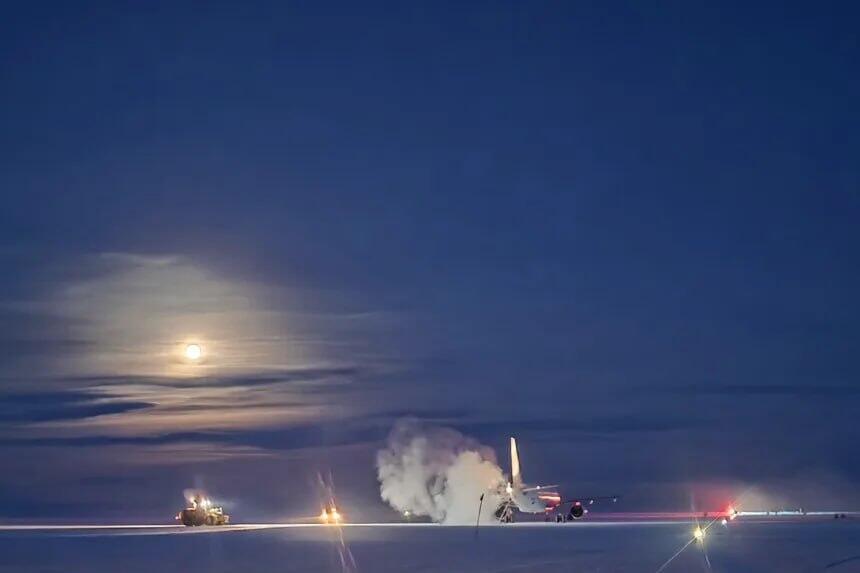
'Every Antarctic mission demands absolute precision, but winter operations raise the complexity significantly'
(Photo: Skytraders)
"Every Antarctic mission demands absolute precision, but winter operations raise the complexity significantly," said Capt. Al Wallach, the pilot of the flight. According to him, "The conditions we encountered were right on the edge of even the most specialised aircraft capability."
Co-pilot Louise Robertson told CNN that "most of the runways are just compacted snow, which means that there’s groomers that come out and prepare the runway to make sure it’s got enough friction for the aircraft to be able to stop, and then also that the surface is smooth and clear."
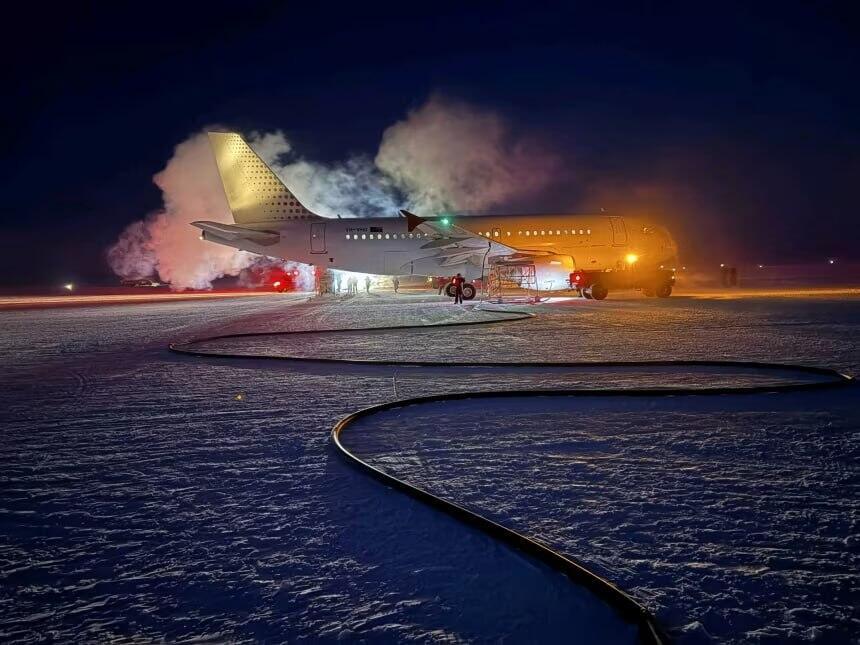
'Most of the runways are just compacted snow, which means that there’s groomers that come out and prepare the runway'
(Photo: Skytraders)
According to the report, before the mission the crew prepared for several worst-case scenarios, including a power outage on the runway that would have forced them to land with zero visibility. During the flight to Antarctica, the aircraft also carried additional fuel in case it was unable to land and had to return to Australia.
According to Robertson, "It was a huge amount of concentration and workload, and a lot of mental maths as well, doing cold weather calculations, correcting for the altitude on the approach, and then communication between the flight crew on board."