


“The moment our aircraft took off toward Iran, U.S. planes routinely stationed in Iraq unexpectedly landed at their bases, clearing the skies,” recalled retired Brig. Gen. R., who commanded the control center in the Israeli Air Force’s underground command post on the night of the strikes during Operation Rising Lion.
“We could clearly see the Iranians saying to themselves, ‘If the skies over Iraq have cleared, maybe the Israelis are coming for us tonight.’”
More than a year after the operation ended, R. recounted how the incident began unfolding in a way that could have compromised the element of surprise and derailed the planned opening strike.
“The Air Force commander immediately called senior CENTCOM officers and asked them to take off again at once and restore the usual aerial picture,” he said. “In the spirit of the excellent cooperation we have with them, they said, ‘Whatever you need, we’re with you. What do you need?’ The Air Force commander told them, ‘Do exactly what you did yesterday at this time.’”
By then, however, Iran had already realized that something was happening and targets began moving.
“We instructed the aircraft to hold just minutes before releasing their munitions,” R. said. “The Air Force commander personally went to the intelligence cell, looked at the young officers sitting there and told them, ‘This is the situation. What do you think?’ They calmly replied, ‘Don’t worry, commander. We have plans for this, this and this as well. We’ll decide which one to activate depending on the circumstances.’”
For several long and tense minutes, the pilots in the air were updated on the changes. At the same time, Israeli defense officials detected that the Iranian side was beginning to relax.
Fearing that the targets might disperse to different locations, then-Air Force commander Maj. Gen. Tomer Bar ordered personnel in real time to “make a little noise so their suspicions would return.”
According to R., what happened next was not only that the senior commanders remained in place, but that more officials arrived after being summoned for consultations.
“At 2:43 a.m., our first munitions struck their targets,” he said. “We fired the opening shot with great success, and the entire Air Force took off. Its targets included command-and-control sites, surface-to-surface missile sites and air-superiority targets — everything we had defined in advance. From that point, the blitz began, wave after wave after wave, in a highly impressive manner.”
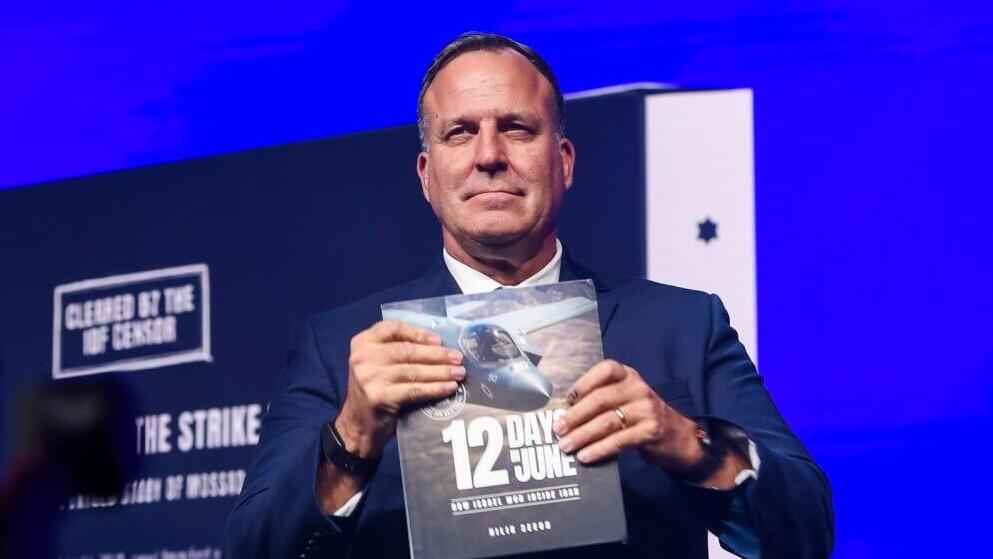
The book brings together dozens of accounts compiled through in-depth research; Gen. Kurilla with ‘12 Days in June'
(Photo: Hilik Sion)
Meanwhile, officials in Jerusalem continue to focus on the achievements of that war, and the Foreign Ministry is working around the world to explain the significance of Israel’s strikes on Iran.
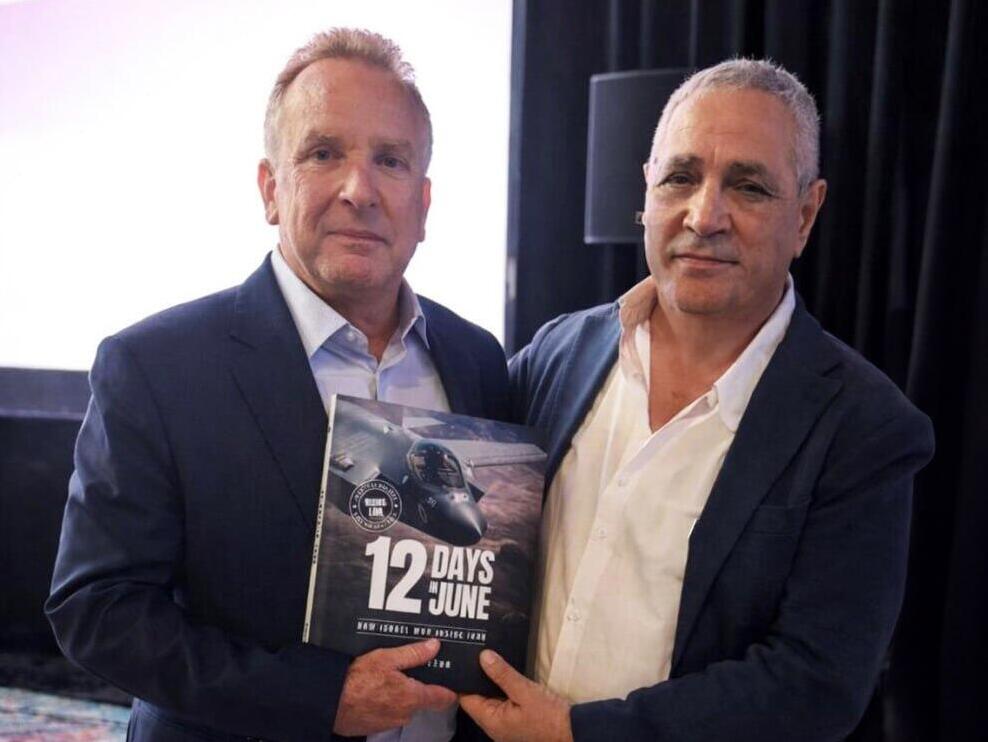
Among its tools is the recently published book “12 Days in June,” released in Hebrew and English, which for the first time provides extensive details about the operation behind the scenes.
Published by Hilik Sion, the book’s editor-in-chief, “12 Days in June” brings together dozens of accounts compiled from 52 in-depth interviews with the most senior figures in Israel’s defense establishment and outside experts.
Among other things, it includes a detailed, dramatic account from inside the Air Force command bunker, as revealed by Brig. Gen. S.
The book is expected to be distributed in the coming days to Israeli diplomatic missions and embassies worldwide as a central tool for explaining Israel’s victory. The ministry is also organizing official launch events for foreign ambassadors and delegations of mayors from around the world who have come to learn from the book how Israel carried out the operation.
In January, the Israeli-American Council selected the book as its official gift to U.S. President Donald Trump at a conference in Miami. At the event, Sion personally presented copies to Steve Witkoff and Gen. Michael Kurilla, then commander of the U.S. military’s Central Command.
During a Friends of the Israel Defense Forces gala in Miami, Sion also showed a copy of the book to an F-35 pilot serving as an Air Force representative.
“He glanced at the cover, and his eyes locked on three digits visible on the aircraft in the photograph: 943,” Sion recalled. “He was shaken and told me, ‘That’s my plane. I used it to strike Iran.’ Everyone standing nearby got chills. It is hard to imagine such a rare coincidence.”