

The U.S. military has begun operating surveillance drones over the Gaza Strip in recent days as part of a broader effort to ensure that both Hamas and Israel are complying with the fragile cease-fire, The New York Times reported Friday, citing Israeli and American defense officials.
The drones are operated from a U.S. command center recently established on the outskirts of Kiryat Gat, and are being used to closely monitor developments in Gaza.
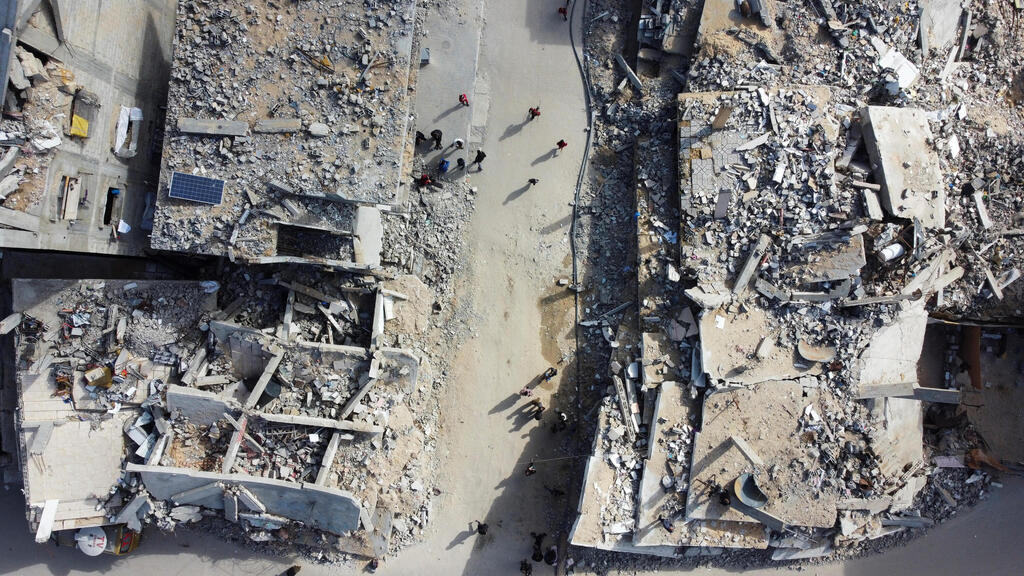
According to two Israeli military officials and one American defense official, the surveillance flights are being conducted with Israel’s consent. The sources said the monitoring operation is designed to assist the U.S. command center’s activities in Israel—another sign of Washington’s direct oversight of the cease-fire’s implementation.
Throughout the war, the IDF has relied heavily on drones for intelligence collection in its campaign against Hamas. However, the new U.S. flights suggest that Washington now seeks an independent, firsthand understanding of the situation on the ground, rather than relying solely on Israeli reporting. The U.S. State Department and the IDF declined to comment on the report.
Several Israeli and American officials, including a former U.S. diplomat, expressed surprise at the decision to deploy surveillance drones during a cease-fire, given the close military ties between the two allies.
(Photo: Reuters/Mahmoud Issa)
“This is a very intrusive form of American monitoring on a front where Israel faces an active threat,” former U.S. Ambassador to Israel Dan Shapiro told The Times. “If there were full transparency and complete trust between Israel and the United States, this wouldn’t be necessary. But clearly, Washington wants to prevent any misunderstandings.”
U.S. monitoring the agreement up close
The move underscores how determined the United States is to safeguard the peace framework brokered by President Donald Trump and his team, led by special envoy Steve Witkoff and senior adviser Jared Kushner.
Since the agreement was signed, the U.S. established a command center in Israel that includes personnel from several other countries—some of which had tense diplomatic exchanges with Jerusalem during the war.
U.S. Secretary of State Marco Rubio


On Friday afternoon, U.S. Secretary of State Marco Rubio visited the U.S.-led command center in Kiryat Gat. Touring the facility and meeting with U.S., Israeli and partner-nation personnel, Rubio described the mission as historic.
“This is an impressive center with a lot of important work happening here,” Rubio said. “This is a historic mission—there’s nothing to model it after because it’s never been done before. We have a lot to be proud of in these first days of implementation, despite real challenges along the way, but also a lot of opportunity.”
Rubio said he wanted to see firsthand how the command center operates.
“One of the reasons I came today was to get a sense of the workflow, the organization and the needs,” he said. “You see a lot of uniforms here—from partner nations that have joined us, and of course the Israelis who are hosting us. You’re also starting to see a growing presence from the State Department and related entities to help with emergency response and humanitarian coordination.”
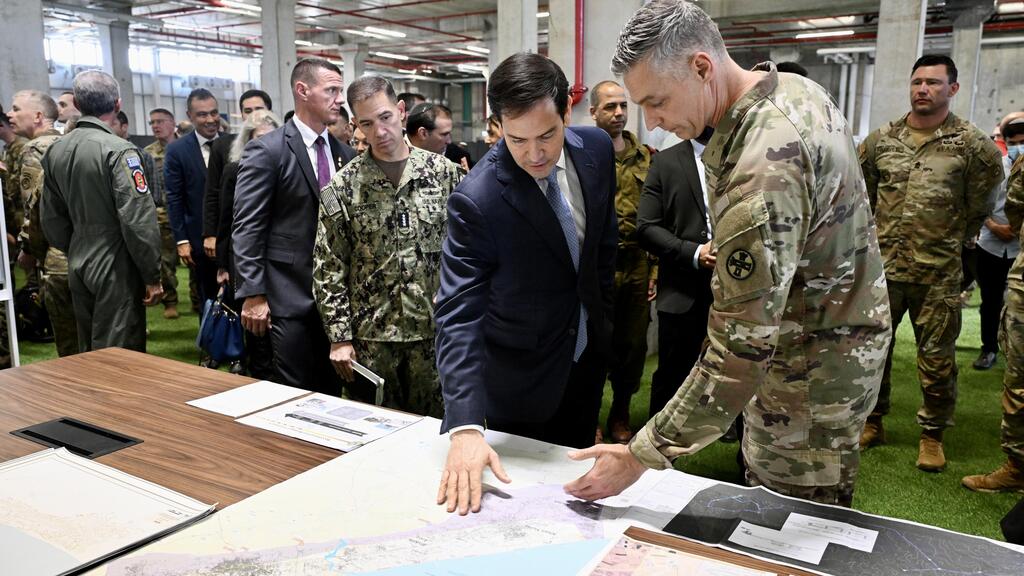
U.S. Secretary of State Marco Rubio
(Photo: David Azagury, U.S. Embassy Jerusalem)
According to Rubio, the mission involves three main efforts: maintaining the cease-fire, coordinating humanitarian assistance and assembling an international stabilization force for Gaza.
“The first task is maintaining the current peace,” he said. “That means avoiding any flashpoints. On the other side of that yellow line there’s still an armed terrorist group that’s brutalized its own population. We need to make sure that nothing derails the broader process.”
Rubio emphasized that humanitarian aid is already flowing into Gaza, coordinated among numerous international and charitable organizations.
“It’s a massive undertaking to make sure the assistance is safely distributed and not looted or diverted,” he said.
He added that work is underway to create a multinational stabilization force that will include countries contributing personnel, funding or both.
“We’re structuring what that force will look like, lining up all the countries that are willing to help, and securing the right international mandate—whether through the U.N. or another framework,” Rubio said. “That force must understand its mission clearly and execute it effectively.”
Looking ahead, Rubio said the long-term goal remains Gaza’s reconstruction and ensuring such violence never recurs.
“We’re creating the conditions so that never again will we see what happened on October 7,” he said. “The aim is to build a place no longer home to elements that threaten Israel or their own people. But before that, we have to make sure the cease-fire holds, that people get the life-sustaining aid they need, and that the stabilization force can enter as soon as possible.”
First published: 21:23, 10.24.25