

At least 226 people have reportedly been killed in a devastating drone strike on a crowded market in Abyei, a disputed territory between Sudan and South Sudan, according to local authorities. The attack, which took place Monday, October 19, triggered powerful explosions and a massive fire after a fuel depot inside the market was hit, leaving charred buildings, destroyed vehicles and bodies trapped beneath the wreckage. Thousands of residents fled the area as rescue workers struggled to recover the dead, with flames continuing to burn into the following day.
The updated death toll was reported by South Sudan's Eye Radio, citing Yohana Akol Ngor, Abyei's caretaker information minister. According to Ngor, 153 victims were buried in one mass grave and another 73 in a second, bringing the reported total to 226. The figure has not been independently verified. Earlier reports by Reuters and the Associated Press placed the death toll at 153. Ngor said an initial strike also hit a tractor-trailer carrying approximately 26 people, while an estimated 8,000 residents were displaced, some seeking shelter beneath trees and in open spaces.
Gallery
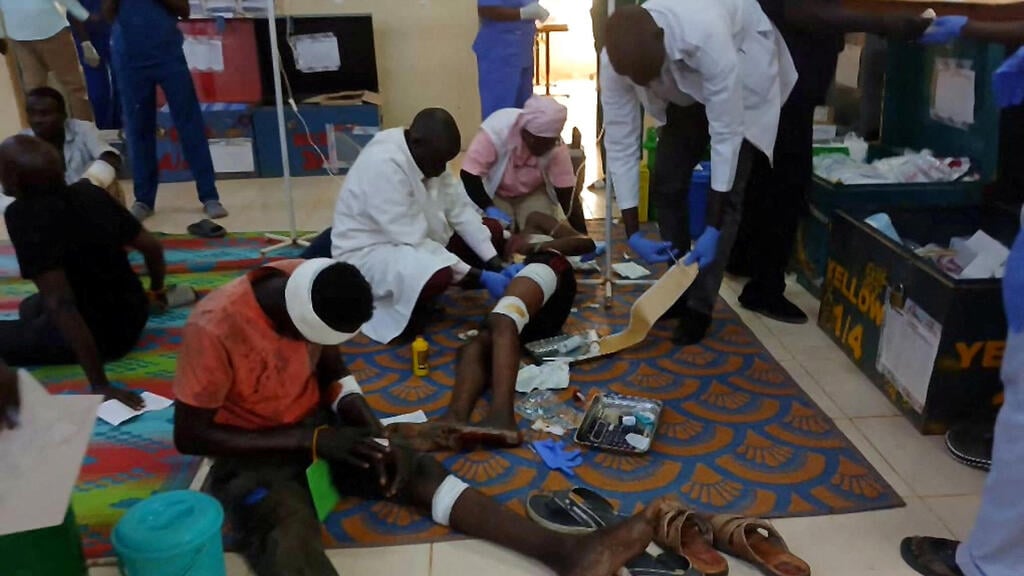
Wounded patients receive treatment at Ameth Bek Hospital in Abyei following the drone strike
(Photo: REUTERS/Medecins Sans Frontieres/Handout via REUTERS)
An eyewitness who spoke to Reuters described hearing five powerful explosions before flames engulfed a fuel storage facility inside the market. As people rushed to evacuate the wounded, many were found suffering from shrapnel injuries to their stomachs and legs. The witness, who requested anonymity for security reasons, said he had seen 28 burned bodies in one location. Images from the aftermath showed scorched vehicles, destroyed buildings and twisted metal scattered across the marketplace, while satellite imagery revealed extensive fire damage.
Doctors Without Borders, also known by its French acronym MSF, reported that more than 20 wounded people were taken to nearby Ameth Bek Hospital, including patients with severe burns and other critical injuries. Dr. Christian Lindauer, the organization's medical activities manager at the hospital, said medical teams were providing emergency treatment, wound care and surgical assistance. Photographs released by the organization showed bandaged patients receiving treatment while lying on the hospital floor. Local officials warned that some bodies had been burned beyond recognition, complicating efforts to identify victims and recover their remains.
Abyei's local authorities and South Sudan's government accused the Sudanese Armed Forces of carrying out the attack. A senior Sudanese military officer subsequently acknowledged to the Associated Press, on condition of anonymity, that the army had conducted a drone strike in the area. However, he claimed the intended targets were fuel tankers arriving from South Sudan and believed to be transporting supplies to the paramilitary Rapid Support Forces, or RSF, which has been fighting Sudan's army since April 2023. The officer maintained that those killed were RSF members or people involved in fuel smuggling, insisting: "We do not target civilians."
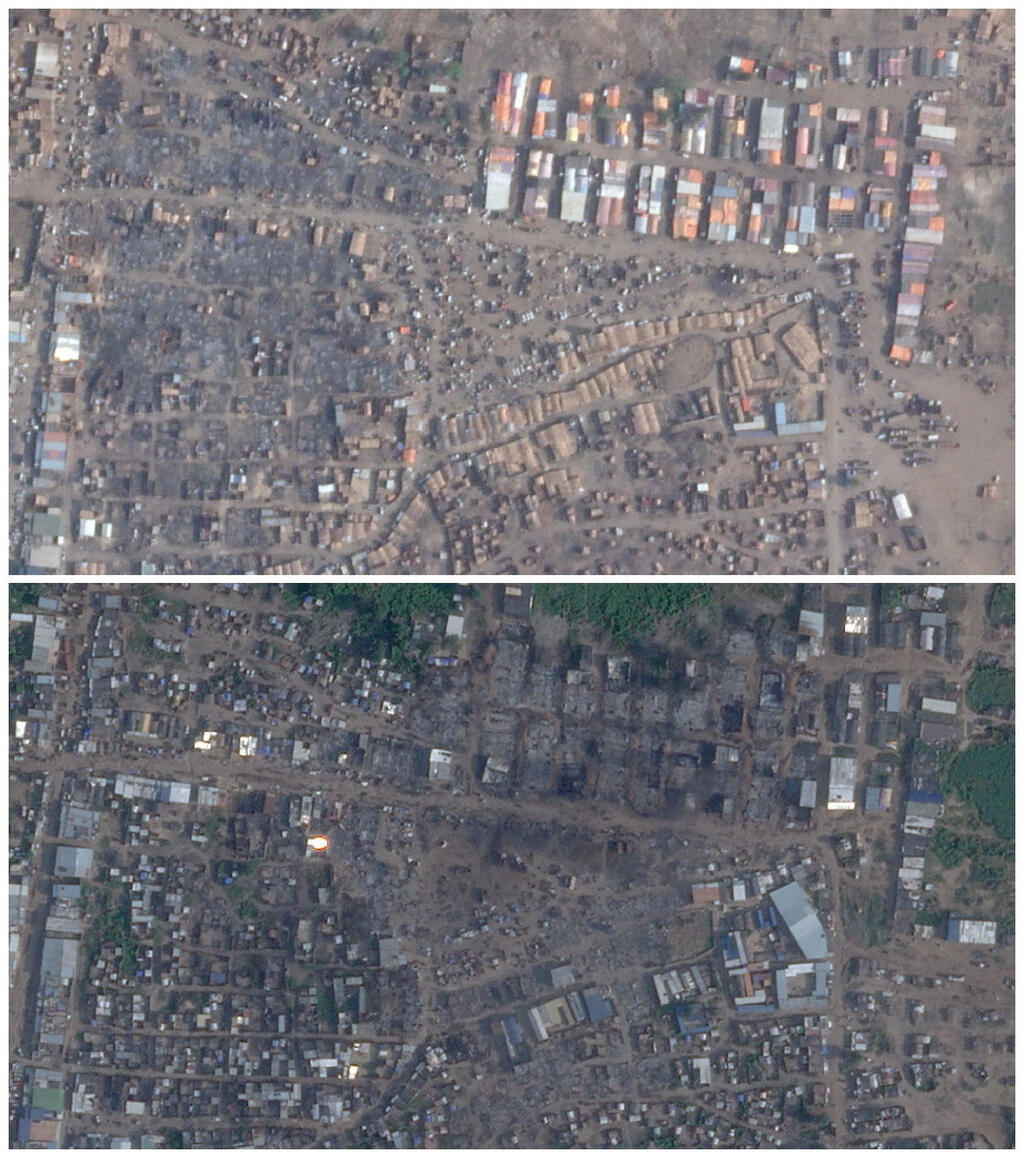
Satellite images show Amiet Market in March 2025 (top) and after the October 19 drone strike (bottom)
(Photo: Planet Labs PBC/Handout via REUTERS)
That account was disputed by the Reuters eyewitness, who said he had not seen RSF fighters or other uniformed armed personnel in the market. He described the site as a busy commercial center selling basic goods, including sugar, flour and biscuits, some of which are transported onward into Sudan. Three diplomatic sources told Reuters that the fuel depot struck in the attack had previously been used by the RSF to supply its forces. However, it could not be independently established whether the facility was serving a military purpose at the time of the strike.
South Sudan's Foreign Ministry summoned Sudan's ambassador to protest the attack, condemning the civilian casualties and extensive destruction. The ministry urged Sudan to refrain from military actions that endanger civilians and called for disputes involving Abyei to be resolved through diplomatic channels. United Nations Secretary-General António Guterres condemned the drone attacks in the region, while the UN said women and children were among the victims. The United Nations Interim Security Force for Abyei, or UNISFA, deployed medical personnel, firefighting teams and rapid-response units to help evacuate casualties and prevent the flames from spreading.
Deadly escalation in Sudan's civil war
The Abyei attack came amid a wider wave of deadly drone strikes across Sudan. According to the BBC, the Sudan War Observatory reported that approximately 150 people were killed in two drone strikes Sunday near Al-Dabab in West Kordofan state. One strike reportedly hit a truck carrying about 200 people traveling to a funeral, killing 145, while another five people were killed when a drone struck a tent where mourners had gathered. The organization also reported 150 wounded and assessed that the drones were launched from Kadugli, a city in South Kordofan controlled by the Sudanese army. The figures and attribution have not been independently verified.
The attacks highlight the growing role of unmanned aerial vehicles in Sudan's civil war, which erupted in April 2023 following a power struggle between army chief Gen. Abdel Fattah al-Burhan and RSF commander Mohamed Hamdan Dagalo, widely known as Hemedti. The conflict has devastated large parts of Sudan and created one of the world's worst humanitarian emergencies. According to UN figures cited in the reports, approximately 13 million people have been displaced and more than 33 million require humanitarian assistance. Around 20 million people face severe food insecurity, with aid organizations warning of worsening famine risks in parts of Darfur and Kordofan.
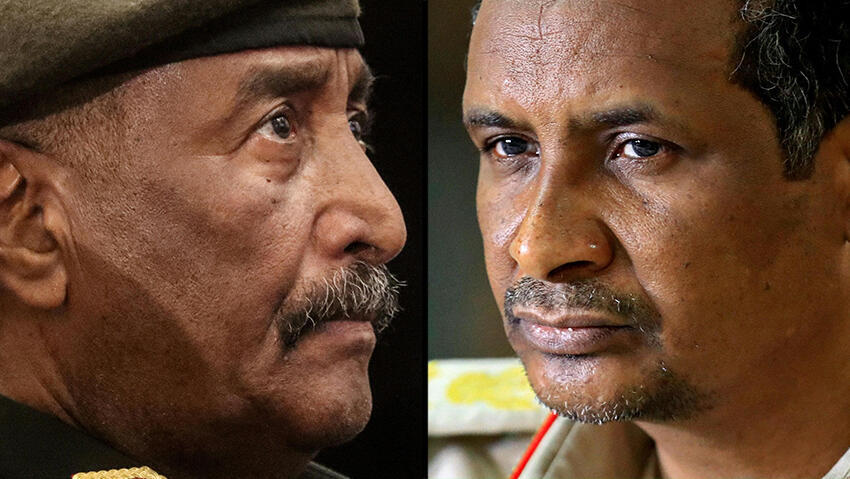
RSF commander Mohamed Hamdan Dagalo, known as Hemedti (right), and Sudanese army chief Abdel Fattah al-Burhan, whose power struggle sparked the country's civil war
(Photo: AFP)
Drone attacks have increasingly targeted strategic infrastructure, supply routes and populated areas. Despite a partial international arms embargo, foreign suppliers have reportedly continued providing unmanned aircraft and other military equipment to both sides. Kordofan, a region rich in oil and gold, has become a crucial battlefield linking RSF strongholds in Darfur with central Sudan and the army-held capital, Khartoum. Control of the region's roads, fuel supplies and trading centers carries significant military and economic importance.
Abyei itself has long been a flashpoint between Sudan and South Sudan. The oil-rich territory's status was left unresolved under the 2005 peace agreement that ended Sudan's previous north-south civil war. The dispute persisted after South Sudan gained independence in 2011, with a referendum intended to determine Abyei's future never taking place because of disagreements over who would be eligible to vote. The Ngok Dinka community generally supports joining South Sudan, while the nomadic Misseriya community favors remaining part of Sudan.
The territory has experienced repeated violence over land, grazing rights and access to resources. Since Sudan's current civil war began, Abyei has also become an important transit corridor for supplies moving toward areas controlled by the RSF. The United Nations warned in May that the presence of RSF members in the region was increasing instability and endangering residents and international peacekeepers. UN spokesperson Stéphane Dujarric has warned that repeated drone attacks and the destruction of essential infrastructure are taking a devastating toll on communities already struggling to survive more than three years of war.