


A new report by the International IPC initiative, the global body that assesses famine conditions, has sparked renewed controversy over the humanitarian situation in Gaza, with the organization warning of severe food insecurity and Israel rejecting its conclusions.
According to the report published Thursday, conditions in Gaza remain “extremely fragile” despite some improvement following the ceasefire that began in October 2025. The IPC said that between April and June, around 1.2 million people in Gaza, roughly 59% of the population assessed, experienced acute food insecurity. The organization projected that the number could rise to more than 1.4 million people by the end of 2026, representing about 67% of the population.
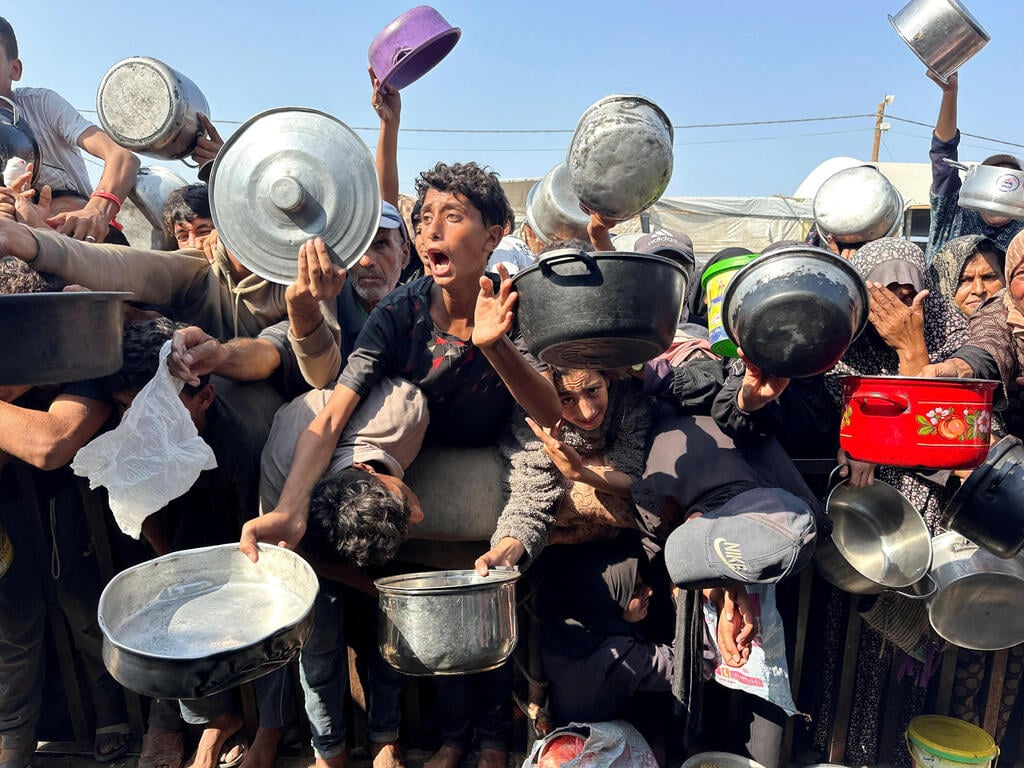
Gazans queue for food in Khan Younis, archive
(Photo: REUTERS/Haseeb Alwazeer )
The report also warned that approximately 74,200 babies and young children between the ages of six months and five years could suffer from acute malnutrition by April 2027, alongside tens of thousands of pregnant and breastfeeding women. The IPC warned of serious risks if humanitarian aid deliveries are disrupted and called for progress toward a permanent ceasefire and the restoration of livelihoods.
Israel’s Coordinator of Government Activities in the Territories, known as COGAT, strongly rejected the report and accused its authors of political bias.
“Israel rejects outright the conclusions and claims presented in the IPC report,” COGAT said. “Time and again, it has been proven that their reports rely on flawed methodology, incomplete sources of information and systematic bias. These findings do not provide a professional or objective basis for assessing the situation in Gaza.”
COGAT said the report’s authors did not contact Israeli officials before publication and ignored official data provided by Israel.
“This conduct proves that the report is not a professional attempt to assess reality, but rather an attempt to justify a predetermined narrative while ignoring facts, serving Hamas propaganda and defaming the State of Israel,” the statement said.
Israeli officials emphasized that a recent comprehensive report based on United Nations and international organization data showed that the humanitarian situation in Gaza remained stable and even improved during the ceasefire period.
According to COGAT figures, around 1.8 million tons of food have entered Gaza since the ceasefire began, three times the amount defined as necessary by the United Nations World Food Program. Israel said the increased supply led to a 72% decline in food prices in local markets.
COGAT also said that more than 70,000 cubic meters of water are being supplied to Gaza every day, exceeding international standards. In the medical sector, Israel said more than 18,000 tons of medical equipment and medication have entered the Strip, allowing hospitals to expand bed capacity by 55%.
COGAT concluded by accusing Hamas of being the main obstacle to improving conditions in Gaza. “Those who choose to ignore these facts are diverting attention from the central obstacle to improving the situation: the Hamas terror organization, which continues to seize humanitarian aid, exploit the humanitarian space for military purposes and refuse to disarm,” the statement said.